What Are the Top Types of Medical Injection Molding in 2026?

A clear medical device may depend on a remarkably precise molded part: a thin catheter hub, a flexible seal, or a tiny diagnostic housing. In 2026, medical injection molding remains important because it can produce repeatable components at scale. Yet “top” does not mean universally best. Material choice, geometry, production volume, and the device’s intended use all shape the decision.

This overview examines several major types, including thermoplastic molding, liquid silicone rubber molding, micro injection molding, insert molding, and overmolding. Each serves different design needs. Thermoplastics suit many rigid components, while silicone can provide flexibility and sealing properties. Micro molding supports very small features; insert molding and overmolding combine materials or components. The boundaries can overlap. That is worth remembering.

A useful comparison goes beyond the machine or process name. It considers dimensional consistency, material compatibility, surface finish, validation needs, and the realities of assembly. For example, a small connector may look simple, but a slight change in fit can affect how it joins another component. Process descriptions alone cannot settle that question. Specific designs require engineering review and evidence from testing.

The sections ahead explain where each molding type is commonly considered, what trade-offs deserve attention, and which questions teams should ask suppliers. No single process guarantees a reliable medical part. Good outcomes depend on thoughtful design, controlled manufacturing, and careful verification. That takes work.
What Are the Top Types of Medical Injection Molding in 2026?

Thermoplastic Injection Molding for Medical Components

What Are the Top Types of Medical Injection Molding in 2026?
Thermoplastic Injection Molding for Medical Components

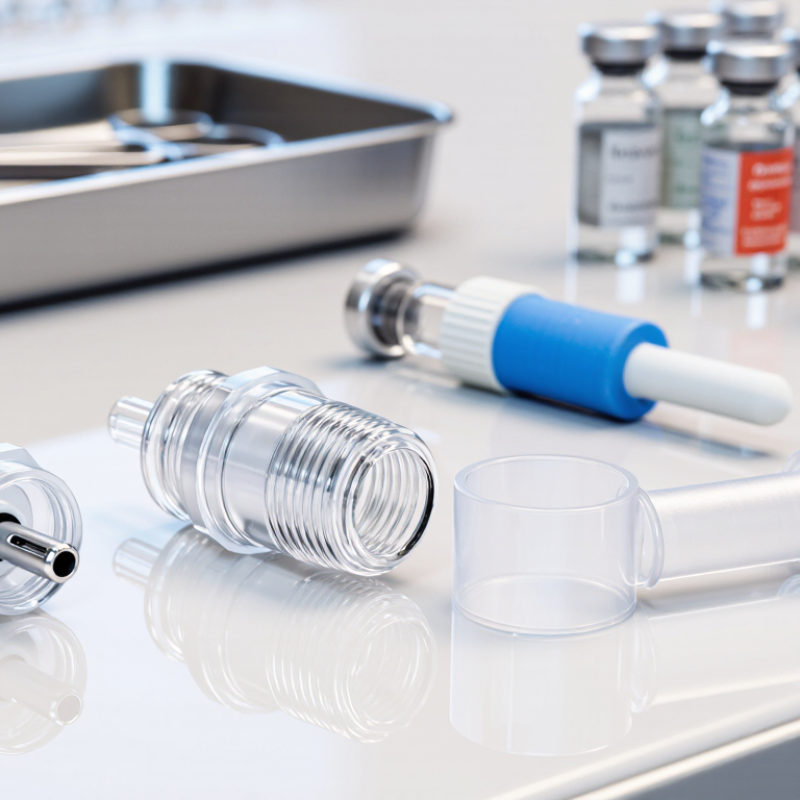
Thermoplastic injection molding is widely used for medical components that need consistent dimensions and repeatable production. Common materials include polypropylene, polyethylene, and polycarbonate. The right choice depends on the part’s function, sterilization method, chemical exposure, and required strength. A clear housing may need optical clarity, while a small connector needs reliable fit. Material suitability must be assessed for the finished device, not assumed from a resin label.

Grand View Research estimated the global medical plastics market at $22.6 billion in 2023 and projected a 7.1% compound annual growth rate from 2024 to 2030. This points to continued demand, though market growth alone does not guarantee a sound production choice. Mold design, process controls, and documented material traceability matter. In practice, even a tiny gate mark or flash can interfere with assembly. I have seen teams treat these details as cosmetic; sometimes they are not.

Tips: Check wall thickness and draft early. Ask how the selected resin behaves after sterilization. Review samples for sink marks, sharp edges, and fit—not just appearance. Test the actual molded part under intended conditions. Small details matter.
What Are the Top Types of Medical Injection Molding in 2026?

Typical tensile-strength ranges for selected thermoplastics used in medical components

The ranges shown are indicative values for typical unfilled molding grades; properties vary by formulation and test method. Material selection also depends on the component’s mechanical, chemical, sterilization, and regulatory requirements. Confirm suitability using the specific medical-grade resin’s technical data.

Liquid Silicone Rubber Molding for Flexible Medical Parts

Liquid silicone rubber (LSR) molding is useful when a medical part must bend, seal, or stay soft against skin. Typical examples include flexible valves, gaskets, tubing components, and soft-touch interfaces. LSR is injected as a two-part liquid into a heated mold, where it cures into an elastic solid. The process can produce detailed features, but thin edges and parting lines need careful control. Small defects matter.

Grand View Research’s 2024 Medical Injection Molding Market report estimates the broader market at USD 24.3 billion in 2023, with growth expected through 2030. That figure covers more than LSR, so it should not be read as a measure of silicone demand alone. Still, it reflects expanding use of molded components in healthcare. For product teams, material selection should consider the intended contact, cleaning or sterilization method, and repeated flexing—not just softness.

In practice, engineers check cure consistency, flash, dimensional stability, and compression set across production runs. A seal that looks sound can lose force after repeated compression. Not always obvious. Material suitability also depends on the specific formulation and validated processing conditions; “medical grade” alone does not establish performance for every use. Early prototype testing helps reveal problems, though prototypes cannot replace process validation.

Micro-Injection Molding for Miniature Devices

What Are the Top Types of Medical Injection Molding in 2026?

Micro-Injection Molding for Miniature Devices

Micro-injection molding makes very small plastic components with fine features and tight dimensional requirements. It can support miniature gears, diagnostic cartridge parts, and small fluid connectors. These parts may include thin walls or narrow channels. That sounds simple, but tiny features can be difficult to fill consistently. A minor change in temperature or material flow may affect the finished part.

Reliable production starts with a design that suits the molding process. Engineers assess wall thickness, gate placement, material behavior, and how parts will be inspected. Tooling and process settings need careful control, especially when components must fit together or manage fluid paths. Verification should reflect the device’s intended use and quality requirements. Micro-molding is not automatically the best choice; some designs need adjustment, and early prototypes can reveal overlooked issues.

Tips: Keep features as uniform as practical, and discuss tolerances with the molder early. Check sample parts under magnification. Record material and process details. Small parts are easy to underestimate.

Insert Molding for Embedded Medical Components

Insert molding embeds a metal, ceramic, or electronic insert inside a molded polymer part. In medical devices, this can combine a rigid connection with a lightweight, shaped housing. Think of a stainless-steel threaded bushing held within a molded handle. Fewer separate fasteners can simplify assembly and reduce opportunities for misalignment.

The market is growing. Grand View Research’s 2024 Medical Plastics Market report estimated its 2023 value at USD 29.6 billion, with a projected 7.4% compound annual growth rate through 2030. That figure covers medical plastics broadly, not insert molding alone. Still, it reflects rising demand for precisely manufactured polymer components. Insert molding can support compact designs, but only when the insert and resin work well together.

Details matter. Engineers should assess insert placement, resin shrinkage, thermal expansion, and bonding strength before production. A poorly supported insert may shift during molding or create stress around its edges. Tiny gaps can also complicate cleaning or sealing. Not a magic fix. Process validation should examine dimensions, pull-out strength, and performance after the intended sterilization cycles. ISO 13485:2016 provides a quality-management framework for medical-device production, but it does not replace part-specific testing. Some designs need rework after testing; that is an uncomfortable, useful lesson.

Overmolding and Multi-Shot Molding for Integrated Devices

What Are the Top Types of Medical Injection Molding in 2026?
Overmolding and Multi-Shot Molding for Integrated Devices

Overmolding adds a second material over a molded component, such as a soft grip around a rigid instrument handle. Multi-shot molding forms multiple materials or colors in one coordinated molding cycle. Both approaches can reduce separate parts and assembly steps, but they solve different design problems.

For a reusable device housing, a flexible overmold may improve grip and help seal a joint. Engineers need to check material compatibility, bond strength, and how the interface behaves after cleaning or sterilization. A smooth sample is not enough. Test real parts under expected use conditions, including repeated handling and temperature changes.

Multi-shot molding can place hard and soft materials precisely around buttons, seals, or touch surfaces. It may also reduce alignment errors from manual assembly. The trade-off is a more demanding tool and process setup. Material flow, shrinkage, and shot timing all affect the final interface. Small changes can matter. A practical design review should compare the integrated part with a simpler, separately assembled version. Sometimes the less elegant option is easier to inspect, repair, or validate. That is worth questioning before committing to production.

What Are the Top Types of Medical Injection Molding in 2026? - Overmolding and Multi-Shot Molding for Integrated Devices

Molding approach How it works Typical medical-device applications Potential advantages Key design and validation considerations
Single-shot injection molding Molten thermoplastic is injected into a mold cavity and cooled to form a part from one material in one molding shot. Housings, caps, trays, connectors, and other molded components with relatively uniform material requirements. Established process; suitable for repeatable production of parts with consistent geometry and material composition. Part geometry, wall thickness, gate location, cooling, shrinkage, and ejection need to be considered. Material suitability depends on the device’s intended use and processing requirements.
Insert molding A preformed component is placed in the mold before plastic is injected around or onto it. The insert may be metal or another compatible material. Components that combine molded plastic with items such as electrical contacts, threaded inserts, or reinforcing elements. Can consolidate components and create a mechanically integrated assembly during molding. Insert positioning, retention, thermal compatibility, and protection from molding pressure are important. The interface and finished assembly should be evaluated for the device’s intended conditions.
Overmolding A second material is molded over a previously molded substrate or preformed component. It can be performed in a separate molding step or as part of a multi-shot process. Soft-touch grips, seals, protective covers, strain reliefs, and other parts that combine a rigid structure with a softer or differently functional surface. Can integrate materials and functions, such as a rigid body with a compliant grip or sealing feature, while reducing separate assembly steps. Material compatibility and adhesion or mechanical interlocking must be assessed. Account for substrate temperature, shrinkage, interface design, and the effects of cleaning or sterilization where applicable.
Two-shot and multi-shot molding Two or more materials, colors, or material regions are molded sequentially in a coordinated process, often using a mold that transfers or indexes the part between cavities. Integrated devices or components with rigid and flexible regions, multiple functional surfaces, or material zones that would otherwise require assembly. Supports integrated designs and can reduce handling or secondary assembly when material pairing, tooling, and production volumes are suitable. Requires careful shot sequencing, material and process compatibility, tool design, and control of the material interface. Multi-shot molding is a process configuration; overmolding may be one of the functions it performs.
Micro injection molding Injection molding is adapted for very small or highly precise plastic components, with specialized attention to the mold, machine setup, and process control. Miniature connectors, small fluid-handling components, precision features, and components for compact diagnostic or delivery devices. Can produce small, detailed parts and features that may be difficult to manufacture economically by other methods at production scale. Small changes in dimensions, material behavior, venting, and process conditions can have a substantial effect on part quality. Measurement methods and tolerances should be defined for the application.
Liquid silicone rubber (LSR) injection molding Metered liquid silicone components are mixed, injected into a heated mold, and cured to form an elastomeric part. Flexible seals, diaphragms, valves, and other elastomeric components used in medical devices. Suitable for molded elastomeric geometries and parts requiring flexibility; can support detailed features when tooling and process controls are appropriate. Cure behavior, flash control, part removal, and compatibility with adjacent materials require attention. The specific silicone formulation and finished device must be assessed for their intended use and processing conditions.

Selection depends on the device design, material requirements, production volume, assembly strategy, and applicable quality and regulatory requirements. No molding process alone establishes that a material or finished device is suitable for a particular medical use.

Warning!

You are using an outdated browser. Things may not appear as intended. We recommend updating your browser to the latest version.

Close