Who Are the Top Insert Molding Manufacturers in China?

China’s insert molding manufacturers serve markets where a small metal contact must sit precisely inside a durable plastic housing. The process combines molded polymer with components such as threaded inserts, terminals, or bushings. A misplaced insert can affect fit, strength, or electrical performance. Details matter.

The market is growing, but the available headline figures need careful reading. Grand View Research valued the global injection-molded plastics market at USD 330.41 billion in 2023 and forecast a 4.2% compound annual growth rate from 2024 to 2030. That figure covers injection-molded plastics broadly; it is not an insert molding market estimate. Still, it signals the scale of the manufacturing ecosystem that supports tooling, materials, and production capacity.

When comparing Chinese suppliers, buyers should look beyond machine count. Ask how a factory controls insert placement, mold temperature, resin flow, and inspection records. Request samples and evidence of repeatability. A polished brochure is not proof.

John Beaumont, co-author of The Moldflow Design Guide, is a recognized injection-molding specialist. His published work emphasizes evaluating material flow, part geometry, and process conditions together—a useful principle when assessing insert molding capability. This is a paraphrase of his technical guidance, not a verbatim quotation. That distinction matters.

The manufacturers discussed in this article should therefore be assessed on verifiable capabilities: tooling experience, quality systems, engineering support, and documented production results. Some supplier information may be incomplete or difficult to compare. Treat rankings as a starting point, not a final decision. The right partner is the one that can demonstrate consistent results on your specific part.
Who Are the Top Insert Molding Manufacturers in China?

What Insert Molding Is and Why China Is a Major Manufacturing Base

Insert molding combines a metal or plastic insert with molded resin in one production cycle. The insert is positioned in the tool, then molten polymer flows around it and forms a bonded component. A threaded brass insert inside a plastic enclosure is a familiar example. The process can reduce assembly steps, but results depend on accurate insert placement, resin flow, and cooling. Even slight movement can cause uneven walls or weak retention. Engineers commonly check dimensions and perform pull-out or torque tests. It sounds straightforward. It isn’t always.

China is a major base because tooling, resins, metal stamping, and molding services often sit within connected regional supply chains. This can shorten prototype loops and simplify coordination between toolmakers and production teams. UNIDO’s International Yearbook of Industrial Statistics 2024 reports that China generated about 31% of global manufacturing value added in 2022, indicating the scale of its industrial ecosystem. That figure is not specific to insert molding, so it should not be treated as a market share estimate. Scale alone does not ensure quality. Buyers still need to review mold design, insert-feed controls, material traceability, and inspection records. One detail is easy to miss: a low-cost quote may exclude testing or tool maintenance. Teams should compare the full production plan, not just the unit price.
How to Identify Leading Insert Molding Manufacturers in China

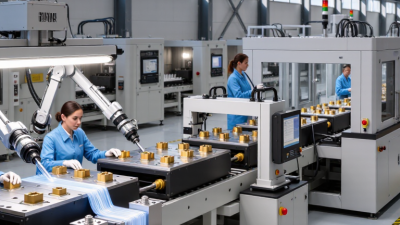
To identify leading insert molding manufacturers in China, look beyond price and production capacity. A capable supplier should explain how inserts are positioned, secured, and checked before molding. Ask how the team controls insert movement, resin temperature, and cycle time. These details affect bond strength and part consistency.

Review evidence from comparable projects, not just polished samples. Request process-flow documents, inspection records, material certificates, and clear criteria for rejecting defective parts. If possible, observe a trial run and inspect parts from different points in the batch. Check whether engineers discuss mold maintenance, design-for-manufacturing changes, and corrective actions with specific examples. A large factory is not automatically the right fit. Even a well-organized supplier can overlook a small tolerance issue, so define critical dimensions together before tooling begins.

Tips: Send a drawing with insert locations, tolerances, expected volumes, and service conditions. Ask who owns tooling maintenance and how changes are recorded. Confirm that sample approval matches the planned production process. If answers stay vague, pause and ask again.

Profiles of Notable Chinese Insert Molding Manufacturers

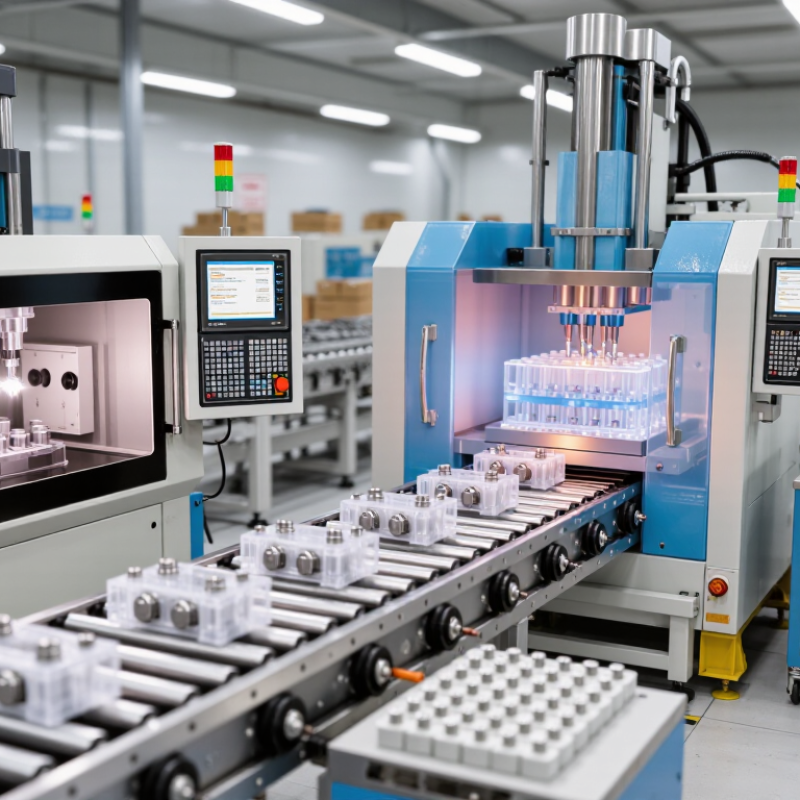
Chinese insert-molding manufacturers often stand out through different strengths rather than one standard model. A precision-focused supplier may combine mold design, metal insert preparation, and plastic injection under one roof. Engineers can check insert position with fixtures before each production run. That matters when a small shift affects fit or electrical contact. Some facilities also use automated feeding for repeatable placement. Still, automation alone does not prove stable quality.

Another profile is the regional supplier serving appliance, automotive, or electronics customers with flexible production lines. These manufacturers may handle several part sizes and materials, then adjust tooling for changing orders. Buyers should review sample parts, inspection records, and the supplier’s experience with the required resin and insert material. Ask how it controls temperature, insert movement, and flash around metal edges. Details count. A factory tour can reveal clean work areas and clear process checks, but one visit cannot show long-term consistency. Supplier profiles should be verified against real production evidence, not polished claims. That is easy to overlook.

How Their Capabilities, Certifications, and Industries Compare

China’s leading insert molding suppliers differ less by machine count than by process control. Some focus on fine-pitch electronics, embedding metal contacts in small plastic housings. Others handle automotive connectors, sensor parts, or higher-volume assemblies. The International Federation of Robotics reported 276,288 industrial robots installed in China in 2023, about 51% of global installations. Automation is widespread, but it does not guarantee stable insert positioning or consistent bond strength.

Certifications help distinguish suppliers, but their scope matters. Automotive programs may require IATF 16949, while medical-device projects often need ISO 13485; ISO 9001 supports broader quality management. The China Association of Automobile Manufacturers recorded 30.16 million vehicle sales in 2023, highlighting strong automotive demand. That figure describes the vehicle market, not insert molding output. A capable supplier should also provide material traceability, dimensional inspection records, and documented process trials. A certificate alone proves little.

Tips: Ask for a sample part made with your actual insert, resin, and tolerances. Check the certificate’s issuing body, site address, and expiry date. Request defect data from a recent production run. One point is easy to miss: a supplier may excel at high-volume automotive work yet struggle with delicate, low-volume electronics. Compare the production conditions you need, not just the equipment list.

Who Are the Top Insert Molding Manufacturers in China? - How Their Capabilities, Certifications, and Industries Compare

This comparison outlines the capabilities and evidence buyers should assess when evaluating China-based insert molding manufacturers. Certification requirements and production capabilities vary by company, site, and product; verify them directly with each supplier.

Capability Area What to Compare Evidence to Request Relevant Standards or Certifications Common Industries
Insert loading and positioning Manual, semi-automatic, or automated loading; insert orientation control; poka-yoke and detection methods. Process flow, fixture details, loading error controls, and sample inspection records. ISO 9001 may support quality-system evaluation; it does not certify a specific molding process. Automotive, electronics, appliances, industrial equipment.
Metal-to-plastic bonding Insert design support, resin compatibility, insert preparation, and control of movement or leakage during molding. Bond-strength or pull-out test results, dimensional reports, and validation data for the proposed material combination. No single certification guarantees bond performance; confirm product-specific test methods and acceptance criteria. Connectors, sensors, fasteners, pumps, and electrical assemblies.
Engineering plastics and material control Experience with the resin specified by the design, resin drying and handling, traceability, and controlled material changes. Material data sheets, lot traceability, drying records where applicable, and change-control procedures. UL recognition applies to specific materials or components where listed; verify the exact file and intended use. Electrical and electronic products, automotive components, and industrial products.
Tooling and process development Mold design for insert retention, venting, repeatability, maintenance, and efficient production; in-house or managed tooling support. Mold-flow or design reviews where applicable, tool-maintenance plans, trial reports, and process validation records. ISO 9001 can provide evidence of a quality-management system, but not a guarantee of tooling performance. Most sectors using molded parts with embedded metal or other components.
Automotive quality and production controls Documented process control, traceability, change management, nonconformance handling, and customer-specific requirements. Certificate scope and site details, control plans, measurement-system records, and relevant production-part approval documentation. IATF 16949 is an automotive quality-management standard; check certificate validity, scope, and manufacturing location. Automotive sensors, connectors, switches, and component assemblies.
Medical-device quality controls Document control, risk-based processes, traceability, cleanliness controls, and capability to meet the device maker’s requirements. Certificate scope, site audit evidence, validated processes where required, and product-specific quality records. ISO 13485 is a quality-management standard for medical devices; it does not by itself approve a product for market. Medical-device housings, instrument components, and other molded parts, subject to product and regulatory requirements.
Environmental management Management of environmental impacts, operational controls, and applicable legal obligations at the certified site. Current certificate, issuing body, covered site, and confirmation that the scope includes relevant operations. ISO 14001 covers environmental management systems; it is not a product-quality certification. Relevant across automotive, electronics, appliances, medical, and industrial supply chains.
Inspection and measurement Inspection methods suited to critical dimensions and insert position; calibrated equipment and documented acceptance criteria. Inspection plans, calibration records, sample measurement reports, and agreed first-article or control-plan documentation. The appropriate evidence depends on the drawing, customer specifications, and application risk. All industries requiring dimensional or functional verification.

How to Choose a Manufacturer for Your Insert Molding Project

Choosing a Chinese insert molding manufacturer starts with the part, not the price quote. Send a clear drawing, resin grade, insert material, tolerances, and expected annual volume. Ask how the supplier controls insert position, mold temperature, and resin flow. These details affect bond strength and dimensional consistency. MarketsandMarkets’ 2023 report valued the global injection molding market at USD 17.7 billion and projected USD 20.7 billion by 2028. Growth is useful context, but it does not prove that a factory can make your specific part.

Review evidence from comparable projects. Request sample parts, inspection records, and a description of how defects are contained. For metal inserts, check whether operators use locating features or fixtures to prevent movement during injection. Ask who owns the mold, how maintenance is recorded, and what happens when a trial run misses tolerance. A polished brochure is not proof. I have seen supplier comparisons overlook communication speed; that can become a real problem when a tool needs adjustment.

Tips: Send a physical insert and a short production brief before requesting a final quote. Confirm whether the quoted price includes tooling trials, inspection, and packaging. Ask for a small pilot run before full production. Measure the parts yourself, too.

Warning!

You are using an outdated browser. Things may not appear as intended. We recommend updating your browser to the latest version.

Close