2026 Best CNC Machining USA Companies for Global Buyers
Global buyers comparing CNC machining USA companies need more than a polished website or a low quote. They need evidence that a supplier can hold tolerances, communicate clearly, and deliver repeatable parts. A machined aluminum housing may look simple in a photograph. Its critical bore, surface finish, and inspection plan tell a more useful story. Details matter.
Taiichi Ohno, the manufacturing engineer associated with the Toyota Production System, is often credited with saying, “Where there is no standard, there can be no kaizen.” The principle applies to CNC sourcing: documented processes make quality easier to check and improve. Buyers should ask about inspection methods, material traceability, engineering support, and how suppliers handle design changes. A certificate alone is not the whole picture. And even a strong supplier can miss a detail if the drawing or requirements are unclear.
This guide examines U.S. machining companies through practical questions, not unsupported rankings. It considers capabilities, communication, quality systems, lead times, and support for international projects. It also recognizes a limitation: no single shop is the best fit for every part, budget, or production volume. A prototype with a tight tolerance may call for a different partner than a recurring production run. Use the comparisons as a starting point, then verify current capabilities and request a quote based on your actual drawings and requirements.
What CNC Machining Services U.S. Companies Provide
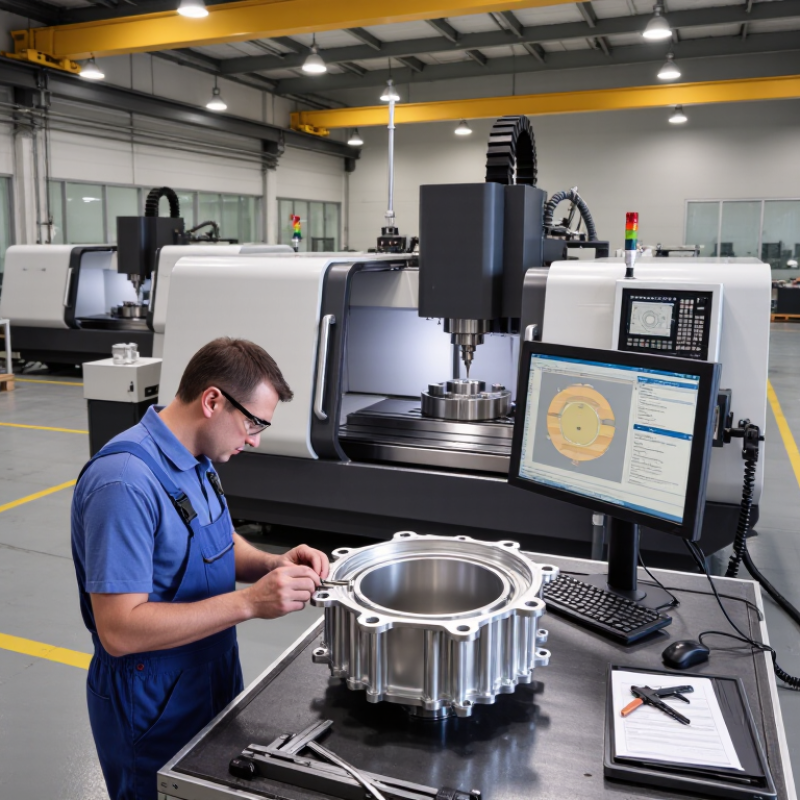
U.S. CNC machining companies commonly provide milling, turning, drilling, and precision finishing for custom parts. A milled aluminum housing may need flat mounting faces, tapped holes, and a smooth sealing surface. Turning is suited to cylindrical components such as shafts, pins, and threaded fittings. Some shops also offer multi-axis machining, which can reduce repositioning and keep related features aligned.
Services often begin with a design review. Engineers may flag thin walls, tight internal corners, or tolerances that add cost without improving function. They can suggest adjustments before cutting begins. Not every supplier offers the same support, though. Ask whether the quote includes material sourcing, programming, setup, and inspection.
Prototype and production orders are both common. A shop may machine one test part, then refine the process for a larger batch. Inspection can include calipers, micrometers, or coordinate measuring equipment, depending on the part’s requirements. Surface treatments, such as anodizing or passivation, may be available through in-house or outside processes. Confirm lead times and inspection records directly. A quote can look complete and still hide an assumption. Clear drawings help, but buyers should also explain how the part will be used.
How U.S. CNC Machining Companies Are Evaluated in 2026
Evaluating a U.S. CNC machining company in 2026 means checking more than its advertised tolerances. Ask for inspection plans, sample reports, and evidence that measuring equipment is calibrated. For a precision shaft, that could mean reviewing diameter readings, surface-finish results, and how out-of-tolerance parts are handled. Useful proof beats a polished capability sheet. No checklist is perfect.
Capacity and workforce matter, too. The U.S. Bureau of Labor Statistics projects a 2% decline in machinist and tool-and-die-maker employment from 2023 to 2033, while still estimating about 34,200 openings each year. That makes staffing, operator training, and backup coverage worth discussing—not assuming. A 2024 workforce study by The Manufacturing Institute and Deloitte estimates that U.S. manufacturing may need 3.8 million workers by 2033, with 1.9 million jobs potentially unfilled. These figures describe broad industry pressure, not any one shop’s performance.
Buyers should compare real production evidence: quoted lead time against recent delivery records, material traceability, first-article inspection, and how engineering changes are documented. Ask who checks a revised drawing before a machine setup changes. Also clarify whether inspection data accompanies each shipment. Price still matters. But a low quote can hide setup assumptions or inspection limits. A small pilot order may reveal gaps that a supplier presentation does not.
2026 Best CNC Machining USA Companies for Global Buyers
How U.S. CNC Machining Companies Are Evaluated in 2026
Suggested evaluation weights for comparing suppliers—not survey results or ratings of specific companies. Buyers commonly assess quality systems, technical capability, material and process expertise, delivery performance, traceability, and communication. Requirements vary by part and industry; certifications such as ISO 9001, AS9100, or ISO 13485 may be relevant depending on the application.
Leading U.S. CNC Machining Companies for Global Buyers
Leading U.S. CNC Machining Companies for Global Buyers
Choosing a U.S. CNC machining partner takes more than comparing hourly rates. Global buyers should check whether a shop can handle the required material, part size, tolerance, and production volume. Ask for sample inspection reports and clear details about machine capacity. A precise drawing helps, but a short conversation about how the part will be used can reveal practical design changes. Small details matter.
Tips: Request a first-article inspection before approving a larger run. Confirm packaging, shipping terms, and who handles export documents. Share your preferred units and measurement standards early; assumptions can cause avoidable delays.
Strong suppliers explain their process, flag design risks, and provide realistic lead times instead of promising everything. Look for documented quality procedures, traceable material records when needed, and a direct contact for technical questions. Video calls can help clarify setup or surface-finish expectations, especially when teams work across time zones. Still, no supplier is a perfect fit for every project. Compare a few qualified shops, review their communication during quoting, and weigh total delivered cost alongside machining price.
Comparing Capabilities, Certifications, and Lead Times
2026 Best CNC Machining USA Companies for Global Buyers
When comparing U.S. CNC machining suppliers, look beyond machine counts. Ask whether their mills and lathes match your part’s material, tolerance, and annual volume. A shop cutting aluminum housings may not be the right fit for tight-tolerance stainless components. Request sample inspection reports, and confirm how dimensions are measured.
Tips: Check certification scope, not just the certificate. Ask for its current expiration date and whether it covers the facility producing your parts. Ask for evidence. A clear quality plan should identify inspection stages, measurement tools, and how nonconforming parts are handled.
Lead times need the same scrutiny. Separate machining time from material procurement, first-article approval, finishing, and international shipping. Request a schedule with milestones, plus the assumptions behind the quoted delivery date. Dates can move. Material shortages or design changes may affect even a well-run schedule. Compare the supplier’s stated capacity with your likely repeat orders, and ask how urgent changes are managed. Certification offers useful evidence, but it cannot guarantee a smooth project; communication and process fit matter too.
How Global Buyers Select and Work With a U.S. Machining Partner
2026 Best CNC Machining USA Companies for Global Buyers
How Global Buyers Select and Work With a U.S. Machining Partner
For global buyers, a capable machining partner is more than a shop with modern equipment. Confirm its experience with your material, tolerances, production volume, and inspection requirements. Ask for a sample inspection report, material traceability records, and a clear explanation of how engineering changes are controlled. Small details matter: a mismatched drawing revision can turn a precise part into unusable inventory.
Capacity deserves careful checking. The 2024 study by Deloitte and The Manufacturing Institute projects that U.S. manufacturing may need 3.8 million workers by 2033, with 1.9 million positions potentially unfilled. That forecast does not prove a supplier will miss a deadline, but it makes staffing and backup capacity sensible questions. Ask who covers a critical machine if an operator is unavailable. Get lead times in writing, including time for first-article approval and shipping.
Digital records can help buyers track quality and production, but software alone is not proof of control. Deloitte’s 2024 smart manufacturing survey found that 86% of manufacturing executives viewed smart manufacturing as a competitiveness driver within five years. Request evidence that matters to your part: inspection data linked to the drawing revision, documented nonconformance handling, and realistic delivery updates. A polished dashboard is useful. It is not the same as a good part. And buyers should admit one awkward truth: the lowest quote can hide assumptions nobody discussed.