Choosing a sheet metal stamping manufacturer is not just a price comparison. A reliable supplier must turn drawings into repeatable parts, hold tolerances, and communicate clearly when a design needs adjustment. One press run may produce thousands of brackets, yet a small tooling issue can affect every piece. Buyers should look beyond polished capability lists.
Metal-forming researcher Dr. Taylan Altan’s work emphasizes a practical principle: tooling and process decisions strongly shape part quality and production cost. This is a paraphrase of his published research, not a direct quotation. It matters when comparing manufacturers. Ask how each supplier reviews material thickness, forming sequence, die design, and inspection requirements. Request examples relevant to your part, not only broad claims about capacity.
Details count. A clean sample on a desk is useful, but consistency across a production run matters more. Check how suppliers track dimensions, manage tooling maintenance, and report changes. Also ask who owns the next step when a sample fails. That answer can reveal more than a brochure. No checklist guarantees a perfect fit; I would still verify claims and test samples. The seven manufacturers in this guide are assessed through buyer-focused criteria, including capabilities, quality practices, communication, and suitability for global projects.
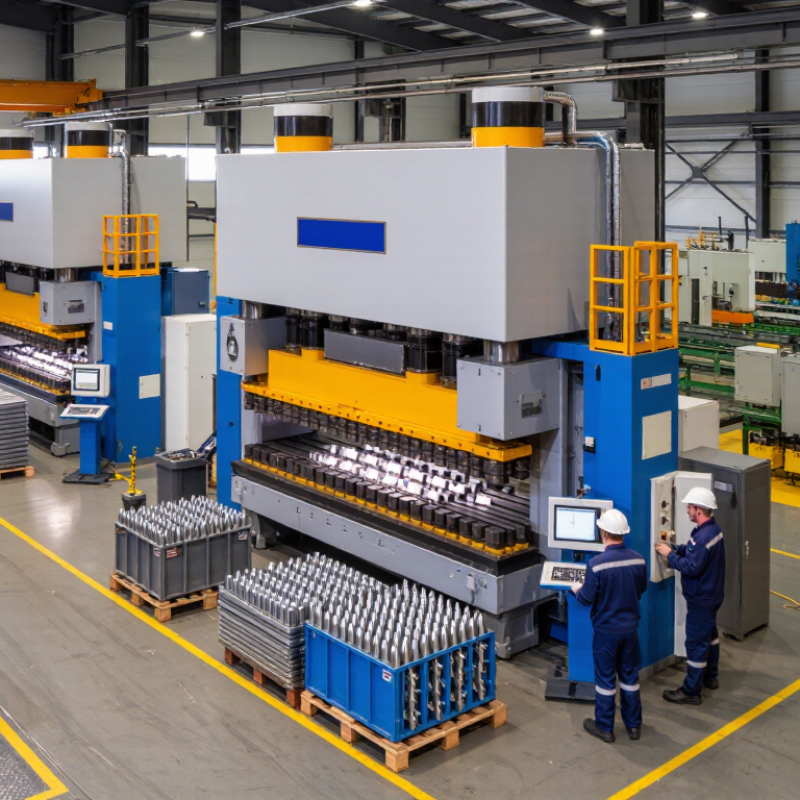
Sheet metal stamping turns flat metal into precise, repeatable components using dies and presses. Common materials include steel, aluminum, and copper alloys. A press applies force to a sheet held between matched tools, shaping or cutting it into a part. The method suits items such as brackets, enclosures, and clips. Small details matter.
The process usually begins with a drawing that defines dimensions, material, and tolerances. Engineers then design a die and choose a suitable press. The sheet is fed into the tooling, where operations may include blanking, piercing, bending, or drawing. Some parts need several operations in sequence. After forming, technicians inspect dimensions and edges, checking for burrs, cracks, or distortion. A sample run can reveal problems that a drawing alone may not show. Even experienced teams can miss a springback issue.
Tips: Share expected production volume, material grade, and critical dimensions early. Ask how sample parts are measured and how tool wear is monitored. Inspect a first article under realistic conditions, not just on screen. A slightly loose tolerance may reduce cost, but only if the part still fits and performs as intended.

Comparing sheet metal stamping manufacturers starts with the part, not the price. Share the drawing, material grade, thickness, annual volume, and critical dimensions. A supplier should explain how its press capacity and tooling plan fit those requirements. Ask whether it can handle progressive dies, deep draws, or secondary operations such as tapping and deburring. Not every shop excels at every process.
Look closely at quality controls. Useful evidence includes first-article inspection, calibrated gauges, documented in-process checks, and clear handling of nonconforming parts. Ask how the team measures a feature with a tight tolerance, not just whether it can meet one. Details matter. Surface finish, burr direction, flatness, and packaging can affect assembly, even when the stamped profile looks correct. Request sample parts or inspection records before committing to production.
Capacity and communication deserve equal attention. Confirm realistic lead times for tooling, samples, and repeat orders, then ask how schedule changes are reported. A low quote may exclude die maintenance or finishing; that is easy to miss. I would also compare how clearly each manufacturer discusses design risks, including springback or material variation. Their first answer may not be perfect. A thoughtful revision, backed by measurements and practical experience, can be more useful than a confident promise.
Approximate densities help illustrate the range of materials a stamping supplier may need to handle. When comparing manufacturers, also confirm their experience with your specific alloys, thicknesses, tolerances, and production volumes. Values are typical reference figures and can vary by grade and composition.
To compare sheet metal stamping manufacturers for global buyers, the selection looked beyond polished product photos. Each candidate was assessed for practical capabilities: material range, stamping capacity, tooling support, and experience producing repeatable parts. These details matter when a small bracket must match a drawing across thousands of units. Clear process information also helps buyers judge whether a supplier can handle prototypes and later production.
Quality evidence was another key factor. The review considered whether manufacturers described inspection methods, dimensional checks, and traceability for materials and batches. Communication mattered, too. Buyers need timely answers about tolerances, packaging, lead times, and design changes, especially when teams work across time zones. Export experience and the ability to prepare consistent shipping documentation were useful indicators, but they were not treated as guarantees of smooth delivery.
Not every public profile provides equal detail. That is a limitation. A manufacturer may have strong capabilities that are difficult to verify online, while a polished website cannot prove consistent performance. The shortlist therefore favors information that can be checked and questions buyers can confirm directly, such as sample inspection reports, tooling ownership terms, and capacity during peak periods. Ask for specifics. A brief video of a production line can help, but it should not replace a documented quality review.
For global buyers, the seven strongest sheet metal stamping manufacturers are best identified by capability, not advertising: a high-volume automotive supplier, a precision electronics specialist, an appliance-parts producer, a deep-draw forming shop, a progressive-die expert, a prototype-to-production partner, and a multi-process supplier offering stamping with finishing and assembly. These are supplier profiles, not a fixed ranking. The right choice depends on part geometry, order volume, tolerances, and delivery region.
The scale is significant. Grand View Research estimated the global metal stamping market at about US$218.7 billion in 2023, with projected growth through 2030. Buyers should still verify each supplier’s fit directly. Request sample parts, tool-life assumptions, inspection records, and capacity data for the intended material and thickness. Ask how the factory handles burrs, springback, and changes between trial and production runs. Small details matter. A polished brochure cannot show whether a stamped edge will meet your assembly needs. Supplier audits and a controlled pilot order help expose gaps, though audits alone are not enough. Compare quoted lead times with actual production schedules, and check who owns and maintains the tooling.
Choosing a sheet metal stamping supplier requires more than comparing quoted prices. Ask for evidence of process control, including material certificates, inspection records, and sample-part measurements. A capable supplier should explain how dies are maintained and how critical dimensions are checked during production. Request a first-article inspection report for your actual drawing, not just a generic quality presentation. Small details matter. A burr on a mounting edge or a hole shifted by a fraction of a millimeter can disrupt assembly.
Compare total landed cost, not only the unit price. Tooling, packaging, freight, duties, and expected scrap can change the calculation. Ask whether the quotation assumes a specific steel grade, thickness, finish, and order volume. If these are unclear, the “cheapest” offer may not describe the same part. It happens. For international delivery, confirm production lead time, shipping method, export documents, and how delays are communicated. Ask for recent examples of shipments to your region, while recognizing that past performance cannot guarantee the next order. A small pilot run can reveal packaging weaknesses, transit damage, or communication gaps before a larger commitment. No checklist removes every risk; even experienced buyers sometimes overlook a detail. Keep drawings, revision numbers, and approval records aligned between both teams.
A practical comparison framework for seven common supplier profiles. These are supplier types, not named or ranked companies; capabilities vary by facility and should be verified directly.
| Supplier profile | Typical strengths | Quality checks for buyers | Cost factors to compare | International delivery checks | Best suited for |
|---|---|---|---|---|---|
| 1. High-volume progressive-die specialist | Progressive dies perform multiple operations as strip stock advances through a press; this approach can support repeat production at high volumes. | Review dimensional inspection plans, first-article results, process controls, and die maintenance records. | Compare tooling cost and ownership, press rate, material utilization, setup charges, and annual volume assumptions. | Confirm production capacity, packaging standards, export documentation, and shipping schedule against forecast demand. | Stable, repeat orders with sufficient volume to justify dedicated tooling. |
| 2. Transfer-press forming specialist | Transfer presses move individual blanks between stations and can accommodate parts or forming sequences that are not suited to a continuous strip process. | Check capability studies for critical dimensions, material traceability, tooling validation, and control of forming variation. | Assess press and automation requirements, number of operations, scrap rate, tooling complexity, and inspection needs. | Verify the supplier can protect formed parts in transit and meet agreed production and export lead times. | Larger or more complex formed components requiring staged operations. |
| 3. Precision small-part stamper | Focused production of small components, often with close dimensional requirements and dedicated inspection methods. | Request measurement-system details, calibrated equipment records, capability data for key features, and documented lot inspection results. | Compare tolerances, inspection frequency, material grade, tool life, and minimum order quantities. | Check whether small parts need corrosion protection, moisture control, or count verification for transit and receipt. | Electrical, hardware, and other applications where small-part consistency matters. |
| 4. Multi-process stamping and fabrication supplier | May combine stamping with operations such as bending, welding, or assembly, reducing the number of external process handoffs. | Confirm inspection coverage at each operation, weld or assembly controls where applicable, and traceability between process steps. | Compare the complete part cost, including secondary operations, outside processing, handling, and final inspection. | Establish responsibility for subcontracted steps and require clear packing and shipment records for finished assemblies. | Buyers seeking finished components rather than stamped blanks alone. |
| 5. Prototype and short-run stamping supplier | Often suited to early design builds, sampling, and lower-volume production; may use flexible tooling approaches where appropriate. | Approve samples against drawings, confirm revision control, and distinguish prototype results from production-process validation. | Review sample charges, tooling scope, engineering changes, and the cost impact of transferring to production tooling. | Confirm sample dispatch options, customs paperwork, and a realistic schedule for design changes and re-sampling. | New products, engineering validation, and demand that is not yet predictable. |
| 6. Material- and finish-integrated supplier | Coordinates stamping with material sourcing and, where offered, finishing processes such as plating, painting, or coating. | Verify material certificates, grade and thickness controls, finish specifications, and inspection criteria for corrosion or coating performance. | Compare material surcharges, yield and scrap assumptions, finish costs, minimum batch quantities, and any outside-processing fees. | Check packaging for finished surfaces, documentation for controlled materials, and the effect of finishing lead times on delivery. | Projects where material certification or a specified surface finish is important. |
| 7. Export-oriented contract manufacturer | Organizes production for overseas customers and may provide export packing, shipment coordination, and customer documentation support. | Audit the actual production site, review the quality system and corrective-action process, and validate records using a trial order. | Compare total landed cost, including tooling, inspection, packaging, freight, insurance, duties, and payment terms. | Agree Incoterms, named place, shipping mode, lead-time milestones, customs documents, and contingency plans before ordering. | Buyers managing cross-border sourcing and requiring coordinated export shipments. |
Buyer checklist: Compare suppliers using the same drawing revision, annual volume, material specification, quality requirements, packaging plan, delivery terms, and quoted scope. Request verifiable evidence rather than relying on capability claims alone.
You are using an outdated browser. Things may not appear as intended. We recommend updating your browser to the latest version.
Close