Finding a reliable CNC partner is not just a price comparison. It affects tolerances, delivery dates, inspection records, and the way a part performs after installation. The Reshoring Initiative’s 2023 annual report counted nearly 287,000 U.S. jobs announced through reshoring and foreign direct investment. That figure spans industries, not CNC shops alone, but it reflects growing attention to domestic production. More demand can create opportunity—and tighter capacity.
Workforce matters, too. A 2024 Deloitte and Manufacturing Institute study projected that U.S. manufacturing could need 3.8 million workers by 2033, with 1.9 million positions potentially unfilled. It does not measure CNC supplier capacity specifically. Still, it is a useful reminder to ask who will program, run, and inspect your parts. A fast quote means little if the shop cannot explain its process.
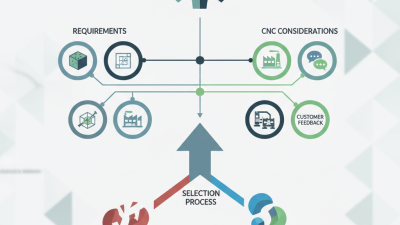
These seven tips for finding cnc machining usa suppliers focus on evidence you can check: material traceability, machine capability, inspection methods, communication, and realistic lead times. Ask for examples of similar work, not just a list of equipment. Confirm how the supplier handles revisions and nonconforming parts. A polished website is not proof. Nor is the lowest bid automatically a warning sign; context matters. Supplier selection involves judgment, and no checklist can remove every risk. The goal is a shop whose capabilities fit your part—and whose answers remain clear when the drawing gets complicated.
Give each supplier a controlled drawing, not a vague sketch. Apply ASME Y14.5-2018 GD&T to show how features relate, using clear datums and position tolerances for holes that must align. Keep tight tolerances only where function requires them. A needlessly tight bore can add inspection and machining time without improving the assembly. Small details matter.
Name the material grade and condition, not just “aluminum” or “steel.” A 6061-T6 plate and a generic aluminum bar may machine differently and arrive with different certifications. State whether the part needs anodizing, heat treatment, or a specific surface finish. If requirements are still being tested, say so; pretending the drawing is final can create costly revisions. A little uncertainty is useful when it is visible.
State expected annual quantity, order frequency, and likely demand changes. A one-off prototype may suit a different process plan than 2,000 parts per year. NIST’s manufacturing overview reports that U.S. manufacturing contributes about $2.3 trillion to GDP and supports 12.8 million jobs, underscoring the scale of the sector. For a supplier comparison, request pricing at several quantities and ask how setup, inspection, and material costs change. Check that the quote matches your drawing revision and stated volume. Then compare lead time and inspection evidence, not just unit price.
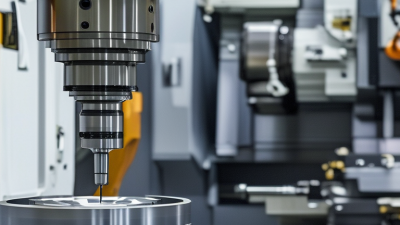
When evaluating CNC machining USA suppliers, compare axis capability with the part’s geometry, not just the machine list. A 3-axis mill moves along X, Y, and Z, making it suitable for flat plates, pockets, and many prismatic parts. A 4-axis machine adds rotation, which can reduce reclamping when features sit around a part’s sides. A 5-axis machine tilts and rotates the workpiece or tool, helping reach angled surfaces and complex contours. Fewer setups can improve alignment, but they do not guarantee lower cost or better quality.
Tips: Ask which features require each axis. Request a sample setup plan. Check achievable tolerances on similar materials. Confirm whether the quote includes fixtures and programming. Ask how many setups the part needs. Compare inspection methods. Request a clear explanation of any recommended 5-axis process.
Share a drawing with critical dimensions marked, then ask suppliers to explain their proposed machining sequence. A simple aluminum bracket may not benefit from five axes; a contoured component with angled holes might. Look for details such as datum selection, probe checks, and inspection reports. Be cautious when a supplier recommends the most advanced process without explaining why. I would also review a first-article report before approving a repeat order. Small oversights happen, even with capable shops.
A basic comparison of the number of programmable axes available on each machine type.
More axes can allow parts to be machined from additional angles with fewer setups. When evaluating suppliers, also compare work envelope, tolerances, materials, and experience with parts like yours.
A supplier’s ±0.001-inch tolerance claim is meaningful only when supported by inspection data. Ask for a sample report tied to the drawing revision, part number, and production lot. Check whether it lists actual measurements, not just “pass” beside each feature. Numbers matter. For a 1.000-inch dimension, the stated limits are 0.999 and 1.001 inches. Confirm the report uses the same datum references and measurement method as your drawing.
Look for the instrument used, its calibration status, and the inspection date. A micrometer may suit a simple shaft diameter, while a coordinate measuring machine can capture hole locations and geometric relationships. Ask how many parts were measured and whether the data represents a first article or ongoing production. One perfect sample is not proof of a stable process; it may simply be the best part in the batch. I have seen reports that look reassuring until the drawing revision does not match. That detail is easy to miss. For recurring orders, ask for recent lot data and a clear plan for handling measurements near tolerance limits. If the supplier cannot explain how a value was obtained, pause before approving the quote.
For CNC buyers, a certificate is a starting point, not proof that every part will meet the print.
Request the current ISO 9001:2015 or AS9100D certificate, then confirm its issuing body and expiration date. Check the scope. It should identify the actual facility and cover relevant work, such as CNC milling, turning, inspection, or contract manufacturing. A certificate covering sales or general assembly may not include the machining cell producing your parts. Look closely. Ask for the scope page, not only a cropped certificate image.
AS9100D is often relevant to aerospace supply chains, while ISO 9001:2015 may suit broader industrial work. Neither certificate guarantees a specific tolerance, surface finish, or delivery date.
Ask how operators manage drawing revisions, calibrate micrometers, and record first-article inspection results. For example, a shop should explain what happens when a bore measures near its upper limit, before parts ship. Ask why. A clear answer matters more than polished paperwork, though records should remain traceable.
One detail is easy to miss: certification applies to a defined scope and site, not every supplier activity. For a higher-risk project, verify the certificate with its issuing body.
When comparing CNC machining USA suppliers, do not rank quotes by part price alone. Ask each shop to quote the same drawing revision, material grade, finish, quantity, and delivery location. Then compare the full cost, including setup, programming, inspection, packaging, and freight. A low unit price can hide a rush fee or separate tooling charge. Get assumptions in writing.
Lead time needs a clear starting point: drawing approval, material availability, or purchase-order receipt. Ten days can mean different things if one supplier counts shop days and another counts calendar days. Confirm whether outside processing and shipping are included. Small details matter. Minimum order quantity also changes the economics. For five aluminum housings, compare the total for five, not only the price at 100. If a shop requires 25 pieces, ask about a smaller pilot lot or staged releases. Define first-article inspection requirements, such as a dimensional report for critical features, material certification, and approval before production. Ask who covers rework if the first article misses tolerance. Comparison tables can overlook that risk. Track total cost, committed ship date, minimum quantity, and inspection scope, then update the figures when assumptions change.
Illustrative comparison for the same assumed order: 100 CNC-machined aluminum parts. Figures are planning examples, not current supplier quotes. Confirm specifications, tolerances, material, delivery terms, and inspection scope directly with each supplier.
| Quote profile | Lead time (business days) |
Minimum order | Unit price (100 pcs) |
Setup / programming | First-article inspection | Estimated shipping | Estimated total | Useful comparison check |
|---|---|---|---|---|---|---|---|---|
| A — Prototype-focused shop | 8–12 | 1 piece | $42.00 | $150 | $250 | $120 | $4,720 | Check whether the schedule includes time for first-article approval. |
| B — General-purpose job shop | 12–18 | 25 pieces | $35.00 | $300 | $400 | $180 | $4,380 | Ask which drawing dimensions are measured and included in the inspection report. |
| C — Production-oriented shop | 20–30 | 100 pieces | $28.00 | $500 | $600 | $250 | $4,150 | Verify that the lower unit price does not depend on a larger required order. |
| D — Expedited-capacity shop | 5–8 | 10 pieces | $48.00 | $200 | $200 | $95 | $5,295 | Confirm that expedited timing is available for the full order, not just the first piece. |
| E — Small-batch specialist | 10–15 | 20 pieces | $32.00 | $350 | $350 | $150 | $4,050 | Ask whether inspection charges are one-time or apply to repeat orders. |
| F — High-inspection quote | 15–22 | 50 pieces | $38.00 | $250 | $750 | $200 | $5,000 | Compare the inspection deliverables, such as a dimensional report or material documentation. |
| G — Repeat-order focused shop | 18–25 | 100 pieces | $30.00 | $100 | $150 | $110 | $3,360 | Check whether setup and first-article costs will recur on future orders. |
| Total calculation: (unit price × 100 parts) + setup/programming + first-article inspection + estimated shipping. Taxes, finishing, special packaging, and revision costs are excluded unless specified. | ||||||||
You are using an outdated browser. Things may not appear as intended. We recommend updating your browser to the latest version.
Close