Why Choose Wedge Anchors for Concrete?
A Wedge Anchor is a familiar choice for fastening steel plates, handrails, and equipment to solid concrete. Its expansion clip grips the drilled hole as the nut is tightened. In practice, that means the hole diameter, drilling depth, edge distance, and installation torque all matter. A slightly oversized hole can weaken the connection. A dusty hole can also affect performance.
For technical context, ACI 355.2 sets qualification and testing requirements for post-installed mechanical anchors, while ACI 318 addresses their design in concrete structures. Product-specific ICC-ES evaluation reports can provide tested capacities and installation limits. These are more useful than a single broad market statistic: anchor performance changes with concrete strength, embedment, spacing, and loading. Check the report for the exact anchor and conditions, not just a similar-looking product. Real sites are rarely perfect.
A properly selected Wedge Anchor offers a direct, durable connection, but it is not automatically the right answer for cracked concrete, thin slabs, or every load condition. No source article or verified expert quotation was provided here, so I have not invented a statistic or attributed a quote to a named specialist. That matters. A named quotation should be checked against its original publication before use. The practical lesson is simple: match the anchor to the design, then install it to the manufacturer’s instructions.
How Wedge Anchors Secure Objects in Concrete
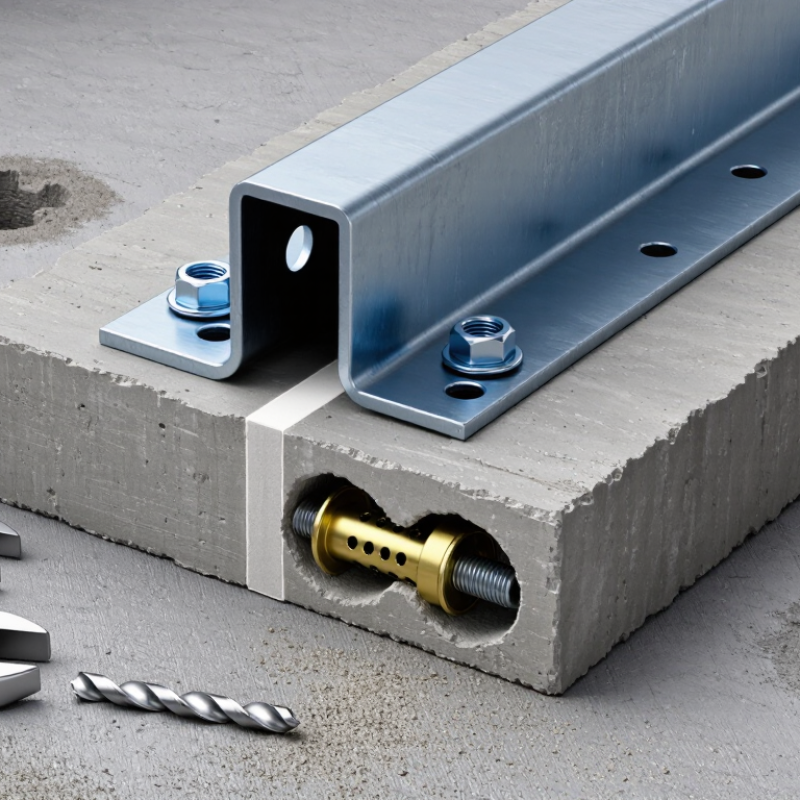
A wedge anchor secures an object by expanding inside a drilled concrete hole. Tightening the nut pulls the anchor’s tapered end into an expansion clip. The clip presses outward against the hole wall, creating a mechanical hold. The fixture sits firm. But only when installation is right.
The load path runs from the attached plate, through the nut and anchor, into the surrounding concrete. ACI 355.2-22 qualification testing evaluates mechanical anchors under tension and shear, including conditions involving cracked concrete. ICC-ES AC193 likewise sets performance tests for mechanical anchors in concrete. These evaluations measure load capacity and installation sensitivity; they do not provide one safe load for every job. Concrete strength, embedment depth, hole cleanliness, edge distance, and anchor spacing all matter. A dusty hole can reduce contact. A hole too close to an edge can raise the risk of concrete failure. Check the anchor’s evaluation data and installation instructions, then match them to the actual concrete and load. Even a solid-looking installation deserves a second look.
Concrete Conditions That Suit Wedge Anchors
Wedge anchors suit solid, sound concrete where a mechanical expansion connection is needed. As the nut tightens, the anchor’s clip presses against the sides of its drilled hole. This works best when the concrete can resist that outward pressure. Not every slab qualifies. Weak, crumbling, or badly spalled areas can compromise the hold.
Check the concrete thickness, edge distance, and spacing before drilling. A hole too close to a slab edge may cause cracking or breakout, especially under heavy loads. For cracked concrete, overhead work, or significant vibration, use an anchor specifically approved for those conditions and follow its design requirements. Wedge anchors are generally intended for solid concrete, not brick, block, or thin toppings over another material.
Installation quality matters. Drill to the specified diameter and embedment depth, then clean the hole as directed; dust can interfere with proper seating. Tighten the nut to the specified torque rather than guessing with a long wrench. On a real job, edges may be chipped and slab thickness uncertain. Pause and verify those details instead of assuming the drawing matches the concrete.
Key Strengths of Wedge Anchors for Structural Fixings
Wedge anchors are useful when a structural fixing needs a firm hold in solid concrete. Tightening the nut pulls the anchor upward, forcing its expansion clip against the drilled hole. The result is a mechanical grip that can suit base plates, handrails, and equipment supports. Installation is straightforward, but precision matters: hole diameter, embedment depth, edge distance, and tightening torque all affect performance.
Concrete strength varies. The National Ready Mixed Concrete Association’s CIP 35, Concrete Tests, describes specified strengths ranging from about 2,500 psi in some residential work to 4,000 psi or higher in commercial construction. That range is not an anchor capacity rating.
The International Code Council Evaluation Service’s AC193 acceptance criteria assess mechanical anchors through testing for conditions including tension, shear, and cracked concrete. Check the anchor’s approved data for the actual load, concrete condition, and installation requirements. Dust left in a hole can undermine a careful installation. I would not assume that a larger anchor automatically means a safer fixing; the supporting concrete and edge distances matter just as much.
Installation Steps for Reliable Anchor Performance
Why Choose Wedge Anchors for Concrete?
Installation Steps for Reliable Anchor Performance
Wedge anchors can provide a strong mechanical hold in sound, solid concrete when selected and installed correctly. Start by checking the fixture’s load needs, concrete thickness, and anchor specifications. Confirm the required diameter, embedment depth, and edge spacing. A suitable anchor cannot compensate for weak or damaged concrete. If the slab is cracked, use an anchor specifically rated for that condition.
Mark each hole carefully. Drill perpendicular to the surface with the specified carbide bit, keeping the hole deep enough for the anchor and drilling dust. Clean it using the method recommended for the anchor; dust left inside can interfere with seating. Small details matter. Insert the anchor through the fixture, then tap it gently until the washer and nut sit in place. Tighten to the specified torque with a calibrated wrench, rather than guessing by feel. Too much force can damage the connection. Check that the fixture sits flat and does not shift. It is tempting to rush cleanup, but that step deserves a second look. If the anchor spins, the hole is oversized, or the concrete chips, stop and reassess instead of forcing the installation.
Why Choose Wedge Anchors for Concrete?
Matching the drill-bit diameter to the nominal anchor diameter is a key step when installing standard wedge anchors.
The chart shows common anchor sizes in millimeters. Drill the hole to the specified depth, remove concrete dust, insert the anchor, and tighten it to the manufacturer’s specified torque. Always check the product instructions and concrete requirements.
When to Choose Wedge Anchors Over Other Fasteners
Wedge anchors are a strong choice when a fixture must be secured directly to sound, solid concrete. Their expansion clip presses against the sides of a drilled hole as the nut is tightened, creating a firm mechanical hold. Think guardrails, steel base plates, or equipment feet that need dependable resistance to pullout and movement.
Choose them over concrete screws when the connection needs a robust, permanent fixing and the concrete provides enough thickness and edge distance. They can also suit heavier loads better than many light-duty fasteners, provided the anchor’s published capacity matches the job. Good concrete matters. In cracked concrete, near an edge, or where vibration is expected, check the anchor’s rating and the design requirements rather than guessing from its diameter.
Wedge anchors are less forgiving than removable screws. The hole must match the specified diameter and depth, and dust should be cleared before installation; otherwise, the anchor may not seat properly. A torque wrench helps avoid under- or overtightening. Not every time. For hollow block, thin slabs, or installations that may need frequent removal, another fastener may be more practical. I’ve seen a small layout error make an otherwise solid anchor unsuitable, so measure spacing and embedment before drilling.