What Is Low Melt Polyester Staple Fiber?

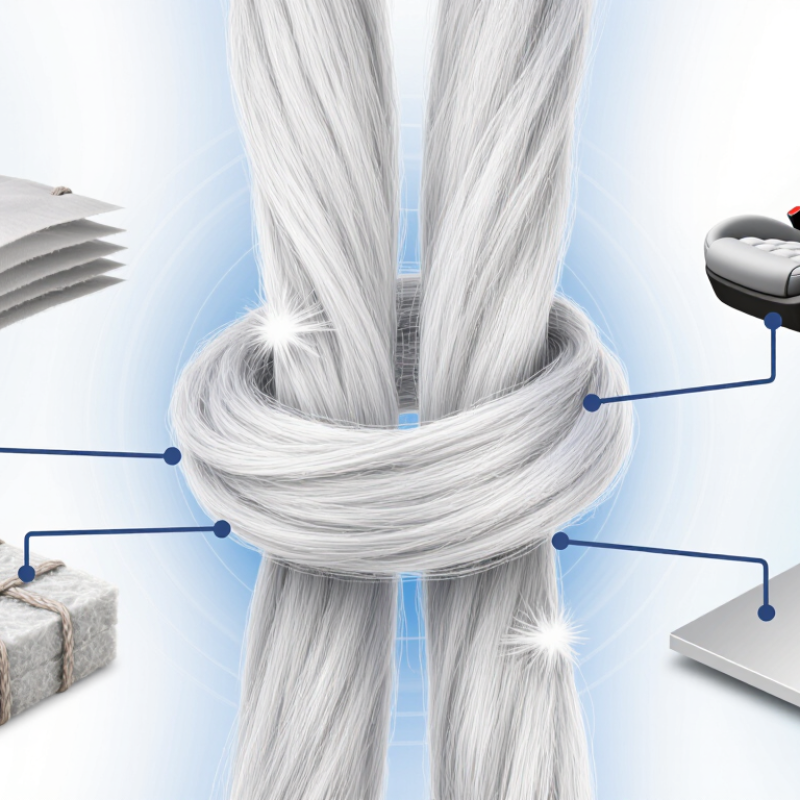
Low Melt Polyester Staple Fiber is a thermoplastic fiber designed to soften at a controlled, relatively low temperature. Unlike standard polyester fiber, it can bond with other fibers during heating. This bonding creates shape, strength, and structural stability without adding liquid adhesives.

Manufacturers commonly blend it into nonwoven fabrics, automotive interiors, filtration materials, mattresses, insulation, and molded products. In production, the fiber is opened, mixed, formed, and heated. Its low-melt component softens and connects surrounding fibers. The result can feel firm, resilient, or lightly molded, depending on the blend and process conditions.

Not all grades perform the same way. Melt temperature, fiber length, denier, crimp, and bonding time affect the final result. A supplier’s technical sheet should guide process settings. Small temperature changes may influence shrinkage, surface texture, and bonding strength. Practical testing remains essential.

It looks simple.

Yet fiber selection can be surprisingly technical. A product may require softness, recovery, flame resistance, or dimensional stability. One grade rarely solves every requirement. Environmental conditions also matter, especially during storage and thermal processing. Reliable evaluation should include laboratory tests, pilot production, and application-specific inspection.

This guide explains what Low Melt Polyester Staple Fiber is, how it works, and where it is used. It also examines key specifications, processing considerations, advantages, and limitations. Some claims depend on the manufacturer and end-use design. That uncertainty should be acknowledged, not hidden.
What Is Low Melt Polyester Staple Fiber?

Definition and Core Characteristics of Low Melt Polyester Staple Fiber

What Is Low Melt Polyester Staple Fiber?

Definition and Core Characteristics of Low Melt Polyester Staple Fiber

Low melt polyester staple fiber is a cut polyester fiber designed to soften below conventional polyester processing temperatures. Heat activates its surface, allowing nearby fibers to bond without fully melting the entire structure. Manufacturers produce it as modified polyester or as a sheath-core fiber with a lower-melting outer layer. The exact softening range varies by polymer design, denier, and test method.

Its main characteristics include controlled thermal bonding, consistent staple length, crimp, and relatively low moisture absorption. These features support nonwoven fabrics, automotive interiors, filtration media, mattress components, and thermal insulation. During production, a hot-air oven or heated calendar can fuse the fiber into a stable web. Bonding conditions require control. Excessive heat may flatten the crimp, shrink the web, or reduce softness.

In practical evaluations, I would check melting behavior with differential scanning calorimetry and confirm bonding through tensile testing. Fiber fineness also matters. Finer fibers can create a smoother surface, while coarser fibers may improve loft and handling strength. The term “low melt” is not fully standardized across every supplier. That detail is easy to overlook. Therefore, technical data should include softening temperature, recommended processing temperature, shrinkage, and compatibility with other fibers. Polyester also resists moisture well, but it is not automatically sustainable. Recycling depends on fiber blends, additives, and the recovery process.

Raw Materials and Manufacturing Process

What Is Low Melt Polyester Staple Fiber?

Low melt polyester staple fiber is a short synthetic fiber that softens at a lower temperature than standard polyester. It can bond with other fibers during controlled heating, without requiring traditional chemical adhesives. Manufacturers commonly use it in nonwoven fabrics, filtration layers, insulation, automotive interiors, and molded textile products.

Raw materials usually begin with purified terephthalic acid and ethylene glycol. Selected copolymer components then adjust the polymer’s melting range, softness, and bonding behavior. Some products use a sheath-core structure. The outer sheath melts first, while the polyester core maintains strength. Small formulation changes matter. A slight imbalance can affect fiber color, tenacity, or thermal stability.

Manufacturing starts with esterification or transesterification, followed by polycondensation under controlled temperature and vacuum. The resulting polymer is filtered and extruded through fine spinneret holes. Fresh filaments are cooled, stretched, crimped, and cut into specified staple lengths. Heat treatment helps stabilize the crimp and reduce shrinkage. Quality checks normally include denier, cut length, melting point, moisture, tensile strength, and bonding performance. Production is not perfectly forgiving. Excessive heat may cause premature fusion, while insufficient drawing can produce weak fibers. Even experienced technicians must review process data, because the best settings can shift with raw material purity and seasonal humidity.

What Is Low Melt Polyester Staple Fiber?

Low melt polyester staple fiber is commonly produced from PET-based polyester and a lower-melting copolyester component. The chart shows typical temperature windows used during key raw-material preparation and fiber-manufacturing stages.

Typical industrial ranges: PET drying generally occurs around 120–170°C, melt spinning around 260–290°C, drawing around 80–120°C, heat setting around 100–180°C, and thermal bonding around 110–180°C. Actual conditions vary according to polymer composition, fiber denier, equipment, and end-use requirements.

Melting Behavior and Performance Properties

Low melt polyester staple fiber is designed to soften or melt below the temperature of standard polyester fiber. Many grades use a lower-melting sheath around a stronger polyester core. During heating, the sheath flows and bonds neighboring fibers. The core helps the structure retain shape and strength. Melting behavior depends on polymer design, fiber fineness, moisture, and heating time.

A controlled temperature profile is essential. The fiber should soften evenly without damaging the core or nearby materials. In production, bonding temperatures commonly fall within a defined processing window. Exact values must come from testing, not assumptions. Differential scanning calorimetry can identify the softening and melting range. A hot-air oven or thermal bonding line then verifies real performance. Heating too quickly may create weak spots. Heating too slowly can reduce productivity.

After bonding, performance is judged through tensile strength, compression recovery, thickness retention, and dimensional stability. The final web should feel firm, but not brittle. It should resist separation when pulled by hand. Humidity and repeated loading can change results. A neat laboratory result can mislead. I would not treat one test as final evidence. Production trials should examine fiber distribution, bond uniformity, and shrinkage after cooling. Small differences in dwell time may alter stiffness noticeably. Careful sampling remains important.

What Is Low Melt Polyester Staple Fiber? - Melting Behavior and Performance Properties

Property or Dimension Typical Value or Description Technical Significance
Basic Definition A polyester staple fiber designed to soften or melt at a lower temperature than standard polyester fiber. It is commonly used as a thermally activatable binder fiber for bonding nonwovens, insulation, padding, filtration media, and molded fiber products.
Common Fiber Structure Often bicomponent, with a lower-melting polyester sheath surrounding a higher-melting polyester core. The sheath flows during heating and bonds adjacent fibers, while the core helps retain dimensional stability and mechanical integrity.
Low-Melting Component Approximately 110–180°C, depending on polymer chemistry and product design. The activation temperature must be selected according to the end-use substrate, production equipment, and required bonding strength.
Standard Polyester Reference Polyester made from polyethylene terephthalate generally melts at approximately 250–260°C. The lower activation temperature of low-melt polyester can reduce thermal damage to heat-sensitive fibers and substrates.
Softening Behavior The low-melting component softens first, becomes viscous, and forms bonding points before the core melts. Controlled softening allows thermal bonding without fully liquefying the entire fiber structure.
Recommended Processing Window Typically set above the sheath activation temperature and below the melting temperature of the structural component. Actual settings depend on dwell time, airflow, web thickness, fiber blend, oven type, and bonding requirements. A temperature trial is recommended for each formulation.
Fiber Length Common commercial staple lengths include approximately 3–15 mm, with longer lengths also available for selected applications. Shorter fibers can improve blend uniformity, while longer fibers may contribute to web integrity and reinforcement.
Linear Density Often approximately 1.5–15 dtex, depending on the intended application. Finer fibers generally provide a softer hand and larger bonding surface area; coarser fibers can improve bulk and processing stability.
Bonding Mechanism Thermal fusion at fiber intersections, usually through the softened outer component. Bonding can be achieved in ovens, through hot air, or by other controlled thermal processes without adding a liquid adhesive.
Bonding Strength Application-dependent; affected by fiber percentage, temperature, pressure, residence time, and cooling conditions. Higher binder content and stronger thermal activation can increase bonding, but excessive heat may reduce loft, flexibility, or breathability.
Thermal Stability The structural component remains stable above the activation range of the low-melting component. This supports shape retention after cooling and helps the bonded assembly withstand normal service temperatures.
Shrinkage Varies by polymer type, draw ratio, heat history, and processing conditions; it should be measured under the intended test method. Heat-setting and controlled processing can reduce unwanted dimensional change in the finished product.
Moisture Absorption Low moisture regain, typical of polyester fibers. Low moisture absorption supports dimensional stability and relatively consistent performance in humid environments, although surface contamination and finishing treatments still matter.
Chemical Resistance Generally resistant to many weak acids and common solvents, but vulnerable to strong alkalis and certain aggressive chemicals. Chemical compatibility should be confirmed for applications involving alkaline washing, solvents, coatings, or chemical finishing.
Handle and Flexibility Can produce soft, resilient, and flexible bonded structures when the thermal cycle is properly controlled. Overheating or excessive binder content can create stiff bonding points and reduce drape or compressibility.
Typical Applications Nonwoven fabrics, automotive interiors, furniture padding, mattresses, insulation, filtration media, acoustic products, and molded fiber components. The fiber is especially useful where solvent-free bonding, low-temperature processing, or improved dimensional stability is required.
Key Advantages Lower bonding temperature, good blendability, low moisture uptake, lightweight construction, and recyclable polyester-based options. These advantages can simplify processing and help preserve the properties of heat-sensitive companion fibers.
Main Processing Risks Insufficient activation, uneven heating, over-melting, migration of molten polymer, and loss of loft. Consistent web formation, accurate temperature control, suitable airflow, and adequate cooling are important for uniform product quality.
Quality-Control Tests Melting or softening range, linear density, staple length, tensile properties, shrinkage, moisture content, thermal bonding strength, and appearance. Testing should be performed using defined laboratory methods and conditions that reflect the intended manufacturing process.

Note: Values shown are typical industry ranges or general descriptions. Actual performance varies with polymer composition, fiber structure, additives, dimensions, processing conditions, and the final product design.

Main Applications in Textile and Composite Production

What Is Low Melt Polyester Staple Fiber?

Low melt polyester staple fiber is engineered to soften at a lower temperature than standard polyester. Its sheath often melts between 110°C and 180°C, depending on the grade. The core remains stable and supports the final structure. This design helps manufacturers bond fibers without adding liquid adhesives. It can reduce processing steps, improve surface cleanliness, and support consistent bonding. However, temperature control matters. Excess heat may flatten fibers or weaken the product.

Its main applications span textile and composite production. In nonwoven textiles, the fiber acts as a thermal binder in mattress padding, automotive liners, filtration media, and acoustic panels. In composite manufacturing, it joins reinforcement fibers with recycled polymers or natural fibers. The result can be a lightweight panel with controlled thickness and improved handling. Textile Exchange’s Materials Market Report 2024 states that global fiber production reached 124 million metric tons in 2023, while polyester represented about 57 percent. That scale explains the strong interest in polyester-based bonding fibers. Reports from the European Disposables and Nonwovens Association also identify hygiene, construction, and transportation as major nonwoven demand areas. Yet low melt fiber is not a universal solution. Recycling mixed structures remains difficult, and performance can vary after repeated heating. Pilot trials should measure shrinkage, peel strength, odor, and end-of-life options. Small process changes matter.

Benefits, Limitations, and Selection Considerations

Low melt polyester staple fiber is a heat-bonding fiber with a lower-melting outer layer and a stronger polyester core. When heated, the outer layer softens and bonds neighboring fibers without traditional liquid adhesives. This structure supports cleaner production and can create soft, lightweight nonwoven materials.

Its main benefit is efficient bonding. Manufacturers can produce stable webs for automotive interiors, filtration layers, insulation, and household padding. The fiber may also reduce adhesive odor and simplify material handling. That matters. However, bonding temperature requires careful control. Excessive heat can shrink the web, damage the core, or create hard spots. A narrow processing window may increase waste during early trials.

Selection should match the equipment and the final product. Check the softening temperature, denier, cut length, core composition, and recommended blending ratio. A finer fiber can improve surface softness, while a thicker fiber may support bulk and resilience. Oven airflow and line speed also affect bonding quality. Test it. In practical trials, compare peel strength, thickness recovery, odor, and aging performance after repeated heating. A fiber that performs well in a laboratory sample may behave differently on a fast production line. I would avoid choosing by melting temperature alone. Real performance depends on fiber geometry, web structure, machine settings, and the required service temperature. Some applications may need stronger heat resistance than low melt fibers can provide.

Warning!

You are using an outdated browser. Things may not appear as intended. We recommend updating your browser to the latest version.

Close