Choosing the right Safety Hand Gloves begins with the hazard, not the product label. A sharp metal edge, corrosive liquid, hot surface, or vibrating tool demands a different protective response. Common categories include cut-resistant, chemical-resistant, impact-resistant, thermal, disposable, and electrical-insulating gloves. Each category serves a specific purpose.
The International Labour Organization estimates that nearly 2.78 million workers die from work-related causes annually. It also reports about 374 million nonfatal occupational injuries and illnesses each year. These figures show why hand protection deserves careful attention. The U.S. Bureau of Labor Statistics continues to identify hand and finger injuries among frequent workplace injuries requiring medical treatment or missed work. Market research supports the same concern. Grand View Research reports continued growth in the industrial protective gloves market, driven by manufacturing, healthcare, construction, and chemical processing.
John Howard, former director of the National Institute for Occupational Safety and Health, has described personal protective equipment as “the last line of defense.” That warning matters. Gloves should not replace machine guarding, safe procedures, ventilation, or worker training. They support those controls.
A thicker glove is not always safer. It may reduce grip, finger movement, or touch sensitivity. Small details matter, such as a torn fingertip, wet palm, or loose cuff. This guide examines the major types of Safety Hand Gloves, their materials, strengths, limitations, and practical applications. Some choices remain imperfect. The best glove is the one that matches the hazard and still allows the worker to perform the task safely.
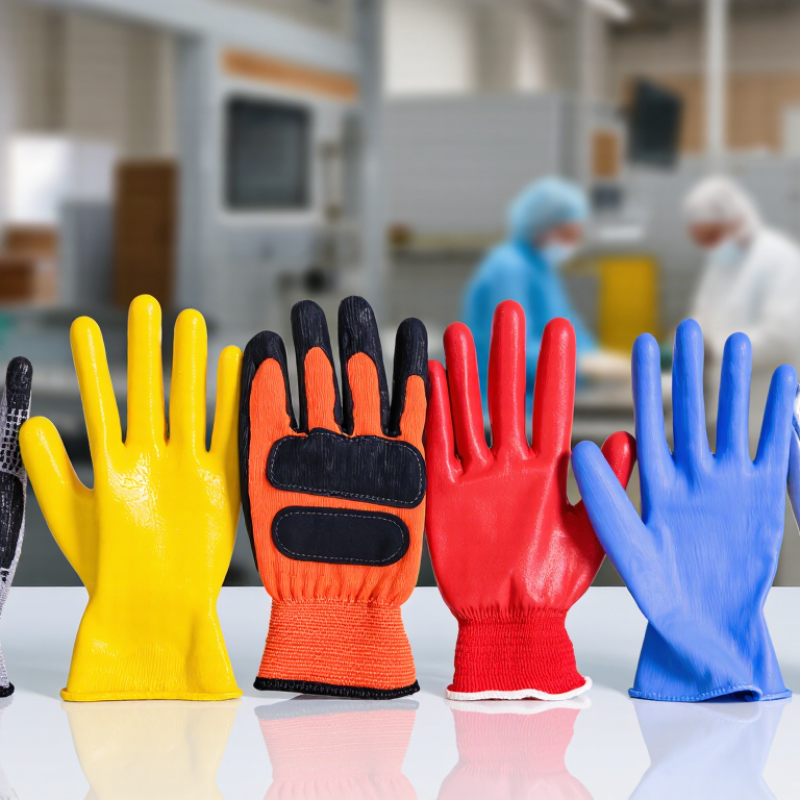
Safety hand gloves are personal protective equipment designed to reduce contact between workers’ hands and specific workplace hazards. Their purpose is not simply to make work feel safer. A glove must match the risk, task, and exposure time.
Common types include cut-resistant gloves for sheet metal and glass, chemical-resistant gloves for solvents and corrosive liquids, and heat-resistant gloves for welding or hot surfaces. Impact-resistant gloves protect the knuckles during material handling. Electrical insulating gloves help control shock hazards, while disposable gloves limit contamination during medical, laboratory, and food-related work. Each type uses different materials and performance standards. EN 388 evaluates mechanical risks, while ISO 374 addresses chemical protection.
Fit matters greatly. OSHA training materials have often cited that about 70% of reported hand injuries involve workers who were not wearing gloves. This figure should not become a careless slogan; workplace conditions differ, and glove use alone cannot prevent every injury. A loose glove may catch on rotating equipment. A damaged glove may provide false confidence. The uncomfortable truth.
A reliable selection process starts with hazard assessment, safety data sheets, and manufacturer test results. Inspect gloves before each shift, especially around fingertips, seams, and cuffs. Replace them after contamination, tearing, or loss of grip. Workers should also receive practical training, because even excellent gloves fail when they are removed for convenience or worn for the wrong task.
| Glove Type | Common Construction or Material | Primary Protection | Typical Applications | Key Limitations | Selection Considerations |
|---|---|---|---|---|---|
| General-Purpose Work Gloves | Knitted textile, coated fabric, leather, or synthetic blends | Basic protection from dirt, abrasion, minor cuts, and handling friction | Material handling, warehousing, assembly, landscaping, and maintenance | Protection varies widely; they may not protect against chemicals, severe impact, or high heat | Match the glove to the task, required dexterity, grip, fit, and expected exposure |
| Cut-Resistant Gloves | High-performance fibers, engineered yarns, or cut-resistant liners with polymer coatings | Protection from sharp edges, blades, sheet metal, glass, and similar hazards | Metal fabrication, glass handling, food preparation, construction, and automotive work | Cut resistance does not automatically provide puncture, impact, chemical, or heat protection | Review the applicable cut-resistance rating and choose the required level for the hazard |
| Puncture-Resistant Gloves | Dense woven fibers, reinforced liners, or layered protective materials | Resistance to penetration from needles, wires, splinters, and pointed objects | Waste handling, recycling, construction, veterinary work, and industrial inspection | Resistance to pointed objects may differ from resistance to sharp-edged blades | Identify whether the hazard is a needle-like point or a cutting edge, then select the correct rating |
| Impact-Resistant Gloves | Textile or synthetic gloves with thermoplastic rubber or other protective back-of-hand panels | Protection from knocks, crushing forces, and impacts to the fingers and back of the hand | Oil and gas operations, construction, heavy maintenance, and material handling | Impact panels may reduce flexibility; they do not necessarily provide cut or chemical protection | Check coverage of the fingers, knuckles, and back of the hand, as well as grip requirements |
| Chemical-Resistant Gloves | Rubber, nitrile, neoprene, PVC, butyl, or laminated barrier materials | Protection from selected liquids, solvents, acids, alkalis, and other hazardous chemicals | Laboratories, cleaning, chemical processing, agriculture, and industrial maintenance | No single material resists every chemical; permeation and degradation can occur without visible damage | Consult chemical-resistance data for the exact substance, concentration, temperature, and exposure time |
| Disposable Examination Gloves | Thin nitrile, latex, or vinyl | Short-duration protection against contamination and contact with low-risk substances | Healthcare, food handling, cleaning, personal care, and light laboratory tasks | Limited durability and resistance to puncture, abrasion, aggressive chemicals, and prolonged exposure | Use the correct size, replace gloves when damaged or contaminated, and avoid treating them as universal protection |
| Heat-Resistant Gloves | Aramid fibers, leather, aluminized fabrics, treated textiles, or insulated multilayer materials | Protection from contact heat, radiant heat, sparks, and limited thermal exposure | Welding, metalworking, foundries, glasswork, baking, and work near hot equipment | Temperature performance depends on contact time and heat type; they may not resist chemicals or sharp edges | Choose gloves rated for the specific thermal hazard and never use them near heat beyond their stated capability |
| Cold-Insulated Gloves | Layered synthetic insulation, fleece, wool, leather, or waterproof outer materials | Protection from cold environments, chilled materials, wind, and some moisture | Cold storage, winter construction, outdoor work, refrigeration, and logistics | Bulky insulation can reduce dexterity; wet or compressed insulation may lose thermal performance | Consider ambient temperature, moisture, duration, dexterity, and whether the hazard involves cryogenic liquids |
| Electrical-Insulating Rubber Gloves | Tested insulating rubber, often used with protective leather outer gloves | Protection against electric shock when working within the glove’s rated voltage class | Electrical installation, utility maintenance, testing, and energized-work procedures | They require inspection and electrical testing; punctures, cuts, contamination, and aging can compromise protection | Use only gloves with the appropriate voltage rating and follow the applicable electrical safety procedures |
| Welding Gloves | 厚 leather or heat-resistant leather with reinforced seams and extended cuffs | Protection from sparks, spatter, moderate heat, abrasion, and brief contact with hot materials | Arc welding, gas welding, cutting, brazing, and metal fabrication | They may reduce fine dexterity and are not a substitute for chemical-resistant or electrical-insulating gloves | Select the style and insulation for the welding process, heat level, required dexterity, and cuff coverage |
| Anti-Static or ESD Gloves | Conductive or dissipative fibers blended into lightweight textile or coated gloves | Helps control electrostatic discharge and reduces contamination from skin oils | Electronics assembly, clean manufacturing, device handling, and static-sensitive work areas | They do not protect against electric shock and require a properly grounded ESD control system | Verify surface resistance, grounding requirements, cleanliness, and compatibility with the work environment |
| Vibration-Reducing Gloves | Gloves with padded or specialized palm materials designed to reduce transmitted vibration | May reduce some hand-arm vibration exposure during tool operation | Use of grinders, sanders, drills, impact tools, and certain powered equipment | They cannot eliminate vibration risk and may not provide adequate protection for every frequency or tool | Use with equipment controls, exposure-time limits, maintenance, and a complete hand-arm vibration program |
| Purpose of safety hand gloves: Safety gloves are selected to reduce specific hand hazards such as cuts, punctures, chemicals, heat, cold, impact, contamination, or electrical contact. No glove protects against every hazard, so the material, rating, fit, condition, and task requirements must be evaluated together. | |||||