Top Tennis Stringing Machine Manufacturers in China?

Choosing a Tennis Stringing Machine for a Chinese workshop is not just a matter of comparing prices. The real test comes when the machine pulls the same tension across a busy day, while its clamps hold the frame securely and its turntable moves without catching. Small details matter. A slipping clamp can waste string and time. A clear control panel helps new staff avoid mistakes.

Experienced racquet technician Richard Parnell is a useful reference point for readers assessing stringing practice. The sentence below is an editorial paraphrase, not a verified direct quotation from him: “Repeatable tension matters more than a long list of features.” That is a practical benchmark, not a substitute for test data. This guide examines Chinese manufacturers through factors buyers can check: tension consistency, calibration options, clamp design, parts availability, training, and warranty support. It also separates verifiable product details from broad marketing claims. Some specifications look impressive on paper. Ask how they are tested. A factory visit, a sample machine, or a live demonstration can reveal how smoothly the machine handles a real racquet, from mounting the frame to pulling the final cross string. No single model fits every shop. This overview helps importers, clubs, and stringing businesses compare options with clearer questions and fewer assumptions.
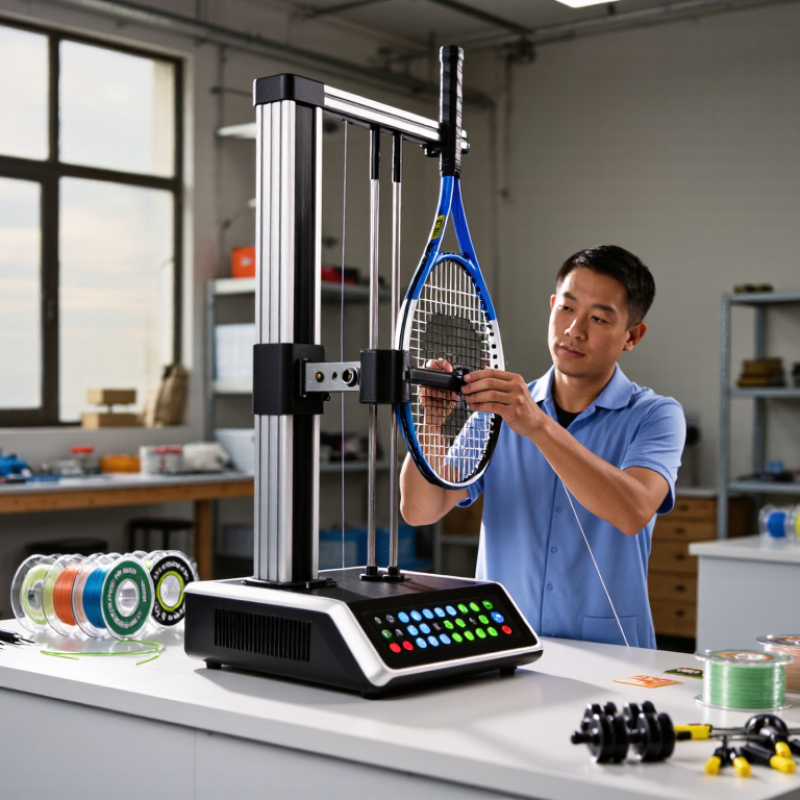
Top Tennis Stringing Machine Manufacturers in China?

What Tennis Stringing Machines Do and How They Work

A tennis stringing machine holds a racquet steady while a stringer replaces its strings at a selected tension. The frame supports the racquet, while a tension head pulls each string and clamps hold it in place. The stringer usually installs the vertical mains first, then weaves the horizontal crosses through them. Small details matter. A missed weave or uneven clamp pressure can affect the finished string bed.

Machines commonly use electronic constant-pull or mechanical lockout systems. Constant-pull models keep drawing as a string stretches slightly; lockout models stop at a set force. Neither removes the need for careful setup. The frame must be secured without excessive pressure, and tension should be checked with a calibrated tool. It is not magic. String type, temperature, and technique can all influence results.

The ITF Global Tennis Report 2024 estimated 106 million tennis players worldwide, up from 87 million in 2019. That participation figure signals broad demand for racquet services, but it does not measure machine sales or stringing frequency. For buyers, useful checks include tension range, clamp stability, mounting design, and service support. A fast machine may still produce inconsistent results if its calibration is neglected. And calibration can drift.

How Chinese Manufacturers Are Evaluated and Compared

Comparing Chinese tennis stringing machine manufacturers requires more than checking price and advertised tension range. The ITF’s 2024 Global Tennis Report estimates 106 million tennis players across 199 countries, up from about 87 million in 2019. That growth indicates a broad equipment market, but it does not certify any machine. Buyers should treat the report as market context, not proof of manufacturing quality.

A practical comparison starts with repeatable tests. String the same frame several times at low, middle, and high settings, then check tension with a calibrated tester. Record variation, clamp slippage, turntable stability, and how easily the machine returns to its set value. Ask manufacturers for calibration procedures, spare-part lead times, warranty terms, and service documentation. Small details matter. A clamp that shifts under load can waste string and distort results. A clean showroom demo can still mislead; request a sample unit or a live test using your own strings. Not enough? Add a long-run test. Compare several machines after repeated pulls, while recognizing that test methods and gauges can also introduce error. No single score captures real workshop performance.

Profiles of Leading Tennis Stringing Machine Manufacturers in China

China’s tennis stringing machine sector includes specialist workshops, export-oriented manufacturers, and suppliers with broader sports-equipment lines. Their strengths differ. Specialist makers often focus on tension consistency, clamp design, and frame support. Export-focused producers may offer several models, spare parts, and setup guidance for overseas buyers. A broad product catalog can be useful, but it does not prove that every machine receives equal testing.

When comparing manufacturers, look closely at the engineering details. A stable turntable, smooth linear clamps, and clearly calibrated tension settings affect daily use. Ask how the machine is checked before shipment and whether replacement parts are available. Practical answers matter. A showroom demonstration can reveal uneven clamp movement or awkward controls that product photos conceal. These checks help buyers judge real usability, not just listed features.

Some manufacturers emphasize electronic tension systems and programmable settings, while others favor simpler mechanical designs. Electronic controls may improve repeatability, but they also add components that need support. Mechanical models can be easier to maintain, though adjustment still requires care. No profile tells the whole story. Specifications may be incomplete, and public testing data is not always easy to find. Requesting a sample run on a familiar racket can expose small issues, such as a slipping clamp or a difficult-to-read display. Those details deserve attention.

Key Technologies and Features Across Chinese Machine Models

Top Tennis Stringing Machine Manufacturers in China?

Chinese tennis stringing machines differ less by appearance than by how they control tension, secure the frame, and repeat each pull. The ITF’s 2021 Global Tennis Report estimated roughly 87 million tennis players across 199 countries in 2019. That participation base suggests demand for reliable restringing, but it does not prove any machine’s accuracy. Electronic constant-pull systems compensate as strings stretch; crank models offer simpler operation and often lower cost. Six-point mounting helps distribute frame support. Adjustable side supports are useful when racket shapes vary. Small errors matter.

When comparing models, check the tension head, clamps, and mounting system in person. A load-cell sensor, pre-stretch setting, knot function, and turntable brake can improve control, but features vary by machine. Fixed clamps should grip securely without marking the string. Ask whether tension can be checked with an independent calibrator, then test repeated pulls at a set value, such as 24 kg. Does the reading stay consistent? That practical check can reveal more than a crowded specification sheet. Digital displays look reassuring, yet they still need calibration. And a six-point mount is not automatically better if its supports are awkward to adjust.

How to Select and Source a Machine from a Chinese Manufacturer

Selecting a tennis stringing machine from a Chinese manufacturer starts with your workload, not the lowest quote. A busy club may need a robust electronic model, while a small shop might prefer a manual machine that is easier to maintain. Ask for the tension range, adjustment increments, clamp type, mounting system, and power requirements in writing. Then request a live demonstration using a familiar racket and string. Watch whether the clamps slip, the turntable moves smoothly, and the tension reading stays consistent. Small details matter.

Before placing an order, verify that the supplier actually makes the machine or clearly identifies its role. Request recent production photos, an operating manual, a parts list, and the warranty terms. If possible, test a sample unit; a polished video cannot show every vibration or awkward adjustment. Check which parts can be shipped separately and how technical questions are handled across time zones. Compare the total delivered cost, including packaging, freight, and replacement parts, rather than comparing machine prices alone. One caution: written specifications can still leave room for interpretation, so confirm key details on the invoice. A rushed purchase is hard to undo.

Warning!

You are using an outdated browser. Things may not appear as intended. We recommend updating your browser to the latest version.

Close