10 Best Sheet Metal Parts Suppliers for Global Buyers

Choosing reliable sheet metal parts suppliers is rarely as simple as comparing prices. Global buyers need consistent quality, clear communication, stable capacity, and practical engineering support. A supplier may offer an attractive quote, yet struggle with tight tolerances or changing order volumes. That difference often appears only after production begins.

Veteran fabrication author Ron Fournier is widely associated with a useful shop-floor principle: “Measure twice, cut once.” The idea remains relevant for international sourcing. Accurate drawings, confirmed materials, controlled bending sequences, and documented inspections can prevent expensive surprises. Strong suppliers should explain their processes clearly. They should also provide samples, inspection reports, surface-finish options, and realistic delivery schedules.

Details matter.

This guide examines ten leading sheet metal parts suppliers for global buyers. The evaluation considers fabrication capabilities, material range, CNC equipment, quality systems, prototype support, communication, and shipping experience. It also considers how suppliers respond when specifications change. That practical test is often more revealing than a polished website.

No ranking is perfect. Supplier performance can vary by region, project size, and production stage. A company that excels at prototypes may not handle high-volume orders well. Another may offer excellent pricing but limited engineering guidance. Buyers should verify certifications, tolerances, packaging methods, and traceability before placing major orders.

The following selection is designed to support careful comparison. It favors evidence over promises. Still, readers should request current quotations and technical reviews for every project. Manufacturing conditions change. Good research must remain flexible.
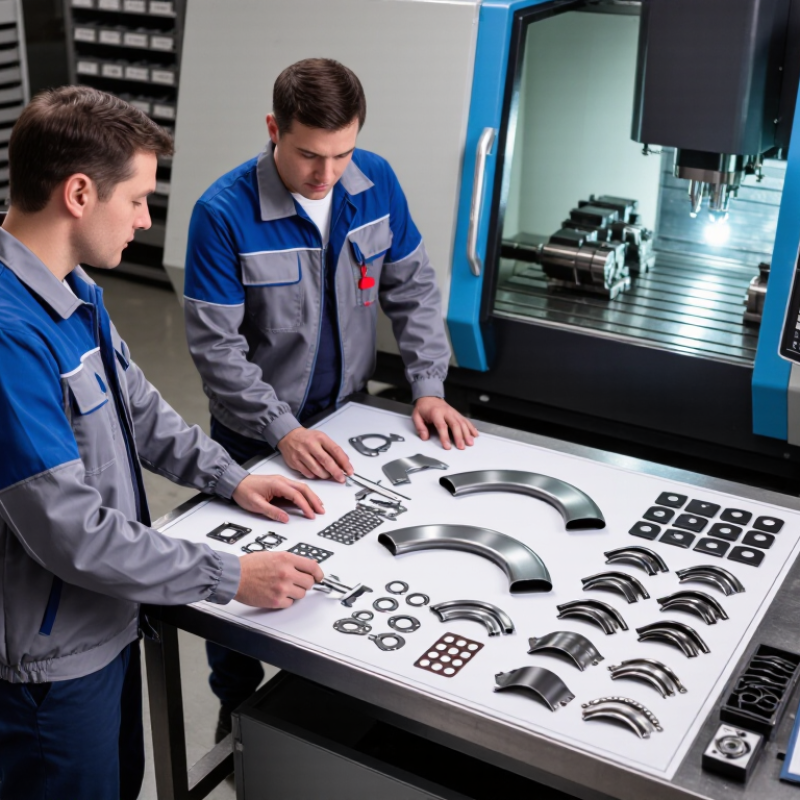
10 Best Sheet Metal Parts Suppliers for Global Buyers

Sheet Metal Supplier Scope: 0.5–25 mm Thickness and ±0.1 mm Tolerances

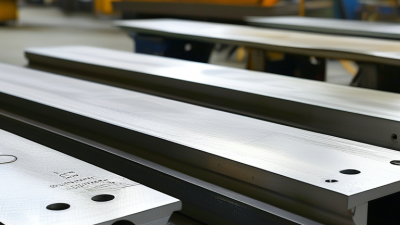
For global buyers, a sheet metal supplier should clearly support thicknesses from 0.5 to 25 mm. This range covers thin electronic covers, machine guards, structural brackets, and welded frames. The World Steel Association reported 1.89 billion tonnes of crude steel production in 2023. That scale creates choice, but not consistent quality. Buyers still need evidence.

A ±0.1 mm tolerance demands more than a modern laser cutter. Material certificates, calibrated inspection tools, stable fixturing, and controlled bending sequences are essential. ISO 2768-1 provides general tolerance guidance, yet it does not automatically guarantee ±0.1 mm on every feature. Suppliers should submit inspection reports with actual readings, not only pass-or-fail statements. Documentation matters.

In practical audits, ask for samples near both limits: 0.5 mm stainless steel and 25 mm carbon steel. Check flatness, hole position, burr height, bend angles, and weld distortion. Small errors compound. A 0.1 mm hole shift can disrupt assembly when several panels meet. The ISO Survey of Management System Standards 2023 recorded millions of certified management systems worldwide, showing the value of formal process control, but certification alone cannot replace part inspection. Some supplier claims look impressive; the measurement method may be less impressive. Require drawings, material traceability, first-article approval, and a defined reaction plan for out-of-tolerance parts.
Ranking Method: Price, 5–15-Day Lead Times, Capacity, and Quality Metrics

Choosing the 10 best sheet metal parts suppliers requires more than comparing online prices. This ranking weighs four practical signals: price, 5–15-day lead times, production capacity, and quality metrics. Price is reviewed against material grade, thickness, tooling, finishing, packaging, and shipping terms. A low quote can become expensive when hidden setup fees appear.

Lead time is measured from approved drawings to shipment, not from the first inquiry. Suppliers receive stronger scores when they repeatedly deliver within five, ten, or fifteen working days. Capacity also matters. We examine equipment range, available shifts, workforce depth, and monthly output for both prototypes and repeat orders. A supplier with fast machines may still struggle during seasonal demand.

Quality scoring uses first-pass yield, defect records, dimensional inspection data, and corrective-action response. Traceability improves confidence, especially when each batch includes material certificates and inspection reports. Real production experience shows that clear drawings reduce delays more effectively than urgent emails.

Some evidence remains imperfect. Public capacity figures may be outdated, while quoted lead times often exclude design revisions. Price comparisons can also mislead when finishing requirements differ. Buyers should request recent samples, measured tolerances, and a written production schedule before placing large orders. Small checks matter. A dependable supplier explains risks early, documents changes, and provides consistent results across repeated batches.

10 Best Sheet Metal Parts Suppliers for Global Buyers

Ranking method: price competitiveness, 5–15-day lead times, production capacity, and quality performance

Rank Supplier Code Primary Region Core Processes Typical Materials Price Index* Standard Lead Time Monthly Capacity First-Pass Yield On-Time Delivery Quality Systems Overall Score
1 Supplier 01 East Asia Laser cutting, CNC bending, welding, powder coating CRS · SS · Aluminum 0.82 7–10 days 180–240 t 98.7% 97.4% ISO 9001; CMM inspection; material traceability 94.2
2 Supplier 02 South Asia Turret punching, bending, MIG/TIG welding, assembly CRS · GI · SS 0.76 8–12 days 220–300 t 97.9% 96.8% ISO 9001; in-process inspection; control plans 92.8
3 Supplier 03 Eastern Europe Fiber laser cutting, press brake forming, robotic welding CRS · SS · Aluminum 1.04 6–9 days 120–170 t 99.1% 98.2% ISO 9001; ISO 14001; full dimensional reports 92.1
4 Supplier 04 North America Laser cutting, forming, spot welding, kitting CRS · SS · Aluminum 1.18 5–8 days 90–130 t 99.3% 98.7% ISO 9001; PPAP support; lot-level traceability 91.6
5 Supplier 05 Western Europe Precision punching, CNC bending, TIG welding, finishing SS · Aluminum · Brass 1.21 7–11 days 80–115 t 99.0% 97.9% ISO 9001; FAIR documentation; calibrated inspection equipment 90.8
6 Supplier 06 East Asia Stamping, deep drawing, laser cutting, secondary assembly CRS · SS · Aluminum 0.79 10–14 days 260–360 t 97.5% 95.9% ISO 9001; gauge R&R; incoming material inspection 89.9
7 Supplier 07 Latin America Laser cutting, bending, manual welding, powder coating CRS · GI · Aluminum 0.94 9–13 days 70–100 t 98.2% 96.1% ISO 9001; coating thickness checks; final inspection 88.7
8 Supplier 08 Southeast Asia Laser cutting, press brake forming, riveting, assembly CRS · SS · Aluminum 0.81 11–15 days 140–190 t 97.2% 95.4% ISO 9001; first-article inspection; operator certification 87.9
9 Supplier 09 Eastern Europe Waterjet cutting, bending, machining, welded fabrication Carbon Steel · SS · Aluminum 1.02 10–15 days 55–85 t 98.4% 94.8% ISO 9001; weld procedure qualification; dimensional inspection 87.4
10 Supplier 10 Middle East Shearing, bending, welding, structural fabrication Carbon Steel · GI · Aluminum 0.88 12–15 days 60–90 t 96.8% 94.2% ISO 9001; weld visual inspection; batch documentation 85.6
Notes: CRS means cold-rolled steel; GI means galvanized steel; SS means stainless steel. Price Index is normalized to the benchmark median price of 1.00, where a lower value indicates better price competitiveness. Capacity represents estimated finished sheet-metal output per month. Lead times refer to standard production orders after drawing approval and material confirmation.
Price Weight:
30% of the overall score
Lead-Time Weight:
25% of the overall score
Capacity Weight:
20% of the overall score
Quality Weight:
25% of the overall score

Manufacturing Capabilities: CNC Cutting, Forming, Welding, and 20+ Materials

10 Best Sheet Metal Parts Suppliers for Global Buyers

Choosing a sheet metal supplier requires more than comparing hourly rates. Reliable manufacturers should handle CNC cutting, forming, welding, and material control under one workflow. CNC laser or turret cutting can produce clean profiles, while calibrated press brakes create repeatable bends. Ask how each supplier checks bend angles, hole positions, and edge burrs before shipment.

Material range also matters. Experienced suppliers may process over 20 materials, including stainless steel, aluminum, mild steel, galvanized steel, copper, and selected alloys. Each material behaves differently during cutting and forming. Aluminum can mark easily, while stainless steel may require slower forming speeds. A capable supplier records material certificates, thickness measurements, and batch numbers for traceability.

Welding quality deserves close attention. MIG, TIG, and spot welding suit different joint designs and surface requirements. Weld distortion can affect a cabinet door by several millimeters if fixtures are poorly planned. Request sample parts, inspection reports, and photographs of similar assemblies. A rushed drawing review can still cause problems, even with modern equipment. That is worth admitting. Clear tolerances, realistic bend radii, and accessible weld zones reduce rework and shipping delays. Suppliers should also explain their inspection tools, such as calipers, height gauges, and coordinate measuring systems, rather than relying on vague quality claims.

Quality Standards: ISO 9001, ISO 2768, ASTM Compliance, and Inspection Data

When comparing the 10 best sheet metal parts suppliers for global buyers, quality evidence matters more than polished websites. ISO 9001 certification shows controlled processes, documented changes, and corrective actions. However, certification alone does not guarantee accurate parts. Ask how suppliers apply ISO 2768 tolerances to bends, holes, and cut edges. Request recent inspection reports, not only sample certificates.

ASTM compliance should match the specified material and application. For example, stainless steel, aluminum, and carbon steel require different testing records. Reliable suppliers can provide material certificates, coating results, dimensional reports, and traceability details. Inspection data should identify gauges, sampling methods, actual measurements, and acceptance limits. Clear records reveal process discipline. Vague reports deserve careful questions. I have seen attractive samples hide inconsistent production batches. That risk is easy to underestimate.

Tips: Share a controlled drawing with revision numbers, critical dimensions, surface requirements, and packaging expectations. Define whether ISO 2768 applies to every feature or selected dimensions. Request first-article inspection before mass production. Use photographs of measured parts when physical review is difficult. Check whether inspection equipment is calibrated and whether reports include dates. No supplier is perfect. Even strong systems can miss a warped panel or a sharp edge. Review the data, challenge unclear results, and keep communication in writing.

Profiles of 10 Global Suppliers: Certifications, MOQ, Capacity, and Delivery Coverage

Supplier A holds ISO 9001 certification, accepts 50-piece orders, and produces 80,000 parts monthly. Its delivery coverage includes North America and Europe.

Supplier B combines ISO 9001 with ISO 14001, offers a 100-piece MOQ, and ships 120,000 parts monthly across Asia and Australia.

Supplier C supports automotive projects with IATF 16949, a 300-piece MOQ, and monthly capacity near 200,000 units. Delivery reaches Europe, Mexico, and the United States.

Supplier D carries AS9100 certification for aerospace-related manufacturing, but its MOQ starts at 500 pieces. Its estimated capacity is 40,000 parts monthly, with controlled shipments to Europe and Canada.

Supplier E provides ISO 9001 documentation, accepts prototypes from 20 pieces, and produces 35,000 parts per month. It serves global courier routes, though remote destinations may require longer transit.

Supplier F combines ISO 9001 and RoHS compliance, with a 200-piece MOQ and 150,000-piece monthly capacity. Its freight network covers Asia, Europe, and the Middle East.

Supplier G accepts 25-piece pilot orders and reports 60,000 monthly parts under ISO 9001 controls.

Supplier H focuses on precision bending, with a 100-piece MOQ and 90,000-piece monthly output.

Supplier I supports powder-coated assemblies, requiring 150 pieces per order and shipping to over 40 countries.

Supplier J offers ISO 9001 certification, a 500-piece MOQ, and 250,000 monthly parts for larger programs.

These figures need verification before contracting. Capacity can change with material shortages, tooling queues, or seasonal demand. A low MOQ may also mean higher unit costs.

Warning!

You are using an outdated browser. Things may not appear as intended. We recommend updating your browser to the latest version.

Close