Top Gummy Making Machine Manufacturers in China
China has become a significant source of confectionery processing equipment, including the Gummy Making Machine. Manufacturers serve small workshops, growing brands, and high-volume factories. Their equipment may produce fruit-shaped gummies, vitamin-style chews, and other lawful confectionery products.
Choosing a supplier requires more than comparing catalog prices. A reliable machine should offer stable depositing accuracy, controlled cooking temperatures, and even cooling. Stainless steel contact surfaces, accessible cleaning points, and clear operating instructions also matter. During factory evaluations, buyers should inspect syrup tanks, depositors, molds, cooling tunnels, and electrical cabinets. A practical test can reveal whether each cavity fills evenly at the intended production speed.
Supplier experience deserves careful attention. Ask for production records, reference installations, spare-parts plans, and operator training details. Documentation should explain capacity, power requirements, cleaning procedures, and recommended maintenance intervals. Certifications may support credibility, but they should be verified rather than accepted automatically. Some manufacturers communicate well before payment but respond slowly after installation. That risk should not be ignored.
This guide examines leading Chinese manufacturers through equipment quality, customization ability, service responsiveness, and transparent business practices. It also considers whether a supplier can adapt formulas, shapes, and batch sizes without creating unnecessary complexity. No manufacturer is perfect. Even an impressive machine may need adjustment after installation. Buyers should therefore compare tested performance, not polished promises, before selecting a long-term equipment partner.
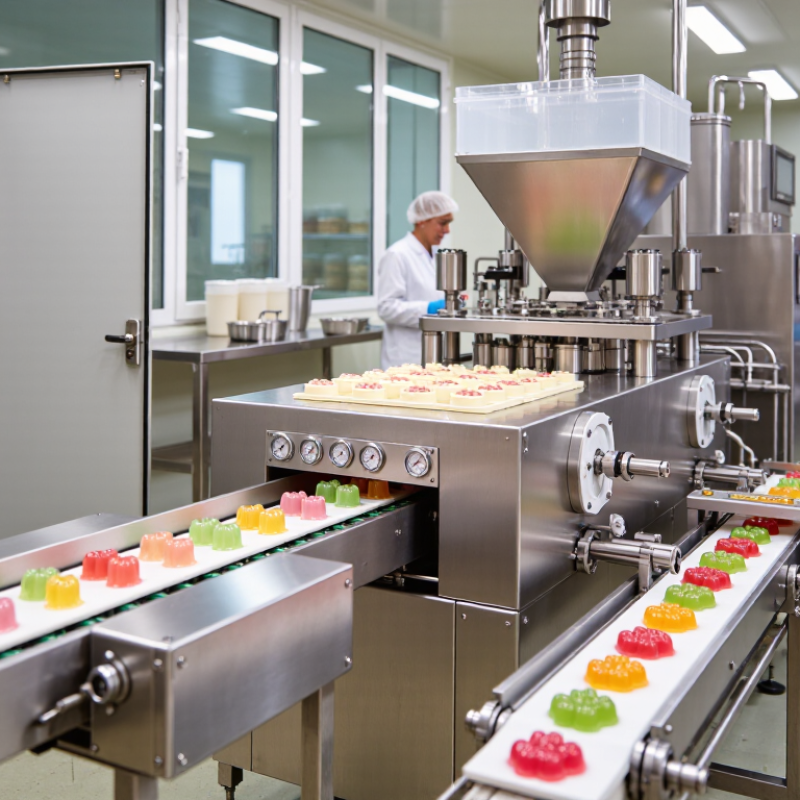
Gummy Making Machines: Types, Functions, and Production Applications
Top Gummy Making Machine Manufacturers in China
Gummy making machines convert syrup, gelatin, pectin, flavors, and colors into consistent pieces. Their designs differ by product, scale, and texture. Common systems include starch mogul lines, starchless depositing machines, and rope-forming equipment. Starch mogul lines press molds into trays filled with starch. Starchless systems deposit liquid mass into reusable metal or silicone molds. They reduce starch handling and simplify cleaning.
A complete line usually includes cooking, mixing, depositing, cooling, demolding, oiling, and packaging. Servo-controlled depositors can manage weight and shape with greater precision. Small temperature changes still affect viscosity, surface gloss, and chewiness. Control matters. A practical trial should check syrup temperature, deposit accuracy, cooling time, and mold release. Minor inconsistencies may become obvious after several thousand pieces.
Grand View Research estimated the global gummies market at about USD 19.6 billion in 2023. Its report also projects a 12.7% compound annual growth rate from 2024 to 2030. These figures support demand for flexible production equipment, although market reports use different definitions. Machines for confectionery, vitamin, mineral, and functional-food applications require different dosing and sanitation arrangements. Hygienic stainless-steel construction, recipe storage, and clean-in-place features improve reliability. Energy use deserves attention, too. A faster line is not always the better investment. A lower-speed system may provide better control during product development and reduce material waste.
Key Factors for Selecting a Gummy Machine Manufacturer in China
Selecting a gummy machine manufacturer in China requires more than comparing quotations. Grand View Research valued the global gummy market at approximately USD 19.5 billion in 2023. It also forecasts strong growth through 2030. This expansion increases pressure on manufacturers to deliver stable output, precise dosing, and faster changeovers.
Start with production evidence. Ask for a live factory test using your actual recipe, starch, and depositor settings. Check whether the machine maintains weight variation below your agreed tolerance. Inspect heating zones, servo controls, cooling tunnels, and CIP-friendly surfaces. Food-contact components should have clear material documentation and traceability. Request factory acceptance testing records, electrical drawings, maintenance schedules, and spare-parts availability. A polished video is not enough.
Service capability often separates a reliable supplier from a cheap one. PMMI industry research continues to identify labor availability and automation support as major packaging challenges. Choose a manufacturer that provides remote diagnostics, operator training, installation support, and response-time commitments. Confirm experience with export documentation and recognized food-safety systems, such as HACCP-based controls and ISO 9001 procedures. I would also compare energy consumption per production hour, not only hourly capacity. Numbers can mislead. A machine rated at 600 kilograms per hour may achieve much less with sticky formulas, frequent cleaning, or frequent flavor changes. Small pilot trials reveal those weaknesses early. Test the recipe.
Leading Gummy Making Machine Manufacturers in China
China’s leading gummy making machine manufacturers are responding to strong category growth. Grand View Research estimates the global gummy market was worth about US$19 billion in 2023. Its forecast also indicates double-digit annual growth through 2030. This demand is pushing Chinese equipment suppliers to improve depositing accuracy, cooling stability, and production flexibility.
Experienced manufacturers usually provide complete systems, including cooking tanks, vacuum units, depositors, cooling tunnels, oiling devices, and cleaning assemblies. Stainless steel 304 is common for external frames, while product-contact parts often use 316L steel. Servo-driven depositors can control small portions more consistently than older mechanical systems. A practical factory should request trial production using its real formula, mold shape, and target weight.
Small details matter. A 2-gram weight variation can affect packaging costs across millions of pieces. Modern lines may support several thousand kilograms per shift, but capacity claims need verification. Technical documents should show heating accuracy, depositing tolerance, compressed-air demand, and cleaning time. The PMMI machinery outlook highlights automation, sanitation, and data visibility as major priorities in food processing equipment.
A polished brochure is not enough. Some suppliers still understate maintenance needs or after-sales response times. Buyers should inspect weld quality, test emergency stops, and ask for installation records from comparable projects. Remote support helps, although it cannot replace skilled commissioning engineers on a difficult production floor. The best Chinese manufacturers combine practical engineering, export experience, documented testing, and honest limits.
Manufacturing Standards, Customization, and Quality Control
Top Gummy Making Machine Manufacturers in China
Chinese gummy machine manufacturers should be judged by standards, customization, and quality control. ISO 22000-based systems help control hazards across processing, cleaning, and packaging. The WHO and FAO estimated that contaminated food causes about 600 million illnesses worldwide each year. That figure makes traceability more than a sales feature.
A reliable machine should use food-contact materials with documented certificates. Stainless steel surfaces need smooth welds, rounded corners, and easy access for sanitation. Temperature sensors should monitor syrup cooking, depositing, and cooling. During factory audits, buyers should request calibration records, cleaning procedures, and batch test results. Small details matter.
Customization must solve a measured production problem. A supplier may adjust mold size, depositing volume, cooling time, or line speed. Yet excessive customization can complicate maintenance and spare-part control. This is often overlooked. FAT and SAT testing should compare actual output with agreed targets, including weight variation, appearance, and rejection rates. The PMMI Packaging Machinery Manufacturers Institute emphasizes documented testing and operator training as practical parts of equipment acceptance. Buyers should also review change-control records under the manufacturer’s quality system. No machine is perfect, and factory conditions can expose weaknesses hidden during demonstrations.
Pricing, Export Services, and After-Sales Support in China
Pricing for gummy making machines in China depends on output, automation, heating control, and mold design. A compact line may cost about USD 8,000 to USD 20,000. Larger systems can exceed USD 60,000. These figures are indicative, not fixed quotations. Stainless steel grade, filling systems, cooling tunnels, and electrical standards can change the final price. Ask for a complete quotation, including installation tools, spare parts, packaging, and shipping terms.
Export support should be practical and documented. Experienced manufacturers usually provide machine drawings, electrical diagrams, operating videos, and commercial invoices. They can also arrange wooden cases, container loading, and customs documents. Confirm whether the quoted price covers FOB, CIF, or another delivery term. Request photographs of the actual machine before shipment. It prevents unpleasant surprises. Some suppliers answer quickly before payment, then respond slowly afterward. That risk deserves attention.
After-sales service often separates a dependable manufacturer from a cheap seller. Look for remote commissioning, video training, English manuals, and a clear warranty period. A useful spare-parts list should include heaters, sensors, pumps, seals, and cutting components. Ask how quickly technical staff can respond and whether paid on-site support is available. In my experience, remote guidance solves many setup issues, but it cannot correct poor factory wiring. One weakness remains: service promises may sound stronger than their written terms. Put response times, replacement rules, and training details into the contract.