Top 10 Ultrafiltration Membrane Suppliers in China

Choosing the right ultrafiltration partner requires more than comparing catalog prices. In China, manufacturers differ in membrane materials, module design, testing methods, and after-sales support. This guide introduces the Top 10 Ultrafiltration Membrane Suppliers in China, focusing on practical evidence rather than attractive claims.

A reliable Ultrafiltration Membrane Supplier China should provide clear specifications for molecular weight cut-off, flux, transmembrane pressure, pore structure, and chemical compatibility. These details matter on a real production line. A food processor may need low-fouling hollow-fiber membranes, while a biopharmaceutical plant may require strict process control and traceable validation records. We also consider pilot-testing support, replacement availability, customization capacity, and experience with water treatment or industrial separation systems.

No supplier is perfect. Performance can change with feed quality, temperature, cleaning chemicals, and operating pressure. Published flux data may come from controlled laboratory conditions, not your wastewater or process stream. That limitation deserves attention. Buyers should request samples, review test reports, inspect quality procedures, and confirm technical service before signing a long-term agreement. Site visits can reveal practical details, such as membrane storage, module assembly, and response speed after installation. The companies selected for this list are assessed through their product capabilities, industry experience, technical communication, and visible market presence. Still, rankings are not permanent. New technologies, export requirements, and customer feedback may change the order over time. This overview is a starting point for informed comparison, not a substitute for project-specific trials.
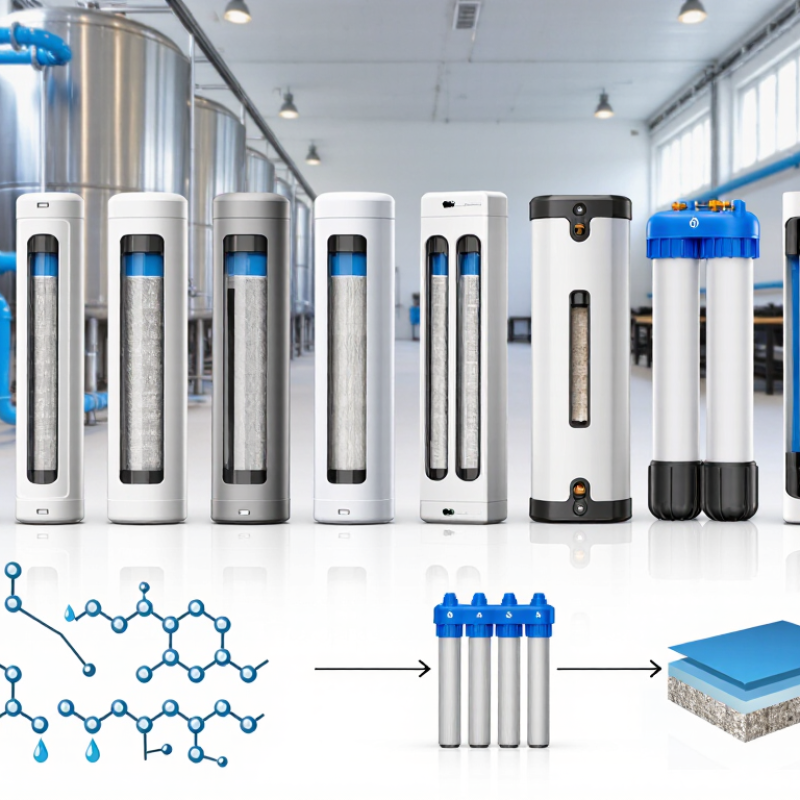
Top 10 Ultrafiltration Membrane Suppliers in China

How Ultrafiltration Membrane Suppliers Are Evaluated

When comparing the Top 10 ultrafiltration membrane suppliers in China, buyers should examine evidence, not impressive claims.

A reliable supplier provides membrane specifications, test methods, and recent performance data. Key indicators include pore size, molecular weight cut-off, flux, pressure tolerance, and chemical resistance. These figures should match the intended water treatment process.

Factory evaluation also matters. Inspect production controls, raw material storage, membrane casting, module assembly, and final testing. Ask for batch records and sample inspection reports. In practical audits, small details often reveal major risks.

Uneven module sealing, unclear labeling, or delayed technical answers deserve attention. Certifications can support credibility, but they do not replace independent verification.

Trial testing with real feed water remains essential because laboratory results may not reflect seasonal turbidity or organic loading.

Tips:

Request pilot membranes before signing a large contract. Compare stable flux, cleaning recovery, energy use, and replacement frequency. Review the supplier’s engineering support and spare-part response time.

Total cost includes installation, cleaning chemicals, downtime, and disposal. The lowest quotation may become expensive later.

No scorecard is perfect. Weight each factor according to your process, and record why a supplier passes or fails. A transparent supplier should accept technical questions, explain limitations, and correct data when new testing exposes uncertainty. That honesty is often more valuable than a polished sales presentation.

Key Technologies Used by Chinese Ultrafiltration Membrane Manufacturers

Chinese ultrafiltration membrane manufacturers increasingly combine polymer science with practical process engineering. Common membrane materials include PVDF, PES, and PAN, selected for chemical resistance, strength, and stable filtration performance. Many factories use hollow-fiber designs because they provide high surface area in compact equipment.

Manufacturing often relies on phase inversion, including NIPS and TIPS methods. These processes control pore structure through solvent exchange, cooling, and polymer concentration. Experienced producers inspect fiber walls with microscopy and test flux under controlled pressure. Small differences matter. A slightly uneven pore structure can increase fouling or reduce rejection.

Surface modification is another important technology. Hydrophilic treatments can reduce protein and organic adhesion, although their long-term stability needs careful verification. Automated potting systems improve module consistency and limit leakage around fiber bundles. Manufacturers also develop air-scouring, backwashing, and chemical-cleaning programs for municipal water and industrial wastewater. A higher flux number is not always better. Field engineers must compare energy use, recovery rate, cleaning frequency, and membrane life. Some published data also comes from ideal laboratory water, not difficult feed streams. That gap deserves more attention. Reliable suppliers therefore combine pilot testing, integrity checks, and traceable quality records before recommending a full-scale system.

Profiles of the Top 10 Ultrafiltration Membrane Suppliers in China

Top 10 Ultrafiltration Membrane Suppliers in China

China’s ultrafiltration membrane market includes suppliers with different technical strengths, production scales, and service models. Supplier One focuses on hollow-fiber modules for municipal water treatment. Supplier Two develops compact systems for food and beverage factories. Its designs often prioritize easy cleaning and reduced downtime.

Supplier Three serves industrial wastewater projects with larger membrane areas. Supplier Four provides flat-sheet membranes for laboratory and pilot testing. Supplier Five combines membrane manufacturing with skid integration. This can simplify installation, though project customization may affect delivery time. Supplier Six emphasizes corrosion-resistant materials for chemical processing. Buyers should verify chemical compatibility under real operating temperatures.

Supplier Seven targets residential and commercial purification equipment. Supplier Eight supports membrane replacement programs and keeps common specifications in stock. Supplier Nine offers engineering support for electronics manufacturing, where stable water quality is critical. Supplier Ten concentrates on research-oriented modules and small pilot units. Its technical documentation may be useful for process development.

A reliable supplier should provide flux data, operating pressure ranges, cleaning guidance, and test conditions. Factory audits can reveal more than brochures. Ask for batch records, membrane integrity results, and references from comparable installations. Published performance figures are not always directly comparable. That is a weakness in many supplier evaluations. Actual results depend on feedwater quality, pretreatment, temperature, and cleaning frequency. Experienced buyers should request samples or pilot trials before approving large orders. There is no universal best supplier. The strongest choice depends on process risk, service response, and long-term operating discipline.

Top 10 Ultrafiltration Membrane Suppliers in China — Profiles of the Top 10 Ultrafiltration Membrane Suppliers in China
No. Supplier Profile Primary Membrane Material Common Membrane Configuration Typical Molecular Weight Cut-Off Typical Application Areas Product Customization Quality and Compliance Information Export Capability Technical Services
1 Supplier Profile 01 PVDFPES Hollow fiber; submerged and pressure-driven modules Approximately 10–300 kDa, depending on membrane grade Municipal wastewater reuse, industrial wastewater, drinking-water pretreatment Module length, potting material, housing, connection type and skid integration Product-level technical documentation commonly includes operating pressure, pH range and chemical-cleaning limits Standard export packaging and project-based overseas delivery Membrane selection, process design support and commissioning assistance
2 Supplier Profile 02 PVDFPAN Hollow fiber and tubular modules Approximately 10–150 kDa Food and beverage processing, bioseparation, water clarification Custom module dimensions, flux targets and skid-mounted systems Technical data generally covers permeability, rejection performance and recommended cleaning procedures Supports distributor and engineering-project channels in overseas markets Application testing, pilot evaluation and operating-parameter guidance
3 Supplier Profile 03 PESPES/PVP blend Hollow fiber; external and internal pressure formats Approximately 10–100 kDa Biotechnology, pharmaceutical processing, enzyme concentration and clarification Membrane area, fiber dimensions, module housing and sanitary fittings Pharmaceutical-oriented specifications may include extractables, material compatibility and hygienic-design information Export availability varies by project and regulatory requirements Process-development consultation and pilot-scale testing
4 Supplier Profile 04 PVDF Submerged hollow-fiber membrane cassettes Typically used for suspended-solids and microorganism retention rather than fixed MWCO claims Municipal MBR, industrial MBR and wastewater reclamation Cassette size, membrane area, aeration arrangement and frame design System documentation commonly provides flux range, backwash conditions and chemical-cleaning protocols Suitable for international EPC and water-treatment projects Plant design, energy-optimization advice, start-up and operator training
5 Supplier Profile 05 PANPES Hollow fiber and capillary modules Approximately 10–300 kDa Surface-water treatment, industrial process water and wastewater polishing Fiber lumen size, module area, end connections and operating configuration Published specifications normally identify nominal pore range, turbidity performance and pressure limits Primarily project-based export with technical documentation in English Feasibility studies, pilot units and replacement-module support
6 Supplier Profile 06 CeramicPVDF Tubular ceramic and polymeric ultrafiltration modules Approximately 10–200 kDa for polymeric products; pore-size specifications for ceramic products High-solids wastewater, oily wastewater, chemical processing and difficult-to-treat streams Tube diameter, channel count, module area, housing material and cleaning design Documentation may include chemical resistance, temperature limits and mechanical-strength data Well suited to heavy-industry and high-fouling applications requiring engineered systems Fouling assessment, chemical-cleaning optimization and process troubleshooting
7 Supplier Profile 07 PVDFPTFE components Hollow fiber modules and compact integrated units Typically specified by microorganism, colloid and suspended-solids rejection performance Small and medium-scale drinking water, groundwater and wastewater reuse Compact skid layout, automation level, flow capacity and connection standards Product information commonly includes operating pressure, recovery range and integrity-testing methods Containerized and packaged-system export options Remote technical support, installation guidance and maintenance training
8 Supplier Profile 08 PESPVDF Pressure-driven hollow-fiber and capillary modules Approximately 10–150 kDa Protein concentration, fermentation broth clarification and specialty wastewater Sanitary design, membrane area, flow path, fittings and clean-in-place configuration Process-industry data may include temperature range, pH tolerance and cleaning-agent compatibility Export support is generally available for standardized modules and OEM projects Membrane screening, pilot trials and process-scale-up assistance
9 Supplier Profile 09 PVDFPAN Submerged and pressurized hollow-fiber modules Application-specific; commonly selected for microorganism and colloid removal Industrial wastewater, landfill leachate pretreatment and water reuse Membrane cassette arrangement, aeration system, control panel and skid integration Project documents commonly define design flux, backwash frequency and chemical-cleaning intervals International project delivery through engineering and distribution partners System sizing, performance monitoring and after-sales maintenance support
10 Supplier Profile 10 PESPVDFCeramic Hollow fiber, tubular and ceramic ultrafiltration modules Approximately 10–300 kDa for polymeric membranes; pore-size-based specifications for ceramic membranes Water treatment, food processing, chemical production and laboratory-scale separation Material selection, module geometry, membrane area, automation and turnkey equipment Technical files may include material certificates, operating envelopes and inspection records Supports OEM supply, replacement modules and complete treatment equipment exports Application testing, system commissioning and lifecycle service

Note: The profiles use anonymous supplier identifiers and summarize commonly published ultrafiltration product categories and technical specifications. Actual performance, certifications, capacity and export coverage should be verified directly with each supplier before procurement.

Product Range, Certifications, and Industry Applications

China’s leading ultrafiltration membrane suppliers serve municipal water, food processing, pharmaceuticals, electronics, and industrial wastewater treatment. Their product ranges usually include hollow-fiber, tubular, flat-sheet, polymeric, and ceramic membranes. Suppliers may also provide modules, pressure vessels, skid systems, and replacement elements.

Technical selection should begin with pore size, membrane material, operating pressure, and expected flux. Polymeric membranes suit many standard water applications. Ceramic membranes tolerate harsher chemicals and higher temperatures, but they often cost more. Some suppliers support pilot testing, which helps engineers compare turbidity removal, transmembrane pressure, and fouling behavior before full-scale installation. Small details matter. A factory with oily wastewater needs a different pretreatment plan than a drinking-water plant.

Certifications can strengthen purchasing confidence, but their scope requires careful review. Common credentials include ISO 9001 for quality management, ISO 14001 for environmental management, and applicable drinking-water or food-contact approvals. Certification should cover the actual membrane, not only the manufacturing site. Application records, batch traceability, cleaning data, and warranty terms also deserve attention. A polished certificate cannot replace performance evidence. In practice, results may vary because feedwater changes seasonally, and some supplier data comes from ideal test conditions. Buyers should request recent test reports, site references, and clear operating limits before making a technical decision.

How to Compare and Select a Suitable Chinese Supplier

Top 10 Ultrafiltration Membrane Suppliers in China: How to Compare and Select a Suitable Chinese Supplier

China’s ultrafiltration market is expanding with municipal reuse, food processing, and industrial wastewater demand. MarketsandMarkets reported that the global membrane filtration market could reach USD 24.1 billion by 2028, up from USD 17.3 billion in 2023. This growth creates choices, but also confusion. A polished catalog is not enough.

Compare suppliers through operating evidence. Request pilot data showing flux, transmembrane pressure, recovery rate, and cleaning frequency. A membrane rated at 60 litres per square metre per hour may perform differently after three months of fouling. Check whether the test used feedwater similar to yours. Ask for polymer details, pore-size testing, module dimensions, and batch traceability. Small omissions matter.

Look beyond unit price. The International Water Association highlights energy, maintenance, and lifecycle performance as major water-treatment concerns. Calculate chemical consumption, replacement intervals, labour, and shipping protection. Review factory quality records, inspection procedures, export experience, and relevant ISO-certified systems. Certification supports credibility, but it does not replace independent testing. A supplier should provide samples and a site-specific pilot plan. Be cautious with “zero maintenance” claims. They sound attractive, yet real plants still need backwashing, integrity checks, and operator training. Even experienced buyers can overvalue initial flux and underestimate long-term fouling.

Warning!

You are using an outdated browser. Things may not appear as intended. We recommend updating your browser to the latest version.

Close