Gas Generator procurement is no longer based on price alone. Buyers now assess resilience, emissions, fuel efficiency, and service coverage.
The International Energy Agency’s Electricity 2024 report highlights rising electricity demand and the continuing need for flexible generation. Gas-fired units can support hospitals, factories, data centers, mines, and remote communities during grid interruptions. The U.S. Energy Information Administration reported that natural gas produced about 43% of U.S. utility-scale electricity in 2023. This figure shows the fuel’s importance in large power systems, although national energy mixes differ widely.
This guide reviews the Top 10 Gas Generator Suppliers for Global Buyers. It considers engine performance, rated output, fuel consumption, emissions technology, controls, warranty terms, and regional maintenance support. These details matter when a generator operates beside a hospital ward or powers a dusty mining site. A strong supplier should provide transparent test data, documented certifications, spare-parts availability, and trained technicians.
Market reports do not always agree. Their definitions, regions, and forecasting methods can change the final ranking. No list is flawless. A supplier may look excellent on paper yet struggle with parts delivery in a remote market. Buyers should verify installation conditions, local grid requirements, noise limits, and after-sales response times before signing a contract. The IEA’s Gas 2024 report also indicates that gas demand growth is becoming more regional and uncertain. Therefore, this comparison treats reliability and practical support as seriously as headline capacity.
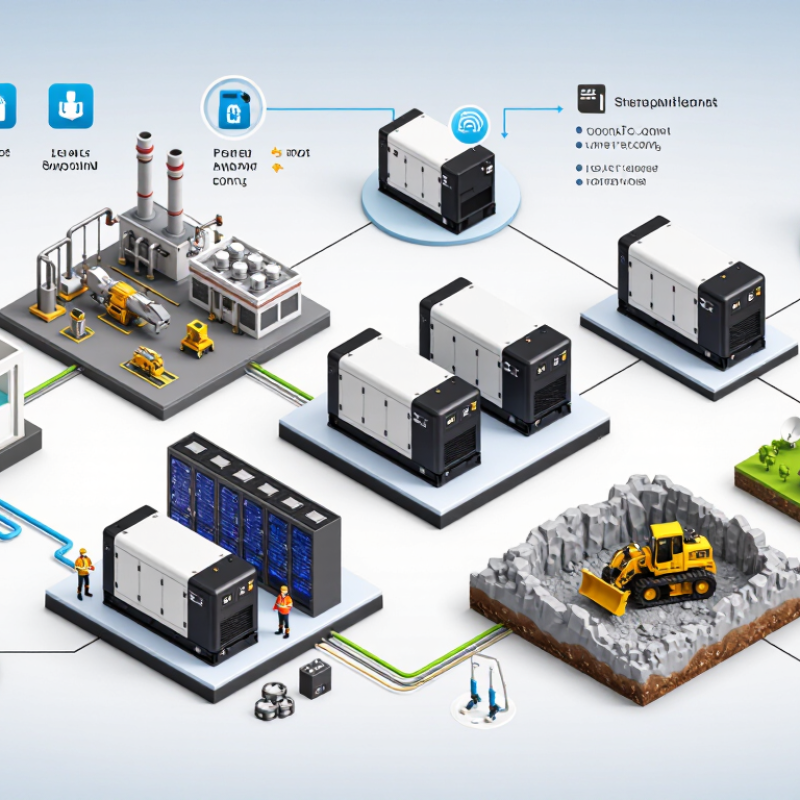
The global gas generator market serves factories, hospitals, data centers, farms, and remote facilities. Demand varies with grid reliability, fuel access, emissions rules, and operating costs. Buyers should compare suppliers across regional coverage, production capacity, and technical support. A low purchase price can hide expensive maintenance, delayed parts, or difficult commissioning.
From practical procurement reviews, supplier experience matters most during site integration. Check whether the supplier has delivered similar generator sizes and gas types. Ask for verified efficiency data, noise measurements, load-bank testing records, and safety documentation. Local technicians can reduce downtime, especially when engines operate continuously. References from comparable sites provide stronger evidence than polished brochures. They are not perfect, though.
Tips: Request a complete ownership estimate. Include fuel consumption, spare parts, transport, installation, training, and scheduled service. Confirm warranty response times in writing. Review compliance with local electrical, environmental, and pressure-system requirements. Also inspect the proposed control panel. Clear alarms and remote monitoring can prevent a small fault from becoming an expensive shutdown.
Selection should reflect actual operating conditions, not laboratory figures alone. Gas pressure may fluctuate. Ambient heat can reduce output. Seasonal demand may change the required load profile. Buyers should request performance curves for their elevation, temperature, and duty cycle. I would also question unusually broad guarantees. Some specifications look attractive until the fine print is examined. That extra review often protects the project budget.

Top 10 Gas Generator Suppliers for Global Buyers
The leading global suppliers usually serve different operating conditions, not one universal market. Their portfolios often include natural gas, biogas, landfill gas, and dual-fuel generator systems. Buyers can select compact units for workshops or containerized plants for industrial sites. Modular designs help expand capacity without replacing the entire installation.
A strong portfolio includes more than engine output. It may cover automatic transfer panels, heat recovery modules, gas trains, remote monitoring, and acoustic enclosures. Some suppliers provide units below 100 kW, while others support multi-megawatt power stations. Industrial models often include jacket-water recovery and exhaust heat exchangers. These details affect fuel use, maintenance intervals, and total operating cost.
Experienced suppliers also provide commissioning, operator training, spare parts, and local technical support. Reliable documentation should state emissions data, gas quality limits, voltage options, and altitude derating. Certification requirements vary between countries. Check them early. A product that performs well in a factory may struggle on a remote site with unstable gas pressure. Supplier rankings can look precise, but they often overlook response time and service depth. I would compare field references, warranty terms, and measured performance before trusting attractive efficiency figures. Even careful buyers can miss installation limits. That is why a site survey remains essential.
Global gas generator suppliers commonly offer product portfolios spanning small commercial units through multi-megawatt power systems. The chart presents ten representative electrical output points, measured in kilowatts, that commonly appear across international gas generator portfolios. It is intended to illustrate product coverage rather than rank individual companies or brands.
Gas generator technology varies sharply by application. Spark-ignited reciprocating engines suit hospitals, factories, and distributed power sites. Gas turbines fit larger facilities with steady demand. Microturbines offer compact installation, but usually sacrifice electrical efficiency. The U.S. EPA CHP Partnership catalog reports electrical efficiencies of roughly 27% to 41% for reciprocating engines. Turbines commonly reach about 21% to 40%, depending on size and operating conditions. Actual results depend on altitude, gas quality, cooling, and maintenance.
Fuel selection needs closer attention than many supplier brochures suggest. Pipeline natural gas provides predictable pressure and composition. Biogas can reduce waste, but siloxanes, moisture, and hydrogen sulfide require treatment. Landfill gas is even more variable. Hydrogen blending remains promising, yet compatibility must be verified for the engine, seals, controls, and local network. The IEA Global Methane Tracker 2024 estimated about 120 million tonnes of methane emissions from fossil fuel operations in 2023. Therefore, buyers should examine upstream leakage, not only generator exhaust.
Performance claims should reference recognized standards. ISO 8528-1 defines generator rating categories, while ISO 8528-5 addresses performance and transient response. Emissions compliance may involve regional rules, permit limits, and continuous monitoring. Ask for test conditions, not just headline efficiency. A low-cost quotation can hide poor part-load performance. It can also ignore fuel pressure changes. That mistake is common. Buyers should compare lifecycle cost, maintenance intervals, noise, black-start capability, and documented factory-test results. Supplier experience matters, but transparent evidence matters more.
Top 10 Gas Generator Suppliers for Global Buyers
Supplier Comparison: Capacity, Reliability, Service, and Pricing
Choosing among the top ten gas generator suppliers requires more than comparing catalogue output. Capacity should match the site, not inflate it. Projects may need 500 kW units for backup or multi-megawatt systems for continuous duty. Ask for tested load profiles, fuel-consumption curves, and performance at high ambient temperatures. Real operating data matters more than polished brochures.
Reliability lives in details. Review engine protection, alternator quality, enclosure design, and documented factory testing. Request reference sites with similar gas quality and operating hours. Service separates a workable purchase from a costly interruption. Check local technicians, remote diagnostics, spare-part stock, and guaranteed response times. A clear warranty should define exclusions, maintenance duties, and acceptable downtime. Ask whether training includes hands-on commissioning.
Pricing deserves a full-life calculation. Compare equipment, installation, gas conditioning, transport, commissioning, maintenance, and fuel costs. A low bid can become expensive after two years. Yet price estimates are rarely perfectly comparable. Taxes, grid codes, site conditions, and currency movement can change the final figure. Price is not everything. An honest review should admit its limits. Supplier rankings depend on verified documents, current service networks, and comparable quotes. Some evidence may be incomplete, so buyers should test every assumption before signing.
| Rank | Supplier Category | Annual Shipment Capacity (Estimated MW) | Typical Unit Range (MW per Set) | Reliability Rating (5-point benchmark) | Typical Lead Time (Weeks) | Global Service Coverage | Standard Warranty | Indicative Equipment Price (USD/kW) | Best-Fit Buyer Profile |
|---|---|---|---|---|---|---|---|---|---|
| 1 | Tier 1 Global Supplier A | 3,000–4,000 | 1–12 | ★★★★★ | 20–32 | Very extensive | 24 months or 10,000 operating hours | $650–$950 | Utility-scale power, data centers, and critical-load projects |
| 2 | Tier 1 Global Supplier B | 2,500–3,500 | 0.5–10 | ★★★★★ | 22–34 | Very extensive | 24 months or 10,000 operating hours | $630–$920 | Industrial plants, hospitals, and continuous-duty applications |
| 3 | Tier 1 Global Supplier C | 2,000–3,000 | 0.4–8 | ★★★★★ | 24–36 | Extensive | 18–24 months or 8,000–10,000 operating hours | $600–$900 | Distributed generation and high-availability commercial sites |
| 4 | Regional Specialist A | 1,200–2,000 | 0.25–6 | ★★★★☆ | 16–28 | Strong regional | 12–24 months or 8,000 operating hours | $480–$760 | Commercial, agricultural, and regional industrial projects |
| 5 | Regional Specialist B | 1,000–1,800 | 0.2–5 | ★★★★☆ | 14–26 | Strong regional | 12–18 months or 6,000–8,000 operating hours | $450–$720 | Backup power, microgrids, and small-to-medium industrial sites |
| 6 | Value-Focused Supplier A | 800–1,500 | 0.1–4 | ★★★★☆ | 12–24 | Selective international | 12 months or 5,000 operating hours | $380–$650 | Cost-sensitive commercial and light-industrial buyers |
| 7 | Value-Focused Supplier B | 700–1,300 | 0.1–3 | ★★★☆☆ | 12–22 | Distributor-led | 12 months or 4,000–5,000 operating hours | $350–$600 | Small businesses, farms, and non-critical standby applications |
| 8 | Modular Power Supplier A | 600–1,200 | 0.25–2.5 | ★★★★☆ | 10–20 | Growing international | 12–18 months or 6,000 operating hours | $420–$680 | Modular microgrids, rental fleets, and phased capacity expansion |
| 9 | Containerized Power Supplier A | 500–1,000 | 0.2–2 | ★★★☆☆ | 10–18 | Project-based | 12 months or 4,000 operating hours | $400–$670 | Remote sites, temporary power, and rapidly deployable projects |
| 10 | Custom Engineering Supplier A | 300–800 | 0.1–1.5 | ★★★☆☆ | 14–30 | Local-service dependent | 12 months or 3,000–5,000 operating hours | $360–$620 | OEM integration, bespoke packages, and niche applications |
Choosing among the top 10 gas generator suppliers requires more than comparing rated output and purchase price. The Energy Institute’s Statistical Review of World Energy 2024 reported that natural gas provided about 23% of global primary energy in 2023. This scale makes fuel efficiency, emissions documentation, and long-term parts support important commercial questions. Ask suppliers for tested fuel-consumption curves at 25%, 50%, 75%, and 100% load.
Look beyond brochures. Request ISO 8528 performance data, factory acceptance test records, and clear definitions for standby and prime power ratings. A serious supplier should explain voltage regulation, transient response, noise levels, cooling limits, and altitude derating. The International Energy Agency’s Gas 2024 analysis also highlighted continuing regional differences in gas demand and infrastructure. Your supplier must therefore confirm gas pressure, composition tolerance, and commissioning support for the destination market.
Check the evidence carefully. ISO 9001 certification shows a quality system, not perfect equipment. Visit a production site if the order is large, inspect serial-number traceability, and contact comparable users. Review warranty exclusions, response times, local technicians, and critical spare inventories. Ask for a lifecycle cost model, not just a quotation. It should include fuel, maintenance, transport, testing, and expected overhaul intervals. My own caution is simple: supplier rankings can hide weak after-sales coverage. A lower bid may become expensive when one control module waits six weeks at a border.
You are using an outdated browser. Things may not appear as intended. We recommend updating your browser to the latest version.
Close