10 Best Button Cell Battery Suppliers Worldwide?

Choosing a reliable Button Cell Battery supplier is more complex than comparing prices on a spreadsheet. A compact CR2032 may power a medical sensor, car key, watch, or children’s electronic device. Each use demands different attention to voltage stability, leakage resistance, shelf life, packaging, and traceability. Small dimensions leave little room for manufacturing mistakes.

Isidor Buchmann, founder of Cadex Electronics and a respected battery-industry educator, once observed, “The battery is the most overlooked component in a portable device.” That warning remains relevant. A supplier may offer attractive unit costs while providing weak batch control, inconsistent labeling, or limited technical support. Those details become visible only after thousands of cells enter production.

This guide examines 10 Best Button Cell Battery Suppliers Worldwide through practical purchasing criteria. It considers product range, chemistry expertise, quality systems, customization, delivery capability, and customer experience. Compliance documentation also matters, especially for international shipments and safety-sensitive applications. A strong supplier should explain test methods clearly, not hide behind impressive marketing language.

No ranking is perfect. Regional availability can change quickly. My evaluation may also favor suppliers with clearer documentation over smaller companies with excellent products but less visible evidence. That limitation deserves attention. Buyers should verify current certificates, sample performance, minimum order quantities, and warranty terms before committing. The right supplier is not always the cheapest. It is the one that delivers consistent cells, honest communication, and dependable support when a tiny battery carries a critical responsibility.
10 Best Button Cell Battery Suppliers Worldwide?

What Are Button Cell Batteries and Where Are They Used?

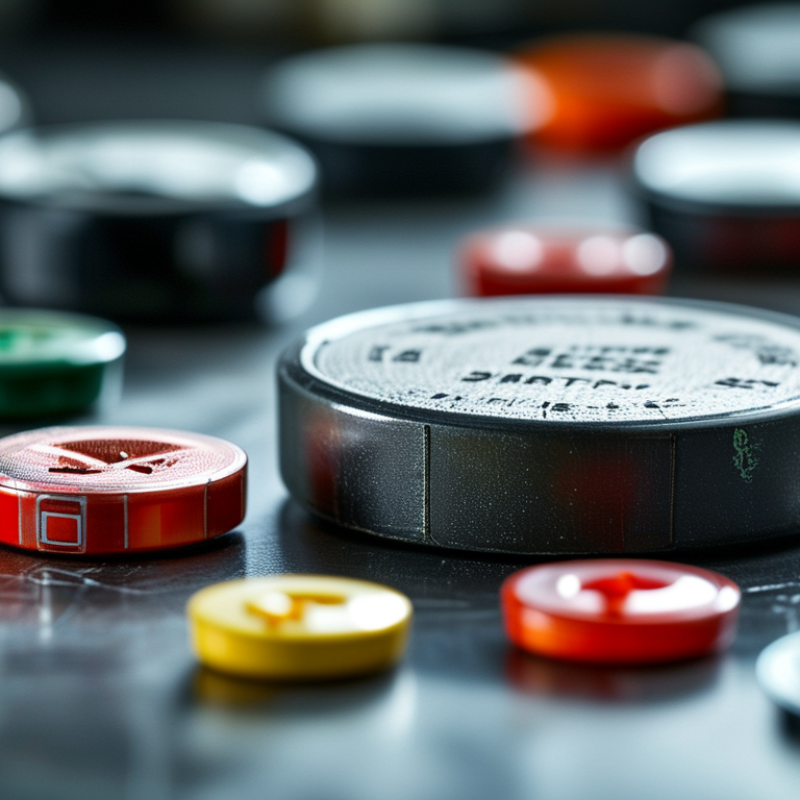
Button cell batteries are compact, flat power sources with a positive and negative face. Their coin-like shape fits devices with limited internal space. Common chemistries include alkaline, silver oxide, lithium, and zinc-air. Each chemistry changes voltage, shelf life, and performance in cold conditions. Grand View Research projects the global button cell market to grow at over 4% annually through 2030. That growth reflects steady demand, not a sudden trend. Think of a digital watch, hearing aid, car key fob, or small calculator. One tiny cell can support months of ordinary use. Small, but important.

Button cells also power medical monitors, toys, sensors, and compact measuring equipment. IDC reported 538.9 million wearable devices shipped worldwide in 2024, although many now use rechargeable packs. This figure still shows the scale of small-device demand. Suppliers should provide consistent voltage, traceable production records, clear expiration dates, and independent quality testing. IEC 60086 standards offer a useful reference for primary battery dimensions and performance. Safety matters too, especially where children may access loose cells. A careless specification can cause leakage or early failure. Forecasts can miss real usage patterns. In practice, temperature, storage time, and equipment design often matter as much as nominal capacity.

How to Evaluate Button Cell Battery Suppliers Worldwide

Evaluating button cell battery suppliers worldwide requires more than comparing unit prices. The International Energy Agency reported that global battery demand exceeded 750 GWh in 2023, mainly driven by electric vehicles. This scale increases pressure on raw materials, production capacity, and quality control. However, button cells need different evidence. Ask for chemistry-specific datasheets, batch records, shelf-life data, and independent safety test reports.

Check compliance before discussing volume. Suppliers should demonstrate testing against applicable IEC 60086 requirements and provide traceability from materials to finished cells. Request measured capacity at defined loads, not only nominal capacity. A reliable supplier can explain pulse performance, leakage resistance, storage temperature, and failure rates. The International Electrotechnical Commission identifies standardized testing as essential for comparing primary battery performance, but real devices may still behave differently.

Audit the factory, or use a qualified third-party inspection service. Review incoming-material controls, sampling plans, calibration records, and corrective-action history. The 2024 Circularity Gap Report highlights that global material use reached 106.6 billion tonnes in 2022, while circular inputs remained limited. This makes recycled-content claims worth verifying, not simply accepting. I would also compare lead times across three production batches. One attractive sample proves little. Supplier websites can look convincing. They can still hide weak documentation, inconsistent sealing, or optimistic capacity figures. A practical scorecard should balance quality, continuity, compliance, technical support, and total delivered cost. Price should remain visible, but not dominant.

How to Evaluate Button Cell Battery Suppliers Worldwide

This neutral supplier-evaluation model prioritizes product quality, capacity consistency, safety testing, regulatory compliance, minimum-order flexibility, and delivery reliability. Buyers can use these criteria to compare suppliers without relying on company or brand names.

Which Features Define a Reliable Button Cell Manufacturer?

A reliable button cell manufacturer should offer more than attractive pricing and a polished website. According to a 2024 Grand View Research assessment, the global button cell battery market is expected to grow at roughly 6% annually through 2030. This expansion increases the need for stable quality, not just higher output. Buyers should check whether each production lot includes capacity, discharge, leakage, and internal-resistance results. Clear batch codes should connect the cells to materials, equipment, and inspection records.

Standards matter in small batteries. The IEC 60086 series defines performance and safety requirements for primary cells, including dimensions, discharge testing, and labeling. A dependable supplier should explain which tests apply to each chemistry and provide current laboratory evidence. Ask for sampling plans, accelerated-aging results, and storage data at different temperatures. A cell that performs well at 25°C may behave differently inside a cold medical sensor or a hot automotive key fob.

Traceability is equally important. Reliable factories usually control incoming materials, seal thickness, welding quality, and packaging humidity. They should also describe corrective actions when a batch fails. That detail reveals practical experience. Still, certificates alone are not enough. I would inspect recent reports, request production samples, and compare measured capacity with the datasheet. Human inspection can miss defects. Even strong suppliers need independent verification, especially when millions of cells enter small devices where replacement is difficult.

What Are the 10 Best Button Cell Battery Suppliers Worldwide?

The 10 best button cell battery suppliers worldwide are not chosen by price alone. They combine stable chemistry, accurate capacity ratings, and dependable quality control. The strongest suppliers usually include established manufacturers from East Asia, Europe, and North America. They serve watches, medical devices, sensors, hearing aids, and compact electronics.

Look for suppliers with ISO-certified production, batch traceability, and clear safety data sheets. Reliable companies provide discharge curves, shelf-life records, operating-temperature ranges, and independent test reports. They should also explain differences between lithium, silver-oxide, alkaline, and zinc-air cells. This matters because a cell that fits physically may still fail under continuous load. Ask about moisture protection, terminal consistency, packaging dates, and shipping conditions. Details matter.

A practical shortlist should include high-volume industrial producers, medical-grade specialists, low-drain coin-cell makers, and distributors with verified storage systems. Regional stock can reduce delays, while direct factory purchasing may improve consistency for large orders. Still, “best” depends on the application. A supplier suitable for a remote sensor may not suit a hearing device. I have seen specifications appear excellent on paper, yet performance weakened after poor storage. That deserves attention. Request samples, compare real discharge behavior, and review replacement policies before approval. Supplier rankings can change when lead times, documentation, or quality audits reveal weaknesses.

How to Select the Right Supplier for Your Battery Requirements?

Selecting a button cell battery supplier starts with your device, not a ranking list. Define chemistry, voltage, diameter, thickness, discharge rate, and storage life. A wearable sensor may need stable output at low current. A medical monitor demands tighter quality controls and traceable production records. Ask for datasheets, safety test reports, and samples from the proposed production line. Do not rely on a polished catalogue alone. It can hide useful details.

Supplier experience matters when your order moves from ten samples to 100,000 units. Check whether the supplier has handled similar dimensions, equipment, and delivery schedules. Request production photographs, inspection procedures, and lot-level test data. Confirm capacity during peak seasons, packaging protection, and moisture-controlled storage. A reliable supplier should explain defects openly, including replacement rules and response times. Vague answers are a warning. So is pressure to approve samples quickly. Review communication quality because engineering changes rarely wait for perfect timing.

Compare total cost, not only the unit price. Include tooling, testing, freight, customs documents, and rejected-batch risk. Clarify minimum order quantities and whether mixed specifications are allowed. Ask how the supplier manages raw-material changes and date coding. Independent certification can support trust, but verify its scope and validity. A factory visit or video audit may reveal labeling gaps, crowded storage, or weak inventory control. I once treated a low quote as efficiency; it later reflected thinner support. That mistake remains worth remembering. Choose the supplier whose evidence matches your operating needs, even when the offer looks less attractive.

10 Best Button Cell Battery Suppliers Worldwide? - How to Select the Right Supplier for Your Battery Requirements?
Rank Supplier Profile Primary Supply Region Button Cell Chemistry Common Sizes Typical Nominal Voltage Application Strength Quality & Compliance Indicators Typical MOQ Range Typical Lead Time Best Selection Criteria
1 Profile A East Asia Lithium coin CR2032, CR2025, CR2016 3.0 V Wearables, key fobs, memory backup, compact electronics UN 38.3 transport testing; IEC 60086-4 safety testing; RoHS and REACH documentation 10,000–50,000 pieces 4–8 weeks Choose when stable high-volume supply and low self-discharge are priorities.
2 Profile B East Asia Alkaline coin LR44, LR41, LR1130 1.5 V Calculators, toys, clocks, low-drain consumer devices IEC 60086-1 and IEC 60086-2 performance references; RoHS-compliant material declarations 20,000–100,000 pieces 3–7 weeks Choose when low purchase cost and broad retail availability matter most.
3 Profile C Japan and East Asia Silver oxide SR626SW, SR44, SR927SW 1.55 V Watches, medical instruments, precision measuring devices IEC 60086-1 and IEC 60086-3 references; leak-resistance and dimensional-control records 5,000–30,000 pieces 5–10 weeks Choose when stable voltage, compact size, and reliable low-drain performance are essential.
4 Profile D Europe Lithium coinSpecialty lithium CR2032, CR2450, CR2477 3.0 V Industrial sensors, access systems, medical and security equipment ISO 9001 quality system; UN 38.3 test summary; IEC 60086-4; traceability by production lot 5,000–25,000 pieces 6–12 weeks Choose when documentation, traceability, and regional regulatory support are important.
5 Profile E North America AlkalineSilver oxide LR44, LR41, SR44, SR626SW 1.5–1.55 V OEM replacement programs, laboratory devices, retail packs UL-related production controls where applicable; RoHS, REACH, and packaging compliance documentation 5,000–50,000 pieces 4–10 weeks Choose when local customer service, import support, and mixed-product sourcing are needed.
6 Profile F Southeast Asia Lithium coinAlkaline coin CR2032, CR2025, LR44, LR41 1.5–3.0 V Consumer electronics, promotional products, smart accessories ISO 9001 or equivalent process control; UN 38.3 for lithium cells; batch sampling reports 10,000–100,000 pieces 4–9 weeks Choose when competitive pricing and flexible product combinations are required.
7 Profile G East Asia Rechargeable lithium LIR2032, LIR2450, LIR2025 3.6–3.7 V Rechargeable wearables, compact sensors, specialty electronics IEC 62133-2 safety testing; UN 38.3 transport testing; charger and protection requirements reviewed 5,000–30,000 pieces 8–14 weeks Choose only when the product is designed for rechargeable cells and includes suitable charging controls.
8 Profile H Europe and North America Zinc-air PR44, PR41, PR48 1.4 V Hearing aids and low-current medical audio devices IEC 60086-1 and IEC 60086-2 performance references; moisture and activation-date controls 10,000–75,000 pieces 5–12 weeks Choose when controlled shelf life, activation performance, and medical-channel packaging are required.
9 Profile I Global distribution network Multiple chemistries CR2032, CR2025, CR2016, LR44, SR44 1.5–3.0 V Multi-country procurement, replacement parts, distributors Supplier qualification audits; lot traceability; SDS, transport, RoHS, and REACH documentation 1,000–25,000 pieces 2–8 weeks from stock Choose when consolidated purchasing and short delivery from regional inventory are priorities.
10 Profile J Asia with global export capability Custom-packaged button cells CR2032, CR2450, LR44, SR626SW 1.5–3.0 V Private-label packaging, retail kits, device-specific battery packs Artwork approval process; barcode and packaging controls; UN 38.3 for lithium products; final inspection reports 20,000–150,000 pieces 6–14 weeks Choose when packaging customization, labeling, and large-volume retail fulfillment are needed.
Selection note: MOQ, lead time, certifications, and available sizes are typical industry benchmarks rather than guarantees for any individual supplier. Verify current datasheets, production-lot traceability, IEC test reports, UN 38.3 documentation for lithium cells, shelf life, warranty terms, and applicable import regulations before placing an order.
Warning!

You are using an outdated browser. Things may not appear as intended. We recommend updating your browser to the latest version.

Close