Top Smart Switch Manufacturers for Global Buyers
Choosing a Smart Switch manufacturer is not just a price comparison. Global buyers must weigh electrical compatibility, wireless standards, product quality, documentation, and after-sales support. A switch that looks polished in a catalog may behave differently behind a thick wall or in a crowded network. Small details matter.
For a connected-device perspective, security technologist Bruce Schneier offers a useful reminder: “Security is a process, not a product.” His words are not specific to switches, but they apply to connected controls: buyers should look beyond a feature list and ask how products receive updates, protect user data, and remain supported. The answers should be clear and verifiable.
This guide examines manufacturers through practical criteria, including product range, certifications, customization options, supply capacity, and communication with overseas customers. It also considers whether published specifications match the needs of real installations. No shortlist is perfect. A strong supplier on paper may still have gaps in documentation or regional support, and those gaps deserve attention. The aim is not to declare one universal winner, but to help buyers ask sharper questions before committing to a Smart Switch supplier.
Understanding Smart Switches and Their Applications
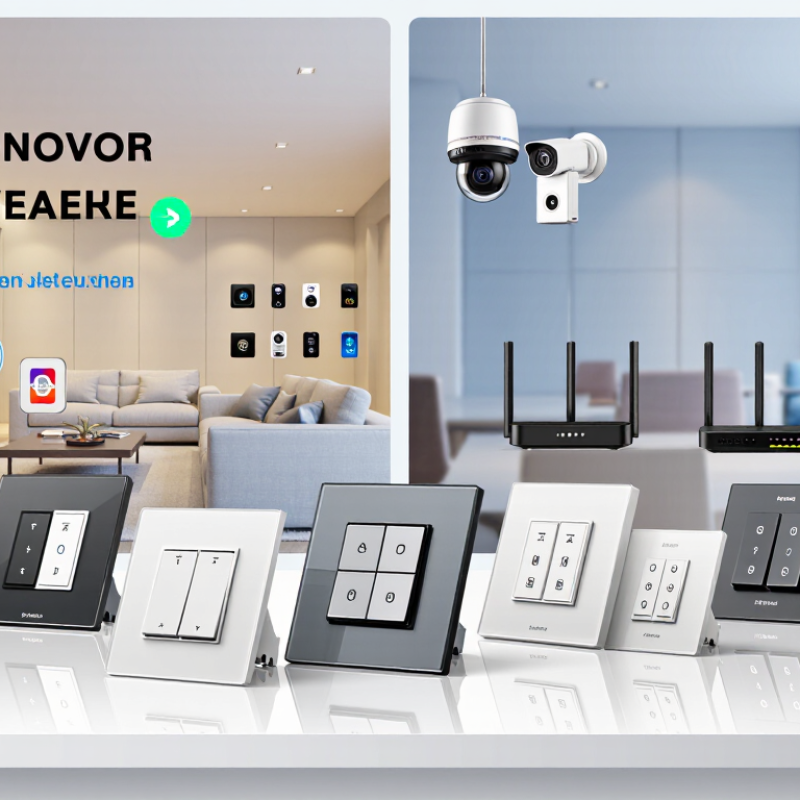
Smart switches replace or supplement conventional wall controls, letting users operate lighting through a button, schedule, sensor, or connected system. In homes, schedules can turn hallway lights off overnight; in offices, grouped controls can adjust meeting-room lighting between occupied and empty periods. Some models also manage fans or other compatible loads, but compatibility depends on the switch design and circuit. A smart label alone does not guarantee an easy retrofit.
The case for better control is practical. The UN Environment Programme and GlobalABC’s Global Status Report for Buildings and Construction 2024/25 estimates that buildings and construction account for 32% of global energy use and 34% of energy-related CO2 emissions. These figures cover a broad sector, not smart switches alone. Still, they show why small, measurable controls matter. Buyers should check wiring requirements, supported load types, communications protocols, and whether switches retain basic operation when internet access fails. That last detail is easy to overlook.
Tips: Test one switch in the intended circuit before specifying a large order. Record the wiring, lamp type, response time, and behavior during a network outage. One awkward point: app-based control can add convenience, yet it may also add setup work for installers.
Smart Switch Connectivity: Representative Radio Frequencies
Smart switches use wireless protocols to control lighting, fans, schedules, and scenes. The chart shows representative frequencies in MHz; Wi-Fi bands vary by region, and Z-Wave frequencies are region-specific. Buyers should check local compatibility and the protocol requirements of their smart-home system.
Criteria for Evaluating Smart Switch Manufacturers
Global buyers should assess smart switch manufacturers through verifiable performance, not polished catalogues. The 2024 Global Status Report for Buildings and Construction, published by UNEP, estimates that buildings use 32% of global energy and produce 34% of energy-related CO₂ emissions. Smart controls may help manage lighting, but a switch alone does not guarantee savings. Ask for test results showing standby power, switching endurance, and performance under realistic loads.
Safety and compatibility deserve equal weight. Check whether products have been assessed against relevant standards, such as IEC 60669-2-1 for electronic switches, and request certificates for the specific destination market. Confirm support for the required wiring, load types, and communication protocols; a device that works on a test bench may fail in an older building with limited neutral wiring. Small details matter. Review firmware-update policies, data handling, and security testing, too. NIST’s Cybersecurity Framework 2.0 offers a useful reference for assessing how suppliers identify and manage cyber risks. Ask for written procedures, not just assurances.
Manufacturing consistency is harder to judge from samples. Request factory audit records, defect-rate data, traceability examples, and a clear process for handling field failures. Compare lead times and spare-part availability across seasons. A neat datasheet can still leave gaps, and buyers should record those uncertainties rather than assume they will disappear after shipment.
Leading Manufacturers and Their Product Specialties
Smart-switch manufacturers usually specialize by installation type, communication protocol, and control depth. A switch may control one bedside lamp or manage lighting across a commercial floor. The IEA’s 2023 Buildings report estimates that buildings used 30% of global final energy in 2022. It also attributes 26% of energy-related emissions to building operations. These figures make efficient controls relevant, but they do not prove that a particular switch saves energy.
Residential-focused manufacturers often prioritize slim designs, retrofit relays, dimming, and compatibility with existing wiring. Buyers should check neutral-wire requirements and load ratings before choosing a model. A tiny relay behind a wall plate can be useful, but crowded wiring boxes complicate installation. Not effortless.
Commercial specialists tend to emphasize centralized management, scene scheduling, occupancy inputs, and energy monitoring. Their products suit offices, hotels, and multi-room projects where operators need repeatable controls. Manufacturers serving original-equipment customers may instead offer configurable modules, custom enclosures, or support for different control protocols. For global buyers, compare certification documentation, local technical support, firmware update policies, and replacement availability. These details are less visible than touch panels, yet they often determine whether a system remains serviceable. And control hardware alone does not guarantee lower consumption; schedules and occupant behavior matter too.
Comparing Compatibility, Certifications, and Global Support
For global buyers, a smart switch manufacturer should demonstrate compatibility across the systems customers already use. Confirm support for the required wireless protocol, hub, and voice platform, then check practical details such as neutral-wire needs, load limits, and app language. A switch may pair successfully yet still behave differently after a router change or firmware update. Ask for a compatibility matrix tied to the exact model and hardware revision. Do not rely on a broad “works with smart homes” claim. Small differences matter.
Certifications should also be checked against the product, destination market, and current documentation. Request test reports or certificates that identify the model, rather than accepting a logo on a brochure. Documents matter. Global support is equally practical: look for clear installation guides, reachable technical staff, firmware update policies, and a defined warranty process. Ask how replacements and troubleshooting work across time zones. A short response during sampling is useful, but it does not prove long-term support. Test a few units in the intended wiring and network conditions before placing a large order. That takes time. Still, skipping the test can leave buyers discovering a compatibility gap after installation has begun.
Choosing a Smart Switch Manufacturer for Your Market
Choosing a smart switch manufacturer for your market starts with the wall box, not the catalog. Confirm supply voltage, frequency, neutral-wire availability, load types, and wireless performance in the buildings your customers actually use. In older homes, a missing neutral can change installation time and cost. Ask for test reports, firmware update policies, component traceability, and samples tested under realistic loads. Small details matter.
The stakes are practical. The IEA’s 2023 Buildings report says buildings accounted for about 30% of global final energy use and 26% of energy-related emissions in 2022. A switch alone cannot deliver those savings; controls and user habits matter too.
The UN and ITU’s Global E-waste Monitor 2024 reports 62 million tonnes of e-waste generated in 2022, with only 22.3% formally collected and recycled. That makes repairability and spare parts worth discussing before an order is placed.
No sample test is perfect. Pilot units can expose app delays, dimmer flicker, or confusing reset steps. Trade-offs remain. Choose a supplier that documents what it has tested and admits what still needs validation.