How to Use Plastic Injection Molding for Efficient Production?
Plastic injection molding is a key manufacturing process. It enables the mass production of intricate parts quickly and precisely. According to a recent report by Grand View Research, the global plastic injection molding market is expected to reach USD 305.42 billion by 2025. This growth signals a demand for efficient production methods in various sectors.
Many companies are turning to plastic injection molding due to its efficiency. This method reduces material waste and allows for quick turnaround times. However, not all processes are optimized. Issues like poor design and inadequate cooling can lead to inefficiencies. Reports suggest that 25% of production waste comes from improper molding techniques.
To maximize the benefits of plastic injection molding, manufacturers must focus on best practices. Attention to detail in design and material selection is essential. Understanding the nuances of the process can lead to significant improvements. Although challenges exist, refining techniques can foster better outcomes in production.
Understanding Plastic Injection Molding and Its Applications
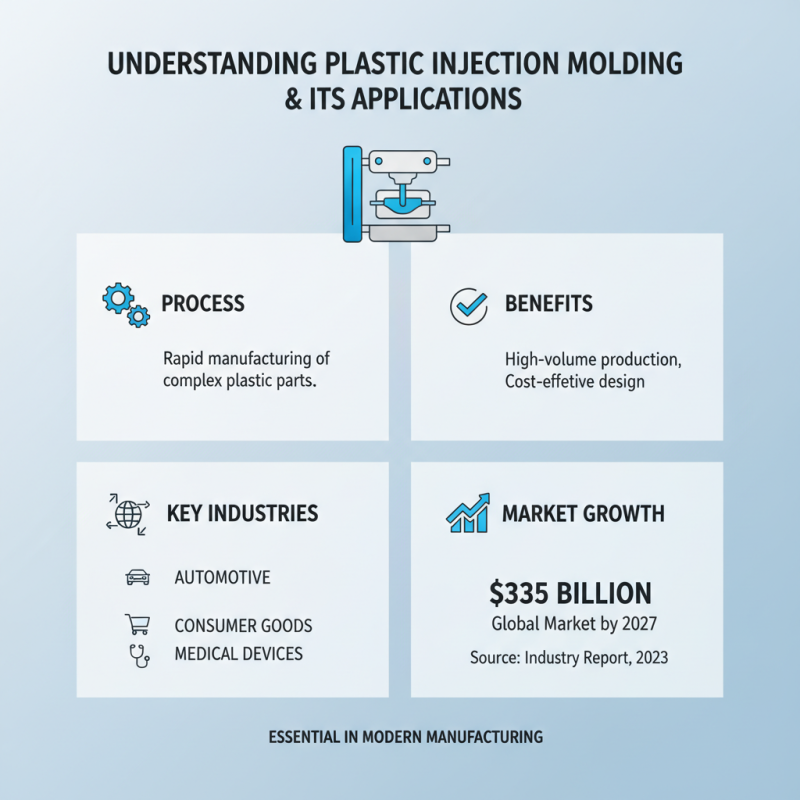
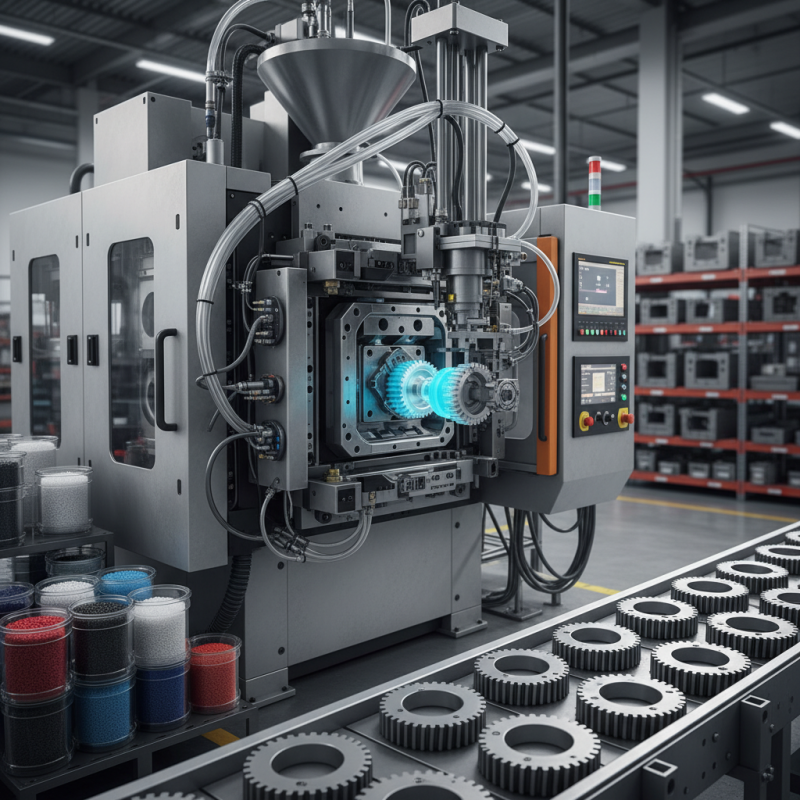
Plastic injection molding is a highly effective manufacturing process. It allows for the rapid production of plastic parts. Many industries benefit from this method, including automotive, consumer goods, and medical devices. According to a recent report, the global plastic injection molding market is projected to reach $335 billion by 2027. This growth highlights its importance in modern manufacturing.
The versatility of plastic injection molding is noteworthy. It can create complex geometries and high tolerances. This is crucial for industries where precision is vital. For instance, in the medical sector, small components must adhere to strict regulations. Yet, the process isn’t without flaws. Design errors can lead to wasted materials and time. Engineers must remain vigilant during the design phase.
Moreover, sustainability concerns are emerging in this field. Many manufacturers are exploring eco-friendly materials and practices. While recycled plastics are gaining traction, their quality can vary. Balancing efficiency with environmental impact is a challenge. As the industry evolves, so too must the development of innovative solutions.
Key Benefits of Using Plastic Injection Molding in Manufacturing
Plastic injection molding offers several key benefits in manufacturing. This process is known for its ability to produce high volumes of consistent, quality parts. According to industry reports, injection molding can achieve production rates of 20 to 120 parts per minute, depending on the complexity of the component. Such efficiency can significantly reduce production time and costs, making it an attractive option for many businesses.
One notable advantage is material versatility. Manufacturers can use various thermoplastics and thermosetting polymers. This flexibility allows for the creation of intricate designs with different mechanical properties. Additionally, the ability to incorporate fillers or additives can enhance product performance. However, high upfront costs for molds and machinery can be a barrier for small-scale producers.
Sustainability is another critical factor. As industries focus on reducing waste, injection molding can be more efficient than traditional methods. Data suggests that 90% of excess material from injection molding can be recycled. Still, it requires careful planning and execution to maximize this benefit. Realizing these advantages demands a balance between initial investment and long-term gains. Each operation must evaluate specific needs to harness the full potential of this technology.
Essential Components of a Plastic Injection Molding Machine
Plastic injection molding is a popular manufacturing process. It involves several key components working together. Understanding these components is essential for efficient production.
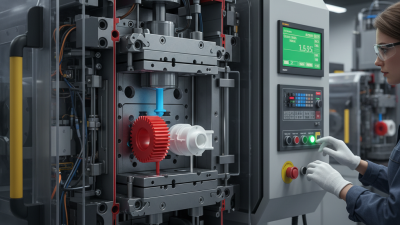
The injection unit is critical. It melts plastic pellets and injects them into a mold. Temperature control is vital here. If the plastic isn’t heated correctly, defects may arise. The clamping unit holds the mold closed during injection. It needs to withstand high pressure. A poorly clamped mold can lead to uneven products.
A cooling system follows the injection process. It helps solidify the injected plastic. Insufficient cooling can result in warping or other issues. Monitoring cooling time is important. Last, the ejector system removes the finished part from the mold. If it doesn’t function properly, it can damage the product or the mold itself. Each component plays a unique role, highlighting the complexity of the process. Ignoring any aspect could lead to inefficiencies and increased costs.
Step-by-Step Process of Plastic Injection Molding Production
Plastic injection molding is a pivotal method in manufacturing. It enables efficient production across various industries. Understanding the step-by-step process can enhance overall output quality and reduce costs significantly.
The journey begins with designing the mold. This step sets the foundation for the product. Engineers must ensure the mold aligns with production goals. Reports indicate that proper design reduces waste by up to 30%. Once the design is finalized, materials are selected. The choice of plastic is crucial and varies by application. Notably, thermoplastics are popular for their versatility and recyclability.
Next comes the injection phase. Plastic is heated and injected into the mold. The pressure applied is critical. Insufficient pressure may lead to defects, while excessive pressure can cause production delays. Studies show that more than 25% of defects occur due to inadequate pressurization. After cooling, the mold opens, and the part is ejected. Observing the initial batches is vital for identifying any issues. Adjustments may be necessary, and refining this process can lead to continuous improvement over time. Manufacturers should remain open to refining their methods for more effective outcomes.
Best Practices for Optimizing Efficiency in Injection Molding Operations
When it comes to maximizing efficiency in plastic injection molding, attention to detail is crucial. The average cycle time can vary widely, ranging from 15 to 60 seconds per part. Optimizing this time requires careful consideration of the machine settings and mold design. According to a 2022 industry report, up to 30% of production time can be lost during setup and maintenance. This highlights the importance of a well-organized workflow and preventative maintenance schedules.
Worker training is another vital element. An experienced operator can make quick adjustments, reducing downtime. Data suggests that companies investing in operator training see a 20% increase in productivity. However, many firms overlook this aspect, leading to inconsistent output quality. Employing a systematic approach to operator onboarding can pay dividends over time.
Moreover, material selection plays a significant role. Choosing the right type of plastic can improve the mold fill and cooling process. For instance, high-flow materials can enhance cycle times but may require more precise temperature control. Neglecting these factors can result in defects, ultimately affecting product quality. Balancing efficiency with quality is often a challenge that requires ongoing evaluation.
Injection Molding Cycle Time Analysis
This chart illustrates the average cycle time for different injection molding processes, highlighting the impact of various factors on efficiency. The data shows the time taken in seconds for standard production runs across three types of materials.