How to Optimize Plastic Injection Molding for Better Efficiency?

In the world of manufacturing, optimizing processes is crucial. One area that stands out is plastic injection. This method plays a vital role in creating a myriad of products. However, inefficiencies can lead to increased costs and wasted materials.

When companies delve into plastic injection, they often overlook small details that matter. For example, mold design is a key factor. A poorly designed mold can cause delays and higher rejection rates. These issues not only affect output but also compromise quality. It's important to reflect on these aspects and make necessary adjustments.

Furthermore, factors such as temperature control and cycle time also need attention. Poor temperature management can lead to defects. Not all companies emphasize this, but even minor tweaks can enhance performance. By examining each stage of the plastic injection process, manufacturers can uncover opportunities for improvement and refine efficiency.
How to Optimize Plastic Injection Molding for Better Efficiency?

Understanding the Basics of Plastic Injection Molding Efficiency

How to Optimize Plastic Injection Molding for Better Efficiency?

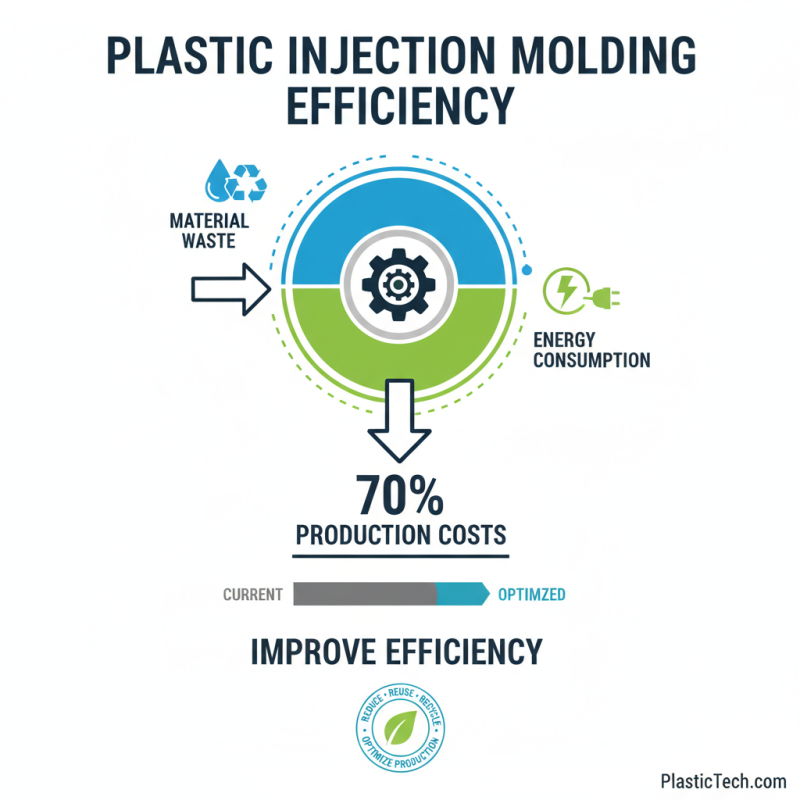
Plastic injection molding is a widely used manufacturing process. Understanding its efficiency is crucial for optimizing production. According to industry reports, up to 70% of production costs can be attributed to material waste and energy consumption. By addressing these factors, manufacturers can improve their overall efficiency.

One common issue in injection molding is cycle time. Reducing the cycle time can lead to higher output. An analysis shows that even a 10% reduction can significantly increase daily production volumes. Fine-tuning parameters like temperature and pressure is essential. However, finding the right balance often requires trial and error, which can be time-consuming.

Another area for improvement is machine maintenance. Data indicates that 20% of operational downtime comes from equipment failures. Regular maintenance schedules can mitigate these issues. Nonetheless, many companies still experience unexpected breakdowns. Ensuring optimal machine conditions is vital yet often overlooked. Balancing efficiency with maintenance needs is a constant challenge in the industry.


Key Factors Affecting Plastic Injection Molding Performance

How to Optimize Plastic Injection Molding for Better Efficiency?

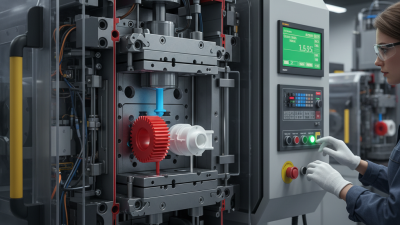
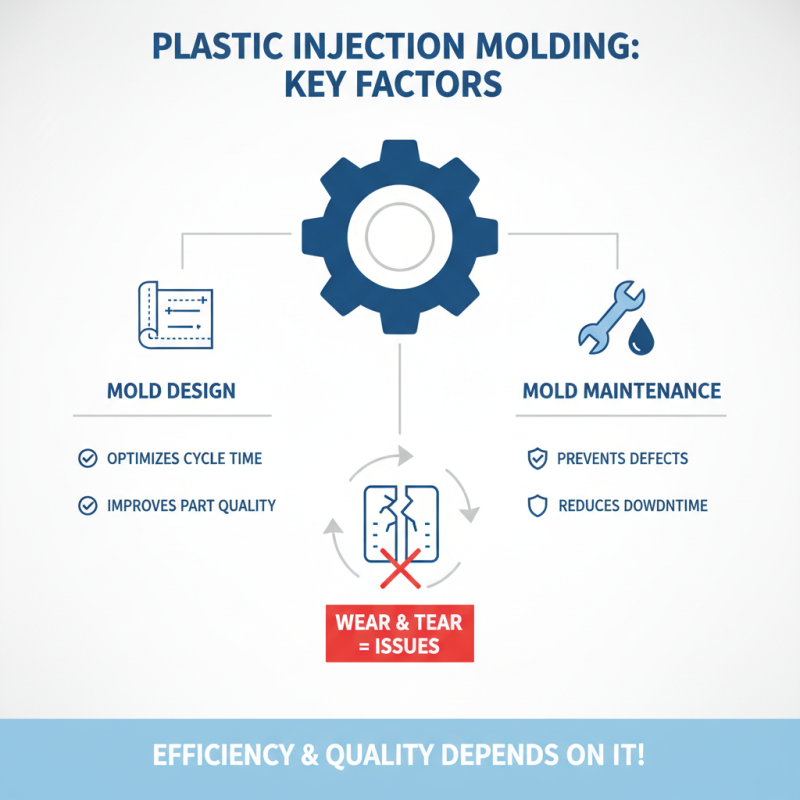
Plastic injection molding is a complex process influenced by several key factors. The design of the mold plays a critical role in ensuring efficiency. A well-designed mold can minimize cycle time and improve part quality. However, many overlook the necessity of regular maintenance on molds. Wear and tear can lead to defects that are hard to identify, causing significant downtime.

Temperature control is another essential aspect. The temperature of the plastic material should be consistent throughout the process. If the temperature fluctuates, it can lead to uneven filling and flawed parts. Some operators might not monitor temperatures closely enough. This oversight can create challenges that affect production timelines and increase scrap rates.

Another factor is material selection. Different plastics behave differently under heat and pressure. It's vital to choose the right material for specific applications. Sometimes, the decision is made hastily. This can lead to inefficiencies or unexpected product failures. Continuous evaluation of the materials used can enhance overall performance, leading to better product outcomes.

Techniques for Reducing Cycle Times in Injection Molding

Reducing cycle times in injection molding is critical for improving overall efficiency. One effective approach is to optimize cooling. A well-designed cooling system can decrease the time it takes for plastic parts to solidify. This can lead to faster production rates. Strategically placing cooling channels improves heat removal. This, in turn, shortens the cycle time significantly.

Another technique involves using fast-cycling machines. These specialized machines can reduce the injection time. However, not all molds are compatible with these machines. Careful evaluation is needed. Too much speed might cause defects in the final product. It's essential to balance speed and quality.

Regular maintenance of molds can also enhance efficiency. Over time, molds may wear or become damaged. This can lead to longer cycle times and inconsistent products. Performing routine inspections can help identify potential issues. Addressing wear and tear promptly may prevent costly downtimes. These strategies require attention but can lead to substantial improvements in production efficiency.

How to Optimize Plastic Injection Molding for Better Efficiency?

Technique Impact on Cycle Time (%) Implementation Cost ($) Return on Investment (Months)
Optimized Mold Design 20% 1500 6
Temperature Control 15% 2000 8
Cycle Time Monitoring 10% 800 4
Improved Material Flow 12% 1200 5
Automated Production 25% 5000 10

Enhancing Material Selection for Optimal Injection Molding Outcomes

Choosing the right materials is crucial in plastic injection molding. Many manufacturers overlook this step, leading to inefficiencies. Different plastics have unique properties, which affect the production process, costs, and final product quality. For example, polypropylene is great for flexibility but may not withstand high temperatures. Understanding these properties helps in making better choices.

Cost is another factor that often clouds material selection. Some may choose cheaper materials to cut costs. This can lead to higher expenses down the line due to poor performance. It’s essential to balance cost with quality. Sometimes, an expensive material may result in longer-lasting products, reducing overall production waste.

Also, consider the environmental impact of your materials. Bio-based or recycled options can be smart choices. However, not all are suitable for every project. It’s a complex puzzle that requires thoughtful consideration. Don’t rush this decision. Take time to evaluate both the specific needs of your project and the potential long-term effects.

Optimizing Material Selection for Enhanced Plastic Injection Molding Efficiency

Utilizing Advanced Technology to Streamline Injection Molding Processes

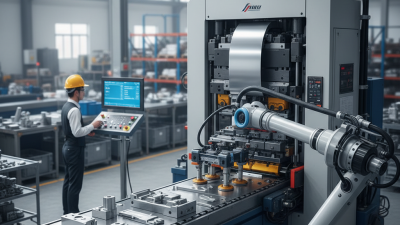
The injection molding industry is moving towards advanced technologies. Automation is one key area driving efficiency. According to a recent industry report, integrating robotics can reduce cycle times by up to 25%. This means faster production and lower costs.

The use of data analytics is also crucial. Collecting real-time data helps in identifying process inefficiencies. A report by the International Journal of Advanced Manufacturing Technology reveals that predictive maintenance reduces downtime by 30%. However, many companies struggle to implement these technologies effectively. There’s a learning curve associated with adjusting to new systems.

Another area is material optimization. Utilizing high-performance polymers can enhance the product's durability while minimizing waste. However, sourcing quality materials can be challenging. Not all suppliers meet the necessary standards. It’s a delicate balance between cost and quality. This requires ongoing evaluation and adjustment, which some manufacturers overlook.

Warning!

You are using an outdated browser. Things may not appear as intended. We recommend updating your browser to the latest version.

Close