Top Conveyor Roller Manufacturers for Global Buyers

Global buyers are reassessing conveyor components as warehouses, mines, and manufacturing plants move more material with tighter uptime targets. Grand View Research’s 2024 analysis estimated the global conveyor system market at USD 9.9 billion in 2023 and forecast a 4.9% compound annual growth rate from 2024 to 2030. This figure covers complete conveyor systems, not rollers alone. That distinction matters. Still, it signals sustained investment in equipment whose smallest rotating parts can affect throughput, noise, and maintenance costs.

Choosing a Conveyor Rollers Manufacturer therefore requires more than comparing unit prices. Buyers should check roller diameter, tube wall thickness, shaft dimensions, bearing and seal design, surface finish, and stated load capacity against the actual application. Ask for drawings, inspection records, material specifications, and sample test results; then confirm how the supplier handles corrosion, dust, impact, and replacement parts. A roller that turns smoothly on a clean showroom floor may behave differently beneath a dusty transfer point. Small details matter. Yet catalog data cannot replace a site trial, and forecasts cannot guarantee a supplier’s delivery performance. This is where procurement teams should stay a little skeptical: compare documented tolerances with real operating conditions, and verify support across the regions where equipment will run. The manufacturers featured in this guide are starting points for that evaluation, not automatic endorsements.
Top Conveyor Roller Manufacturers for Global Buyers

Understanding Conveyor Rollers and Their Role in Material Handling

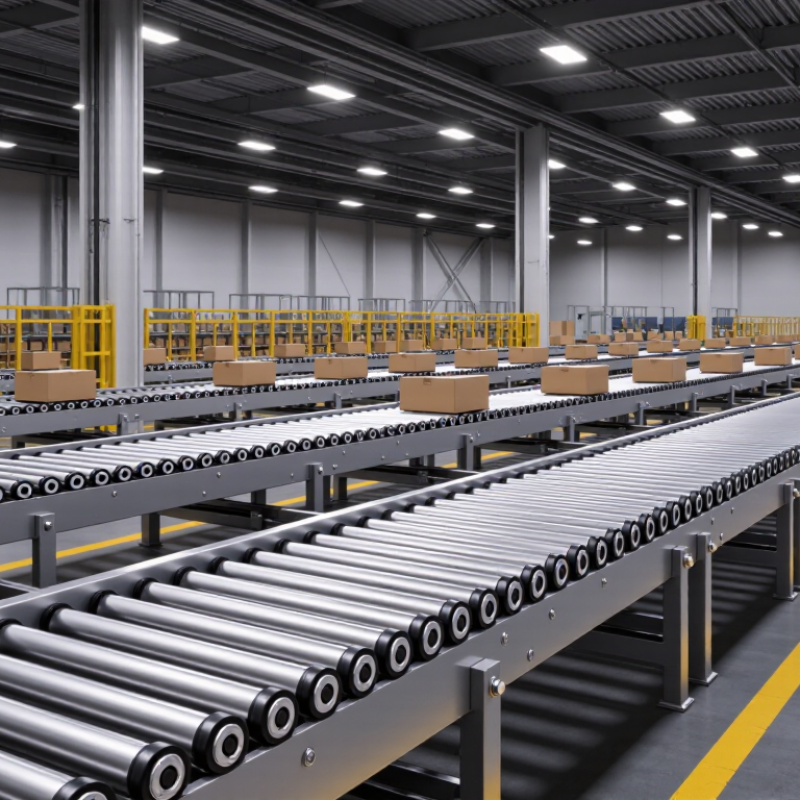
Conveyor rollers support and guide goods as they move across a conveyor frame. Their rotation reduces sliding friction, helping boxes, totes, and bulk materials travel with less resistance. In a warehouse, that may mean a carton gliding over closely spaced rollers; in a processing plant, heavier loads may require larger rollers and stronger shafts. Roller diameter, spacing, bearing design, and surface material all affect how smoothly a line runs. Small choices matter.

The wider market reflects growing investment in material-handling systems. Grand View Research estimated the global conveyor system market at about $7.9 billion in 2022 and projected a 4.5% compound annual growth rate from 2023 to 2030. This figure covers complete systems, not rollers alone, but it signals continued demand for reliable conveying equipment. In practice, buyers should match roller specifications to load weight, speed, environment, and cleaning needs. Dust, moisture, and uneven loading can shorten service life. A roller that seems adequate in a catalog may behave differently under real operating conditions. That deserves a second look. Routine inspection for noise, wobble, and buildup can reveal problems before they interrupt material flow.

Key Criteria for Evaluating Conveyor Roller Manufacturers

Top Conveyor Roller Manufacturers for Global Buyers

Key Criteria for Evaluating Conveyor Roller Manufacturers

Selecting a conveyor roller manufacturer takes more than comparing unit prices. Ask for roller diameter, shaft dimensions, bearing type, shell thickness, and load ratings in writing. Then compare those specifications with your belt speed, material weight, and operating environment. A roller that looks suitable on a drawing may struggle in a dusty transfer point or washdown area. Small details matter.

Request test records, material certificates, and a clear explanation of expected service life. Check whether the supplier tests runout, noise, and rotation resistance, and whether its quality process covers incoming materials and finished rollers. MHI’s 2024 Annual Industry Report found that 55% of surveyed organizations planned to increase supply-chain technology investment. That figure concerns technology, not roller quality, but it highlights the value of traceable production data. Ask for batch-level records, not just a polished brochure. Inspect a sample, too. It is easy to overlook.

After-sales support deserves the same scrutiny as manufacturing capability. Confirm spare-parts availability, lead times, warranty terms, and how the supplier handles failures in the field. For global buyers, check packaging and shipping protection; a bent shaft can turn a good roller into a costly delay. Compare quotes on total operating cost, including installation and replacement labor. No supplier can promise zero failures. Be cautious when claims lack test conditions or measurable evidence.

Top Conveyor Roller Manufacturers for Global Buyers - Key Criteria for Evaluating Conveyor Roller Manufacturers

Evaluation Dimension What to Compare Buyer Screening Guide Evidence to Request
Product range and application fit Carrying, return, impact, training, and other roller types; belt width, material, operating speed, and installation conditions supported. Confirm that the supplier can match the conveyor layout and operating duty rather than relying on a general-purpose roller description. Product catalogue, application questionnaire, dimensional drawings, and a written recommendation for the stated operating conditions.
Dimensions and interchangeability Roller face length, tube diameter, shaft dimensions, end configuration, and bearing-seat details. Require dimensions to be checked against the existing conveyor or approved engineering drawings before production. Dimensioned drawings, tolerance schedule, sample inspection report, and confirmation of mounting compatibility.
Load and operating speed Rated load, belt speed, roller spacing, material impact, and operating duty. Ask for the assumptions behind any load or service-life claim. Capacity depends on the complete conveyor design and operating conditions. Calculation or selection sheet showing the stated inputs, design limits, and applicable safety factors.
Bearing selection and service life Bearing type and size, sealing arrangement, lubrication, and the method used to estimate bearing life. Compare bearing-life estimates only when the operating loads, speed, temperature, and calculation method are stated consistently. Bearing specifications and life calculation. ISO 281 provides methods for calculating the basic rating life of rolling bearings.
Sealing and contamination protection Protection against dust, water, washdown, and other site-specific contaminants. Match the sealing design and any enclosure rating to the actual environment; an IP rating should be specified only when tested and applicable to the product assembly. Seal drawings, test documentation, and an IP rating declaration where relevant. IEC 60529 defines IP code classification for enclosure protection.
Materials and corrosion resistance Tube and shaft materials, coating or galvanizing details, and suitability for moisture, chemicals, or abrasive materials. Check material and finish against the site environment. Salt-spray results can help compare tested coatings but do not directly predict service life in every field condition. Material certificates, coating specifications, and test reports. ISO 9227 specifies salt-spray test methods for assessing corrosion resistance.
Manufacturing quality control Incoming-material checks, dimensional inspection, weld quality where applicable, balancing, and traceability. Look for documented inspection stages and acceptance criteria that correspond to the supplied drawings and purchase specification. Quality-control plan, sample inspection records, traceability format, and nonconformance handling procedure.
Testing and sample validation Checks for rotation, noise, runout, sealing, and performance under specified test conditions. Agree on the test method and pass/fail limits before ordering. A sample should represent the production configuration. Sample test report, test setup and conditions, measured results, and approval record.
Production capacity and delivery planning Available production lines, order-volume capability, material availability, and shipping preparation. Evaluate capacity against the required order quantity and delivery schedule; request a schedule based on the actual specification and quantity. Production plan, order milestones, packaging details, and written delivery schedule.
Export packaging and documentation Moisture protection, handling protection, package identification, and shipment paperwork. Confirm packaging suits the shipping route and storage conditions, and that package markings match the purchase order. Packaging specification, sample labels, packing list format, and agreed export documents.
Warranty and after-sales support Warranty coverage, exclusions, spare-parts availability, response process, and technical support. Compare written terms and claim procedures; clarify how operating conditions and maintenance affect coverage. Warranty document, claims process, spare-parts list, and service contact procedure.
Total cost of ownership Purchase price, installation compatibility, maintenance needs, replacement frequency, and downtime risk. Compare quotations on the same technical specification and include expected maintenance and replacement costs where data is available. Itemized quotation, maintenance guidance, replacement-part pricing, and documented service-life assumptions.

Note: The screening guidance above is for supplier evaluation, not a universal product standard. Final requirements should be defined for the conveyor design, material handled, operating environment, and applicable regulations.

Leading Manufacturers and Their Product Specialties

Conveyor roller manufacturers often specialize by application rather than product volume. Heavy-duty producers build steel rollers for mining, ports, and aggregate plants. Their designs usually include reinforced shells, sealed bearings, and larger shaft diameters. These details matter when loads are constant and dust is unavoidable.

Food-processing specialists focus on stainless steel, smooth surfaces, and easy sanitation. Their rollers may use hygienic end caps and corrosion-resistant bearings. Plastic rollers suit lighter packages and quieter warehouse lines. Powered roller manufacturers add motors, drive components, and control-ready sections for automated sorting systems. I have seen buyers overlook motor compatibility during early planning. That mistake can delay installation.

Precision manufacturers serve parcel handling, electronics, and compact production equipment. They control runout, surface finish, and roller spacing more carefully. A small alignment error can create noise, belt drift, or uneven package movement. Reliable suppliers provide load charts, material certificates, dimensional drawings, and test records. They should also explain temperature limits and maintenance intervals clearly. Ask for samples when the conveyor carries fragile or unstable goods. The choice is rarely obvious. A low purchase price may hide frequent bearing replacement, while an advanced roller may exceed the actual duty requirement. Buyers should compare service life, cleaning conditions, installation access, and local technical support before approving a specification.

Top Conveyor Roller Manufacturers for Global Buyers

Common product specialties and representative nominal roller diameters used in industrial conveyor systems.

Roller diameter depends on belt width, load capacity, conveying speed, material, and operating environment. The values shown are commonly specified nominal sizes rather than company-specific data.

Comparing Manufacturing Standards, Customization, and Global Support

Manufacturing standards are more than a certificate on a factory wall. Buyers should ask how roller runout, shaft dimensions, bearing fit, and coating thickness are checked. A sample inspection report can reveal whether measurements are recorded consistently. Ask about load testing, too. A roller that looks sound may still vibrate under continuous operation. Small details matter.

Customization should start with the conveyor itself, not a catalog option. Share the required roller length, tube diameter, shaft ends, load, speed, and operating environment. For dusty lines, sealed bearings may reduce maintenance; washdown areas may need corrosion-resistant materials. Fit matters. Even a small mismatch at the frame can cause rubbing, noise, or uneven belt tracking. Custom parts can help, but they may increase lead time and complicate replacement stock.

Global support becomes practical when suppliers provide clear drawings, stable part references, and realistic delivery estimates. Confirm how technical questions are handled across time zones, and whether replacement components can be identified from a simple parts list. Packaging also deserves attention: exposed shafts can be damaged in transit, even when the rollers are packed tightly. No supplier can prevent every delay. A useful partner explains risks early and gives buyers enough information to plan maintenance without guesswork.

How Global Buyers Can Assess Suppliers and Select a Manufacturer

Global buyers need more than a low quotation when selecting a conveyor roller manufacturer. The conveyor system market was valued at about USD 7.4 billion in 2023 and may reach USD 10.6 billion by 2028, according to MarketsandMarkets. This growth increases supplier choices, but not necessarily supplier quality.

Ask for measurable evidence. Request roller load ratings, shaft tolerances, bearing specifications, surface hardness, and tested service life. A capable manufacturer should provide drawings, material certificates, inspection records, and clear replacement procedures. Check whether production follows documented quality controls, such as ISO 9001 principles. For safety-related equipment, review conformity with applicable machinery and guarding requirements.

A factory audit can reveal more than a polished brochure. Watch a roller assembly line. Are parts labeled? Are rejected components separated? Can workers explain the inspection process? These small details matter. CEMA guidance can help buyers compare conveyor components and operating conditions, while ISO 13849 may support risk-based safety discussions where controls are involved.

Do not judge only by unit price. Compare total cost across five years, including energy use, corrosion, spare rollers, installation, and downtime. Ask for references from facilities with similar loads and environments. A cold warehouse, a dusty quarry, and a parcel hub need different designs. Samples can mislead. One successful test does not prove consistency. Require a factory acceptance test, written tolerances, and an agreed remedy for failed batches. Some buyers skip this step. They often regret it later.

Warning!

You are using an outdated browser. Things may not appear as intended. We recommend updating your browser to the latest version.

Close