Why Are Injection Molded Parts Essential for Modern Manufacturing?
Injection molded parts play a critical role in modern manufacturing. According to a report by MarketsandMarkets, the global injection molding market is projected to reach $330 billion by 2025. This growth reflects the increasing demand for precision and efficiency in production. Renowned industry expert Dr. Jason Lee states, "Injection molded parts are the backbone of countless industries today."
The advantages of injection molded parts include high-volume production and cost-effectiveness. They allow for complex designs that can be replicated with precision. In industries like automotive and healthcare, these parts ensure quality and performance standards are met. However, manufacturers face challenges. The initial setup costs are high, and material selection can be complex.
As technology advances, the industry must adapt. Sustainable practices and materials are becoming essential. Companies that ignore this trend risk falling behind. The continuous evolution of injection molded parts showcases both opportunities and difficulties. Learning from previous mistakes is vital for future success.
The Role of Injection Molding in Contemporary Manufacturing Processes
Injection molding plays a crucial role in modern manufacturing. It allows for the mass production of complex parts with high precision. According to a report from the American Society of Mechanical Engineers (ASME), over 30% of manufactured plastic parts utilize this process. This underscores its importance in industries like automotive and electronics.
The efficiency of injection molding cannot be overstated. Many manufacturers report a 20% reduction in production time compared to traditional methods. This speed is vital in today's fast-paced market. However, not all processes are perfect. Waste materials from defective molds can lead to significant costs. Manufacturers must constantly refine their techniques to minimize these inefficiencies.
Moreover, the versatility of injection molding allows for a variety of materials. Thermoplastics, elastomers, and some metals can be molded. This flexibility benefits product design and development. Yet, the complex nature of the process poses challenges. Designers must consider material behavior in high-pressure environments, which can lead to flaws if overlooked. Continuous innovation is necessary to navigate these hurdles.
Why Are Injection Molded Parts Essential for Modern Manufacturing?
| Feature |
Description |
Benefits |
Applications |
| Precision |
Injection molding allows for high precision and accuracy in part production. |
Ensures consistent quality, reducing waste and rework. |
Automotive components, medical devices. |
| Material Variety |
Wide range of materials can be used, from plastics to metals. |
Flexibility in design allows for innovation. |
Consumer electronics, packaging. |
| Efficiency |
High-speed production capabilities facilitate high-volume manufacturing. |
Reduces lead time and manufacturing costs. |
Home appliances, toys. |
| Complex Geometries |
Enables the production of complex shapes that would be difficult to achieve with other methods. |
Expands design possibilities for engineers and designers. |
Medical equipment, aerospace parts. |
| Cost-Effectiveness |
Lower production costs for mass production due to reduced labor and material waste. |
Enhances profitability for manufacturers. |
Industrial machinery, construction equipment. |
Key Benefits of Injection Molded Parts in Production Efficiency
Injection molded parts play a crucial role in modern manufacturing. These components are produced using a method that allows for high efficiency and precision. This technique significantly reduces production times, making it easier to meet tight deadlines. Manufacturers can create complex shapes that traditional methods often struggle with. The versatility of injection molding accommodates a variety of materials, too.
One of the main benefits is the cost-effectiveness it brings. Bulk production leads to lower per-unit costs. However, initial setup can be pricey. It requires investment in molds and machinery. Mistakes in design can lead to costly revisions. Despite these challenges, the potential for high-quality outputs often outweighs the drawbacks. The consistency in quality is another key advantage. Each part produced maintains similar quality standards, which is essential for large-scale projects.
The speed of production is also noteworthy. Layers of material are added quickly. This efficiency can sometimes lead to neglect in design checks. Surprising defects may slip through. Therefore, balancing speed with thorough quality control is vital. Overall, understanding these elements helps manufacturers capitalize on the benefits of injection molded parts while being mindful of associated risks.
Diverse Applications of Injection Molded Components Across Industries
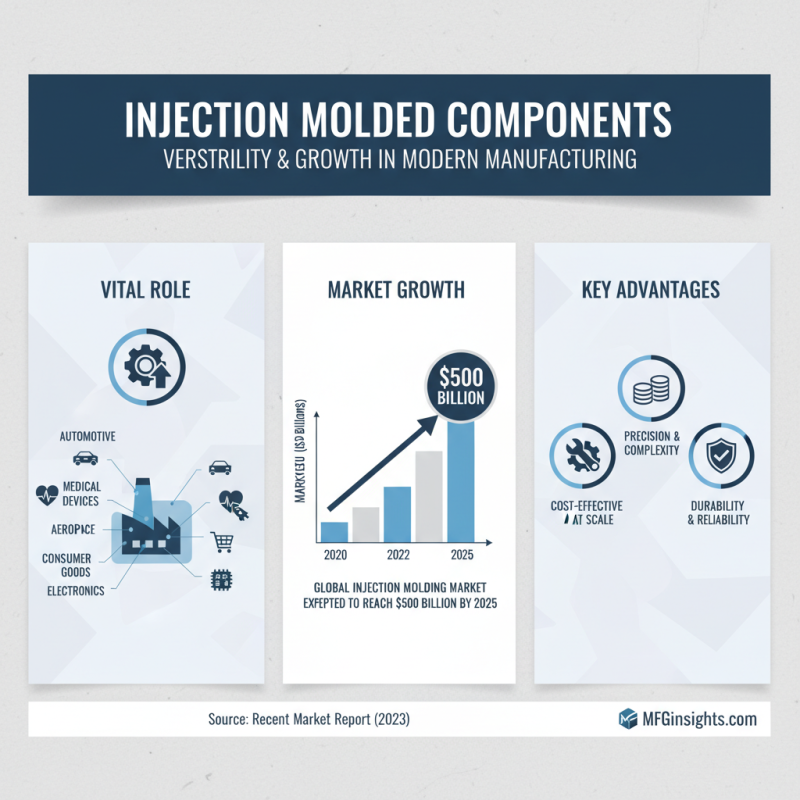
Injection molded components play a vital role in modern manufacturing. Their applications span numerous industries, highlighting their versatility. According to a recent market report, the global injection molding market is expected to reach $500 billion by 2025. This growth underscores the reliance on these parts across sectors.
In automotive manufacturing, injection molded parts are crucial. They enable the production of lightweight components, improving fuel efficiency. Components like dashboards and housings are often made this way. A study reveals that nearly 28% of automotive parts are produced using injection molding methods. However, challenges remain in achieving perfect accuracy, which can lead to wastage and rework.
The consumer electronics sector also benefits significantly from injection molded parts. Devices such as smartphones and tablets feature intricately designed components. It is estimated that about 70% of these devices use injection molded shells. Yet, manufacturers face issues like material inconsistencies. Inconsistent quality can affect the longevity and functionality of the final products. This aspect necessitates ongoing research and development to enhance processes.
Technological Advancements Enhancing Injection Molding Techniques
The evolution in injection molding techniques has significantly impacted modern manufacturing. Technological advancements have led to increased precision, and faster production rates. Reports indicate that the global injection molding market is projected to reach $370 billion by 2027. This growth illustrates the rising demand for efficient manufacturing processes.
One remarkable development is the use of advanced materials. Improved thermoplastics and composites are now being used in injection molding. These materials offer better strength and durability, making them ideal for various applications. Recent data shows that companies utilizing these advanced materials experience up to 25% reduction in production costs.
Tips: Consider integrating automation into your injection molding process. Automation can lead to consistent quality and reduced labor costs.
Moreover, 3D printing technology is changing the game. By enabling rapid prototyping, companies can create complex molds quickly. The ability to test designs swiftly can minimize errors and reduce lead times. Some manufacturers report lead times decreasing by 40% when using 3D-printed molds.
Tips: Keep an eye on emerging technologies. Adapting early can provide a competitive advantage in your market.
Investing in advanced simulation software also enhances molding processes. These tools can predict flow patterns and potential defects before production begins. However, not every company utilizes this technology effectively, leading to waste and inefficiency. Identifying gaps in technology use could be crucial for ongoing improvement.
Environmental Considerations and Sustainability in Injection Molding
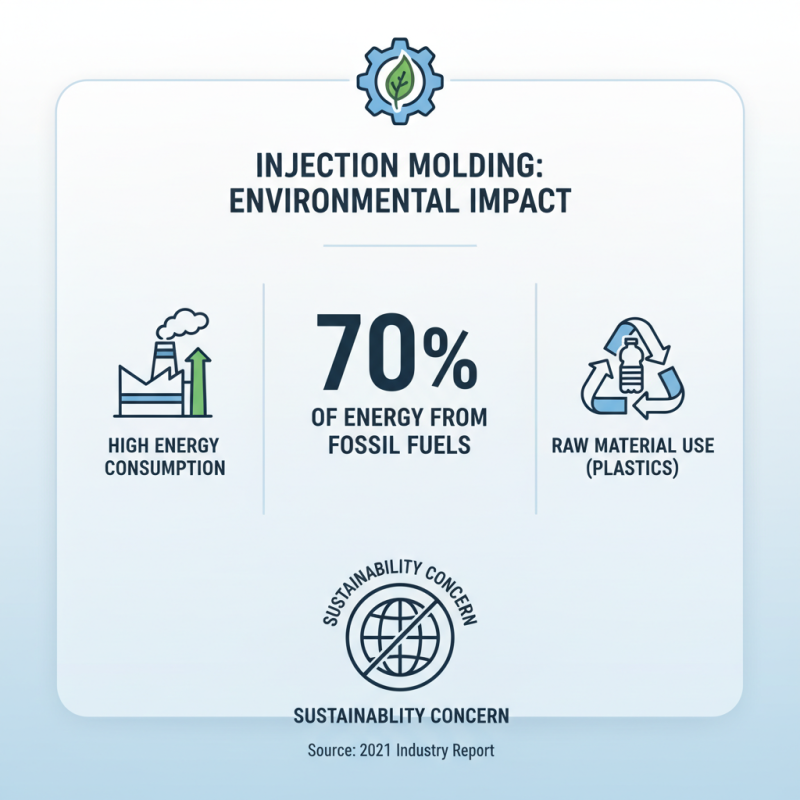
Injection molding has become a cornerstone of modern manufacturing. However, its environmental impact raises important questions. This process uses a significant amount of energy and raw materials. According to a 2021 industry report, nearly 70% of the energy consumed in injection molding comes from fossil fuels. This is a pressing concern for sustainability.
The lifecycle of injection molded parts also needs consideration. For instance, many of the resins used come from petroleum sources. Recycling rates for these plastics seldom exceed 9% globally. This disheartening fact shows that while injection molding is efficient, it often contributes to plastic waste. There's an increasing push for bioplastics, which can reduce reliance on non-renewable resources. However, the infrastructure for recycling and waste management for these materials is not fully developed.
The industry must prioritize sustainable practices. Implementing better energy efficiency in machines is a step forward. For example, newer electric injection molding machines can reduce energy consumption by up to 80%. Despite the advancements, many facilities remain outdated. Transitioning to more eco-friendly practices is still a long way off for many manufacturers. Addressing these issues will not only improve the industry's environmental footprint but also enhance its overall efficiency.