Choosing the right Coal Mine Fans is not a simple equipment comparison. Global buyers must connect airflow, mine depth, gas conditions, energy use, and maintenance realities. A fan that performs well in one mine may fail in another. The surrounding ventilation network matters just as much.
Dr. Edward D. Thimons, a respected mining ventilation researcher, stated, “A fan is only as effective as the ventilation system it serves.” This principle remains highly relevant. Buyers should examine fan pressure, airflow range, explosion-resistant construction, noise levels, motor efficiency, and control compatibility. They should also request tested performance curves, material certificates, inspection records, and practical references from comparable mines. Numbers alone are not enough.
Look closely at the details. Can technicians replace bearings without long shutdowns? Does the housing resist corrosion from wet, dusty air? Can the control system respond when production zones change? These questions expose weaknesses early. Cost still matters. However, the cheapest quotation may create higher electricity bills, spare-part delays, or unsafe pressure instability.
A careful selection process should include site measurements and independent technical review. Manufacturer promises need verification. Even experienced buyers can miss changing airflow demand. That is the uncomfortable part. Conditions underground are rarely fixed.
This guide compares major Coal Mine Fans, explains selection criteria, and highlights practical risks for international purchasers. It focuses on dependable ventilation, lifecycle value, documentation quality, and responsible supplier evaluation. The final choice should be evidence-based, not driven by attractive specifications alone.
Coal mine fans perform different ventilation duties, and selecting the right type requires more than comparing airflow ratings. Main surface fans create the pressure difference that moves fresh air through intake shafts, roadways, working faces, and return routes. Axial-flow fans handle large air volumes with relatively compact equipment. Their blades can often reverse airflow, which supports emergency planning and maintenance operations.
Centrifugal fans are suited to systems requiring higher pressure, especially where long ducts, bends, or dense underground networks increase resistance. Auxiliary fans supply or exhaust air near advancing headings through flexible or rigid ducting. Booster fans support airflow in selected sections, but their placement needs careful engineering. Poor positioning may disturb the intended ventilation pattern. Airflow must remain controlled.
Selection should begin with the required duty point: volume, pressure, efficiency, and operating hours. Technicians should also check methane monitoring, vibration sensors, bearing temperature, noise, corrosion resistance, and access for cleaning. Electrical equipment must meet applicable mine-safety requirements. A fan that appears efficient on paper may consume more power after dust buildup or duct leakage. This is often underestimated. Field inspections should compare measured airflow with design values, because real tunnels rarely match drawings perfectly. A practical review includes spare parts, control compatibility, weather protection, and the consequences of a fan stopping during a shift. Reliability is not only a specification; it depends on installation, inspection, and disciplined maintenance.
The chart compares representative airflow-capacity ranges commonly used in underground mine ventilation. Actual selection depends on mine depth, airway resistance, gas-control requirements, heat load, and regulatory design limits.
Choosing top coal mine fans for global buyers starts with measured airflow, not catalog promises. Underground headings need enough fresh air to dilute heat, dust, and gases. Specify airflow in cubic meters per second, then verify the required volume at the working face. Pressure matters just as much. Long ducts, bends, screens, and regulators create resistance. A fan delivering volume at zero pressure may fail underground. Ask for a fan curve showing airflow, static pressure, and operating limits.
Efficiency affects electricity costs across every shift. Compare air power with motor input, not motor efficiency alone. Variable-speed control can match ventilation demand, although poor settings may waste energy. Check noise, vibration, bearing temperature, and motor protection during trials. Reliable fans need accessible inspection points and clear maintenance intervals. Consider corrosion-resistant construction where moisture and coal dust remain persistent. Independent test records strengthen confidence, but field references reveal practical weaknesses. Even good equipment can underperform when installation is rushed.
Tips: Define duty points before requesting quotations. Request factory test data and a signed performance curve. Confirm local voltage, frequency, enclosure rating, and safety requirements. Keep spare bearings and sensors available. Record airflow and pressure after installation, then recheck them after duct changes. A small measurement error can distort the selection. Ask operators about actual service conditions; paperwork rarely captures every harsh detail.
For international coal mine buyers, fan selection begins with the mine risk assessment, not airflow alone. A fan may move sufficient air and still fail during an ignition event. Check airflow, static pressure, gas conditions, dust levels, temperature range, and installation zone. These details should match verified test data. Ask for the complete technical file, including drawings, materials, motor data, inspection records, and maintenance instructions. No shortcuts here.
Compliance depends on location. Requirements may come from mining authorities, safety regulators, and electrical certification bodies. Depending on the destination, buyers may need evidence aligned with IECEx, ATEX, MSHA, or national standards. These systems are not interchangeable by assumption. Confirm the applicable approval before purchase. Review enclosure protection, grounding, cable entry, emergency isolation, vibration limits, and noise performance. For hazardous areas, certification must cover the complete relevant assembly, not only the motor. An old certificate is weak evidence.
During factory acceptance, measure airflow and pressure at stated operating points. Inspect impeller balance and guards. Record vibration readings before shipment. On site, test rotation, alarms, backup power, and shutdown controls under supervision. Keep inspection logs accessible to operators. A small cable gland can delay an entire project. This mistake is avoidable. Even compliant equipment can perform poorly when manuals are unclear. Translate critical procedures and train maintenance teams using the actual fan. Requirements change, and documents can age. Recheck them before every major replacement.
| Selection Dimension | Verified Technical or Regulatory Fact | Why It Matters in Coal Mines | Recommended Buyer Check | Typical Compliance Evidence |
|---|---|---|---|---|
| Ventilation Duty | Fan selection depends on required airflow, system resistance, air density, altitude, and operating temperature. Airflow is commonly expressed in m³/s or m³/min. | Insufficient airflow can allow methane, diesel emissions, heat, or dust to accumulate. Excessive pressure may increase power consumption and duct leakage. | Request a fan-system curve showing airflow and pressure at the actual duty point, including duct, bend, regulator, and auxiliary-equipment resistance. | Certified performance test report, fan curve, duty-point calculation, and stated test conditions. |
| Explosion Hazard | Methane has a flammable range of approximately 5% to 15% by volume in air under normal atmospheric conditions. | Coal mines may contain methane and combustible coal dust. Ignition prevention must cover electrical, mechanical, and electrostatic sources. | Define the mine gas classification, hazardous zone, permitted equipment category, and maximum surface temperature before purchasing. | Area classification document, explosion-protection certificate, equipment marking, and risk-assessment records. |
| ATEX Compliance | Directive 2014/34/EU applies to equipment and protective systems intended for use in potentially explosive atmospheres within its scope. | European projects require equipment to match the defined zone, equipment group, category, gas or dust classification, and temperature requirements. | Check whether the complete fan assembly is covered, including motor, terminal box, sensors, cable glands, couplings, and controls. | EU Declaration of Conformity, technical documentation, notified-body certificate where required, and correct Ex marking. |
| IECEx and IEC 60079 Series | IEC 60079 standards address explosive-atmosphere equipment, including general requirements and protection methods such as flameproof, increased-safety, intrinsic-safety, and protection by enclosure. | Many international buyers use IECEx documentation as a common technical reference, although local approval remains the controlling requirement. | Confirm certificate scope, gas or dust group, equipment protection level, temperature class, ambient-temperature range, and permitted installation conditions. | IECEx certificate, certificate schedule, product marking, inspection records, and installation instructions. |
| Non-Electrical Ignition Protection | ISO 80079-36 and ISO 80079-37 cover non-electrical equipment for explosive atmospheres and protection concepts such as constructional safety and control of ignition sources. | Fan impellers, housings, bearings, belts, couplings, and rotating parts can create hot surfaces, friction sparks, or electrostatic discharge. | Review rotor-to-housing clearances, anti-static materials, bearing-temperature monitoring, vibration protection, and mechanical ignition-risk controls. | Ignition-hazard assessment, material declarations, temperature-rise data, clearance measurements, and maintenance limits. |
| Fan Design for Explosive Atmospheres | EN 14986 provides requirements for the design of fans intended for use in potentially explosive atmospheres. | The standard helps address mechanical ignition risks caused by impact, rubbing, rotating assemblies, and unsuitable construction materials. | Ask whether the fan design has been assessed against the applicable edition and operating conditions, not only whether the motor is certified. | Design assessment, dimensional inspection, material compatibility records, and manufacturing quality-control documentation. |
| North American Mine Approval | In the United States, 30 CFR Part 18 establishes requirements for approval of certain permissible electric face equipment used in gassy underground mines. | A general industrial hazardous-location certificate does not automatically satisfy mine-specific approval requirements. | Confirm the exact mine authority, approval scope, permissible status, voltage, cable arrangement, and installation limitations for the intended site. | Mine-approval certificate or listing, approval drawing, permissible-equipment documentation, and inspection procedure. |
| Temperature Class | For gas atmospheres, IEC 60079 temperature classes range from T1 at 450°C maximum surface temperature to T6 at 85°C maximum surface temperature. | The maximum equipment surface temperature must remain below the ignition temperature of the surrounding gas or vapor under the specified conditions. | Match the temperature class to the mine hazard assessment and consider blocked airflow, high ambient temperature, dust deposits, and overload conditions. | Temperature-rise test, thermal protection settings, ambient-temperature rating, and product marking. |
| Ingress Protection | IEC 60529 defines IP ratings for protection against solids and water. The required rating depends on the enclosure, location, wash-down exposure, and dust conditions. | Water, conductive dust, and fine coal dust can reduce insulation performance, damage bearings, and obstruct cooling passages. | Specify the minimum IP rating for the complete electrical enclosure and verify that cable entries and unused openings maintain the rating. | IP test report, enclosure drawings, cable-gland specification, and installation instructions. |
| Electrical Supply and Motor | Motor selection must account for rated voltage, frequency, starting current, duty cycle, protection method, efficiency, and permissible ambient temperature. | Voltage variation, long cable runs, frequent starts, and restricted cooling can cause overheating or nuisance trips underground. | Confirm local supply values, motor starting method, overload protection, short-circuit protection, cable length, and compatibility with variable-speed control. | Motor data sheet, wiring diagram, protection settings, type-test records, and control-system compatibility statement. |
| Mechanical Integrity | Rotating equipment should be evaluated for balance, shaft strength, bearing life, vibration, fatigue, and guard integrity at the maximum permitted speed. | Mechanical failure can create fragments, sparks, air loss, production stoppage, and serious personnel hazards. | Request overspeed limits, rotor-balance grade, vibration limits, bearing design life, guard details, and preventive-maintenance intervals. | Balance report, vibration test report, fatigue or strength calculation, inspection checklist, and spare-parts schedule. |
| Materials and Static Electricity | Conductive or static-dissipative materials and appropriate bonding may be required where electrostatic discharge could ignite a hazardous atmosphere. | Non-conductive components, flexible ducts, coatings, and accumulated dust can increase electrostatic risk. | Verify material resistivity, bonding continuity, flexible-duct construction, coating compatibility, and earthing points. | Material certificates, electrical-continuity test, earthing diagram, and static-control procedure. |
| Noise and Worker Exposure | Fan noise depends on blade design, speed, pressure, duct geometry, turbulence, and installation. Measurement conditions must be stated. | High noise can affect communication, warning-signal recognition, worker comfort, and compliance with occupational exposure limits. | Request sound-power or sound-pressure data at the specified duty point and define whether silencers or acoustic enclosures are needed. | Noise test report, measurement location, operating condition, and acoustic-treatment recommendation. |
| Monitoring and Interlocks | Common protective functions include methane monitoring, motor overload, bearing-temperature monitoring, vibration trip, airflow proving, and emergency shutdown. | Automatic protection can reduce the likelihood that a stalled, overheated, vibrating, or poorly ventilating fan continues operating in a hazardous condition. | Define alarm and trip thresholds, fail-safe behavior, sensor certification, reset method, communication protocol, and integration with the mine control system. | Cause-and-effect matrix, functional test record, sensor certificates, calibration certificates, and commissioning report. |
| Documentation and Traceability | Safety compliance applies to the supplied configuration; changes to motors, impellers, controls, cable glands, or enclosures may affect certification. | Incomplete records make inspection, maintenance, incident investigation, and future replacement more difficult. | Require serial-number traceability, approved drawings, manuals, certificates, spare-parts identification, and change-control records. | Complete technical file, nameplate photographs, revision-controlled drawings, operating manual, and conformity documents. |
| Site Acceptance and Maintenance | A safe fan requires correct installation, inspection, testing, cleaning, lubrication, alignment, and periodic verification throughout its service life. | Coal dust accumulation, duct damage, misalignment, blocked inlets, and worn bearings can reduce performance and increase ignition risk. | Include commissioning tests, airflow and pressure verification, vibration baseline, emergency-stop test, maintenance intervals, and competent-person requirements. | Site acceptance certificate, commissioning checklist, baseline measurements, training records, inspection log, and maintenance plan. |
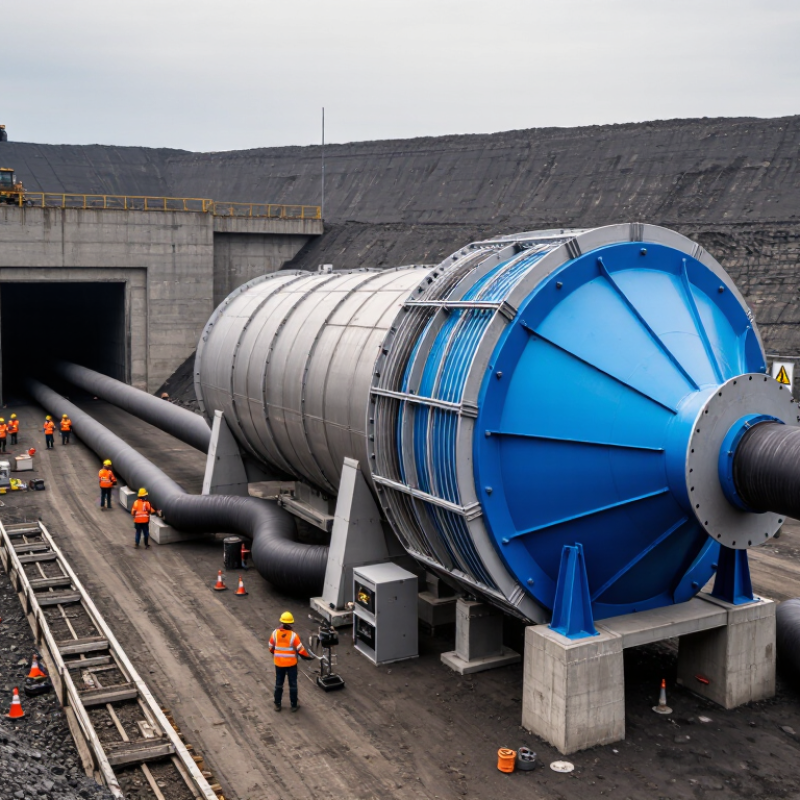
Compare impellers, housings, shafts, and bearings carefully. Corrosion-resistant steel may suit wet headings, while heavy-duty coatings can protect exposed surfaces. Check weld quality and balancing records. Small vibration can become a costly failure. Materials should match the mine environment, not simply the lowest quotation. That assumption can fail.
Controls deserve equal attention. Variable-speed drives can adjust ventilation demand and reduce unnecessary power use. However, controls must communicate with existing monitoring systems and remain usable during faults. Ask about emergency stops, alarms, backup operation, and cybersecurity practices. Maintenance access should be practical, with visible inspection points and replaceable wear parts. Request service intervals, spare-parts availability, training, and response times in writing. A manufacturer with documented testing and field references offers stronger evidence than polished claims. Still, references may not match your geology or duty cycle. Leave room for an independent engineering review before purchase.
Selecting a mine fan starts with the site, not the catalogue. Map every working district, roadway, face, and return airway. Measure required airflow, static pressure, temperature, altitude, and leakage. Then build the operating point from actual resistance calculations. A fan that moves impressive air at zero pressure may fail underground.
Energy deserves close attention. The U.S. Department of Energy’s Mining Industry Energy Bandwidth Study identifies ventilation as one of underground mining’s largest electricity loads. Industry assessments often place it near 40% of mine power consumption. Small efficiency losses become expensive over continuous operation. Compare total pressure efficiency, motor efficiency, variable-speed control, and part-load performance. Check test results against ISO 5801 or an equivalent accepted method.
Safety comes before output. Review methane-control requirements, dust conditions, emergency reversal needs, noise limits, and local certification rules. Confirm the fan’s duty point after adding filters, silencers, bends, and seasonal changes. Specify alarms for vibration, bearing temperature, motor current, and airflow loss. Plan a standby fan where a single failure could interrupt ventilation. It is easy to overestimate future production and purchase excessive capacity. I have seen calculations weaken when leakage assumptions were copied from another mine. Recheck them with underground measurements. During commissioning, record airflow and pressure at several speeds, not only the best-looking result.
You are using an outdated browser. Things may not appear as intended. We recommend updating your browser to the latest version.
Close