Choosing the right Chemical IBC Tank is a risk-control decision, not a simple purchasing exercise. A square container may look similar across suppliers. Its liner, valve, pallet, and certification can differ significantly.
Cefic’s 2023 Facts and Figures report places global chemical sales at approximately €5.7 trillion in 2022. That scale reflects the demanding nature of chemical storage and distribution. Grand View Research’s IBC market assessment also identifies chemicals as a major application area. However, market growth does not make every tank suitable. Product compatibility remains the starting point. A tank designed for detergents may fail with solvents, oxidizers, or concentrated acids.
Process-safety authority Dr. Trevor Kletz wrote, “If you think safety is expensive, try an accident.” His warning applies directly to IBC selection. It sounds simple. It is still often ignored. Buyers should verify UN certification, maximum filling temperature, specific gravity, pressure limits, and gasket material. They should also check ISO 16103 guidance for dangerous-goods packaging. A 1,000-liter tank may carry a dense liquid weighing more than one metric ton. The warehouse floor, forklift pockets, and racking system must support that load.
In practice, inspect the discharge valve first. A leaking gasket can contaminate a concrete floor within minutes. Review the safety data sheet before selecting HDPE, stainless steel, or a composite design. Confirm traceability, cleaning records, closure seals, and transport requirements. No tank is perfect. Supplier claims also deserve careful questioning. The safest choice is the tank that matches the chemical, handling route, operating environment, and documented compliance evidence.
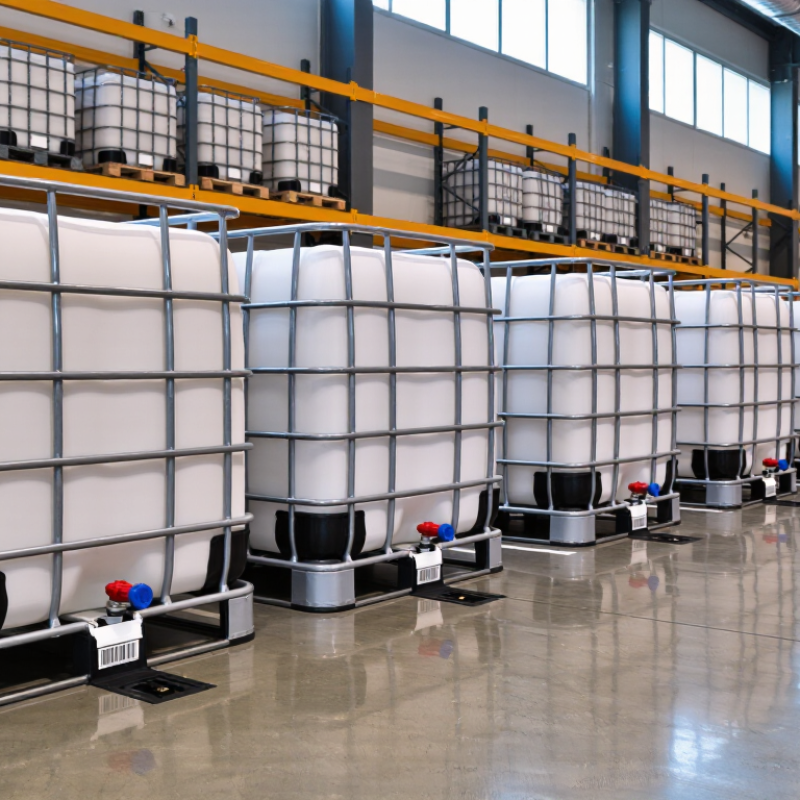
Choosing the right chemical IBC tank starts with an exact chemical profile, not a convenient tank size. Record the liquid’s name, concentration, density, viscosity, temperature, and vapor behavior. Check compatibility with the container, valve, gasket, and fittings. A chemical may look harmless yet attack a seal over time. Do not rely on color or smell. Request the current safety data sheet and confirm details with a qualified chemical engineer. Small omissions matter.
Capacity should match the working volume, not only the shipment target. Leave expansion space for temperature changes and movement during transport. Estimate daily consumption, filling frequency, and emergency containment needs. A larger tank can reduce handling, but it may increase lifting risks and cleaning difficulty. I have seen teams choose capacity from warehouse space alone. That decision later caused awkward transfers and wasted residue. Measure the route, door width, rack height, and access for inspection.
Handling requirements determine whether the tank works in real conditions. Confirm forklift entry points, pallet strength, lifting limits, grounding procedures, and secure connections. Plan how operators will sample, drain, clean, and respond to a small leak. Keep compatible secondary containment nearby. Train people on the actual tank, not a generic slide deck. Before approval, test the process with water if practical. It may expose a poor valve position or an unsafe reach. Recheck assumptions after the first delivery; field experience often corrects the original plan.

How to Choose the Right Chemical IBC Tank?
Tank selection should begin with the chemical, not the container price. Read the current Safety Data Sheet and check concentration, temperature, density, vapor pressure, and storage duration. High-density polyethylene suits many acids, alkalis, and water-based solutions, but some solvents can cause swelling, permeation, or stress cracking. Stainless steel may handle aggressive chemicals better, yet chloride-rich liquids can still trigger corrosion. The gasket matters too. A compatible tank with an incompatible seal remains unsafe. Keep samples of the actual liquid and test them under expected conditions. Compatibility charts help. They are not proof.
Safety standards deserve equal attention. UN Recommendations on the Transport of Dangerous Goods and ISO 16106 address tested IBC design, packaging performance, and quality management. Confirm the tank’s UN marking, maximum filling level, grounding needs, ventilation, and inspection records. ECHA’s 2023 enforcement project found non-compliance in 23% of 2,407 checked products, showing why labels and SDS details cannot be treated as paperwork. UNEP’s Global Chemicals Outlook II projects chemical production could double by 2030 and triple by 2050 from 2017 levels. More chemical movement means more compatibility mistakes to prevent. In practical audits, operators often check the liquid but overlook the valve, pallet, or replacement gasket. That gap is easy to miss. A documented review by a qualified materials specialist remains worthwhile, especially when the chemical is heated, mixed, or stored for months.
General compatibility ratings for common IBC tank materials and industrial chemicals
Rating: 3 = generally resistant, 2 = conditional suitability, 1 = generally not recommended. These indicative ratings reflect commonly published chemical-resistance guidance for HDPE, polypropylene, and 304 stainless steel at ambient conditions. Actual compatibility depends on concentration, temperature, exposure time, cleaning conditions, and mechanical stress. For dangerous goods, confirm the chemical-specific compatibility data and use an IBC with the applicable UN approval and testing required by regulations such as ADR 6.5 or 49 CFR 178.
Choosing a chemical IBC tank starts with the liquid, not the advertised capacity. Review compatibility data for the chemical, concentration, temperature, and expected storage time. HDPE may suit many liquids, but additives and heat can change its performance. Check wall thickness, UV protection, cage strength, pallet design, and valve construction. The outlet should close cleanly and remain accessible without exposing workers to drips. Small details matter.
Certification is evidence, not decoration. Verify the tank’s test scope, manufacturing date, marking, and inspection records. For transport, confirm applicable UN performance requirements and local rules with a qualified safety professional. A certificate may cover one configuration only. Changing the valve, liner, or closure can affect approval. Ask for material declarations and traceable batch information. Keep records where operators can find them. Paperwork is part of the equipment.
Site conditions often decide whether a suitable tank remains safe. Measure doorways, turning space, floor loading, racking height, and forklift access before delivery. Protect tanks from direct sunlight, impact, standing water, ignition sources, and incompatible chemicals. Provide secondary containment sized for the credible spill scenario, plus clear labeling and emergency access. Temperature swings deserve attention. A shaded yard can still become hot inside a container. Operators should inspect valves, cages, labels, and pallets routinely. A checklist helps, but it can miss unusual conditions. Revisit the choice after seasonal changes, process modifications, or repeated handling damage.
How to Choose the Right Chemical IBC Tank?
Choosing a chemical IBC tank starts with compatibility, not price. Check the chemical’s safety data sheet and the tank material’s resistance. Temperature, concentration, and storage time can change performance. A reusable tank may reduce waste and purchasing costs. However, it needs documented cleaning, inspection, and suitable storage between uses. Residue in a valve or gasket can create serious problems. Small details matter.
Maintenance costs often hide inside the purchase decision. Inspect the cage, pallet, outlet valve, closures, and labels before every filling. Replace worn seals early. A damaged fitting can cause leakage, product loss, or transport delays. Transport also affects the total cost. Select a tank approved for the intended route and chemical class. Consider stacking limits, loading equipment, return distance, and secondary containment. A lighter tank may reduce freight costs, but weaker construction can increase replacement risk.
Tips: Compare the full cost over several cycles. Include cleaning, testing, labor, storage, freight, downtime, and disposal. Ask for compatibility evidence and inspection records. Keep a simple maintenance log. It exposes repeated failures. I have found that the cheapest tank is not always economical after two returns and one rejected load. Still, estimates can be imperfect. Actual cleaning time may vary with weather, residue, and site equipment. Recheck the numbers after real use.
| Evaluation Dimension | New Composite IBC (HDPE Bottle + Steel Cage) | Reconditioned Composite IBC | Stainless-Steel IBC | Single-Use Plastic IBC |
|---|---|---|---|---|
| Typical nominal capacity | 1,000 L | 1,000 L | 1,000 L | 1,000 L |
| Typical tare weight | Approx. 55–65 kg | Approx. 55–70 kg | Approx. 180–250 kg | Approx. 45–60 kg |
| Typical service life | 5–10 years with inspection and proper handling | 2–5 years, depending on refurbishment quality and use | 10–20+ years with suitable maintenance | One transport cycle or limited reuse |
| Practical reuse potential | Approximately 5–15 filling cycles, subject to chemical compatibility and inspections | Approximately 2–8 filling cycles, subject to condition and cleaning history | Often 50+ filling cycles when maintained and chemically compatible | Normally not intended for repeated commercial reuse |
| Chemical compatibility | Good for many acids, alkalis, aqueous solutions, and compatible solvents; verify HDPE compatibility | Depends on bottle condition, previous contents, and cleaning validation | Excellent for many aggressive chemicals; grade selection is critical | Good for selected products; limited suitability for high-temperature or highly aggressive chemicals |
| Temperature capability | Commonly suitable for approximately -20°C to +60°C; check the design specification | Usually similar to composite IBCs, but aging may reduce safety margin | Often suitable for wider temperature ranges; confirm seals, valves, and material grade | Usually approximately -10°C to +50°C; confirm before filling |
| Routine maintenance | Inspect cage, bottle, valve, cap, labels, pallet, and welds before each reuse | Require documented cleaning, leak testing, visual inspection, and replacement of worn components | Inspect welds, fittings, gaskets, pressure-relief devices, and internal cleanliness | Limited maintenance; disposal or recycling is normally required after use |
| Cleaning difficulty | Moderate; plastic may retain odor or traces of previous contents | Moderate to high; cleaning standard depends on prior cargo and reuse requirements | Low to moderate; smooth stainless surfaces are generally easier to clean and validate | Low because the unit is generally not cleaned for repeated use |
| Transport efficiency | High; standard footprint is approximately 1,200 × 1,000 mm and units can be stacked when permitted | High; generally uses the same footprint as a new composite IBC | Moderate; heavier tare weight increases handling and freight cost | High for outbound delivery, but empty returns may be uneconomical |
| Typical purchase price per 1,000 L unit | Approximately US$180–350 | Approximately US$100–220 | Approximately US$1,200–3,000+ | Approximately US$150–300 |
| Estimated cleaning and inspection cost per reuse | Approximately US$25–100 | Approximately US$40–150 | Approximately US$50–200 | Usually not applicable; disposal or recycling cost may apply |
| Estimated total cost per filled cycle* | Approximately US$45–125 | Approximately US$35–120 | Approximately US$75–260 | Approximately US$160–350 |
| Best suited for | Regular domestic distribution and chemicals compatible with HDPE | Cost-sensitive operations with controlled reuse and verified cleaning procedures | High-value, corrosive, temperature-sensitive, or cleanliness-critical chemicals | One-way export shipments, short supply chains, or products requiring no return logistics |
| Main limitations | Plastic aging, permeation, impact damage, and limited high-temperature performance | Unknown previous-use history, variable condition, and greater cleaning-control requirements | High initial cost, high tare weight, and possible corrosion or compatibility issues at welds and fittings | Higher recurring cost, waste generation, and limited reuse capability |
| Overall value rating | High for general-purpose chemical distribution | High when cleaning and inspection are well controlled | High for demanding applications despite higher capital cost | Moderate for one-way logistics; low for repeated distribution |
You are using an outdated browser. Things may not appear as intended. We recommend updating your browser to the latest version.
Close