How to Choose the Best Iron Strainer Supplier in China?

Choosing the best Iron Strainer supplier in China requires more than comparing prices. The right partner should demonstrate stable production, verified materials, and consistent quality control. A polished website is useful, but it cannot replace factory evidence.

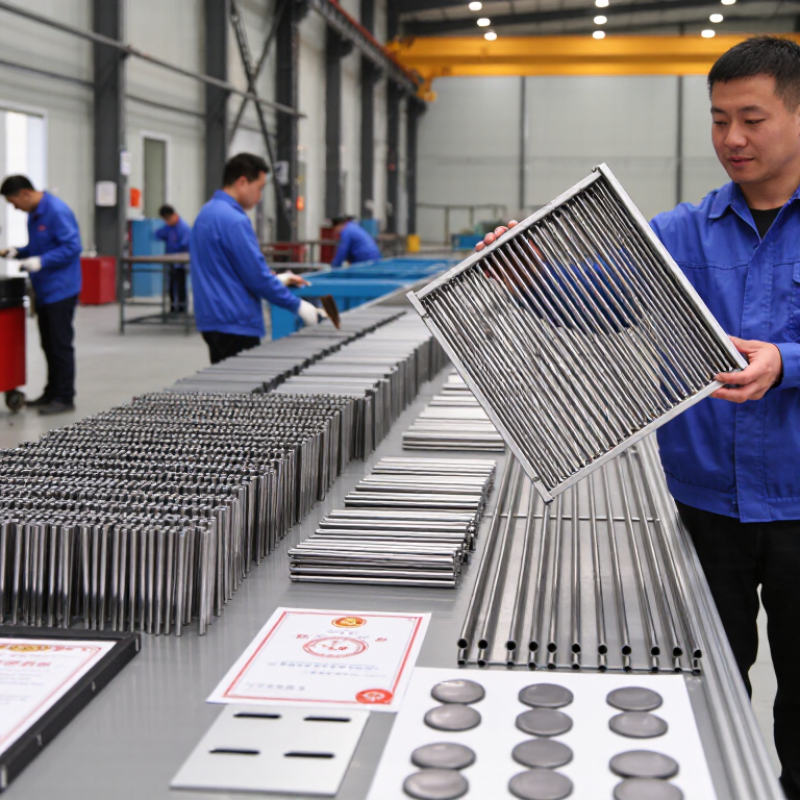
Chen Wei, a filtration-equipment sourcing consultant with more than fifteen years of manufacturing experience, says, “A reliable supplier proves performance before discussing volume.” This principle deserves attention. Ask for material certificates, mesh specifications, weld inspection records, and production photographs. For food-processing or chemical applications, confirm whether the Iron Strainer uses suitable stainless steel, such as 304 or 316. Small details matter.

Request a sample before signing a large order. Examine the screen tension, frame alignment, surface finish, and connection accuracy. Poor welds may leave rough edges or hidden gaps. Those defects can affect cleaning and service life. Ask how the supplier controls incoming materials and final inspection. Do not guess.

A credible manufacturer should explain its tooling, monthly capacity, minimum order quantity, lead time, and packaging method. Traceability is equally important. Each batch should connect to clear inspection records and production dates. Independent testing may provide additional confidence for demanding projects.

There is no perfect supplier search. Price comparisons can be misleading when specifications differ. I have seen buyers overlook packaging, then receive bent strainers after long-distance shipping. That mistake is avoidable. Compare complete costs, not only unit prices. Speak with technical staff, inspect the factory when possible, and request references from similar industries. The strongest choice combines engineering support, honest communication, and repeatable quality. Reliability must be demonstrated.
How to Choose the Best Iron Strainer Supplier in China?

Define Your Iron Strainer Requirements and Quality Standards

How to Choose the Best Iron Strainer Supplier in China?

Define Your Iron Strainer Requirements and Quality Standards

Start with the strainer’s actual working conditions, not a supplier’s catalogue image. Specify mesh opening, wire diameter, rim thickness, handle length, load capacity, and operating temperature. Also define the material clearly. “Iron” may mean cast iron, carbon steel, or stainless steel with an iron-based structure. These materials behave differently during cleaning, heating, and storage.

China offers a deep metal-processing supply base. The World Steel Association reported 1,019.1 million tonnes of crude steel production in China during 2023. This capacity does not guarantee a reliable strainer. Ask for material certificates, dimensional records, coating details, and batch traceability. Request samples with visible welds, even mesh spacing, stable handles, and smooth edges. Small defects often appear after repeated use.

Set acceptance rules before requesting quotations. ISO 2859-1 can guide sampling and inspection levels, while ISO 9001 certification supports process control. The ISO Survey 2022 recorded more than 1.2 million ISO 9001 certificates worldwide, so certification should not be treated as proof of product excellence. Check the certificate scope and recent audit status. Include corrosion testing, load testing, and mesh-size tolerance in the purchase specification. My own practical preference is to approve a slightly imperfect sample early. It exposes unclear requirements before mass production, though this step can feel inefficient.

Research and Shortlist Qualified Iron Strainer Suppliers in China

Choosing the best iron strainer supplier in China starts with careful research, not attractive product photos. Define the strainer’s use, connection size, mesh opening, pressure rating, and coating requirements. Ask suppliers for material certificates, dimensional drawings, inspection records, and sample photos. Experienced suppliers should explain differences between cast iron grades, stainless steel screens, and sealing materials clearly.

Build a shortlist of three to five qualified suppliers. Check factory registration, production equipment, quality-control procedures, and export experience. A video tour can reveal machining areas, testing tools, packaging methods, and inventory conditions. Request a sample before placing a larger order. Measure its flange alignment, screen fit, surface finish, and thread accuracy. A clean sample helps, but one sample cannot prove consistent production.

Tips: Compare answers, not just prices. Ask the same technical questions to every supplier. Confirm lead time, minimum order quantity, replacement support, and inspection responsibility in writing. Third-party inspection may be useful for larger shipments. Be cautious when a supplier avoids detailed questions or sends identical documents for different products. I once treated a polished catalog as strong evidence; it was not. Some specifications still needed correction after drawing review. Leave room for that possibility, and verify every critical dimension before production.

How to Choose the Best Iron Strainer Supplier in China? - Research and Shortlist Qualified Iron Strainer Suppliers in China
Evaluation Dimension Research Data to Collect Qualified Supplier Benchmark Verification Evidence Weight Priority
Material and Casting Quality Body material, cover material, screen material, casting grade, corrosion allowance, and material traceability. Material grades must match the purchase specification. Common reference standards include ASTM A126 for gray iron pressure-retaining castings and EN 1561 for grey cast iron. Material certificates, heat or melt records, casting inspection reports, and approved drawings. 20% High
Pressure and Leakage Testing Shell-test pressure, seat or closure-test pressure, test medium, holding time, and acceptance criteria. The supplier should provide a documented test procedure based on the applicable project standard, such as EN 12266-1 or API 598 where specified by the buyer. Factory test reports, calibrated-gauge records, test procedures, and sample test videos when required. 18% High
Design and Connection Compliance Strainer type, flow direction, end connection, face-to-face dimension, pressure class, drain arrangement, and screen-removal method. Dimensions and flanges must comply with the selected standard. Relevant references may include ASME B16.1 for cast-iron flanges or EN 1092-2 for cast-iron flanges. Dimension drawings, 2D or 3D CAD files, pressure-rating charts, and connection-standard declarations. 15% High
Filtration Performance Screen material, mesh opening, open-area ratio, removable-screen design, pressure-drop data, and cleaning access. The screen opening and filtration rating must be clearly stated and verified against the application. The supplier should provide pressure-drop data for the specified flow rate where required. Screen drawings, mesh certificates, flow-test data, and application-specific sizing calculations. 14% High
Quality Management System Quality-system certification, incoming inspection, process controls, final inspection, nonconformance handling, and calibration management. A valid ISO 9001 certificate issued for the relevant manufacturing site is preferred. The certificate scope and validity should be independently checked. Certification document, certificate verification record, inspection plan, calibration list, and corrective-action samples. 12% High
Production Capability Foundry capacity, machining equipment, pattern-making capability, production lead time, monthly output, and subcontracting controls. The supplier should demonstrate control of casting, machining, assembly, coating, and final testing. Outsourced processes must be identified and controlled. Factory audit, equipment list, process flow chart, production photos, capacity statement, and sample purchase-order records. 9% Medium
Documentation and Traceability Product drawings, bill of materials, inspection reports, packing list, certificate of conformity, and material documentation. Each shipment should be traceable to the purchase order, product model, material batch, inspection result, and quantity supplied. Sample quality dossier, serial or batch-number system, inspection checklist, and document-control procedure. 7% Medium
Commercial and Export Reliability Quotation completeness, payment terms, packaging method, export experience, response time, warranty terms, and after-sales support. The quotation should identify specifications, inclusions, delivery terms, packaging, inspection arrangements, warranty coverage, and spare-screen availability. Formal quotation, proforma invoice, packaging specification, warranty policy, reference-project evidence, and communication records. 5% Medium
Shortlisting rule: Retain suppliers that meet all high-priority requirements, provide verifiable technical documentation, pass document review, and achieve a minimum overall evaluation score of 75 out of 100. Any unresolved material, pressure-test, or dimensional nonconformity should be treated as a disqualifying issue until corrected and verified.

Verify Supplier Certifications, Factory Capacity, and Product Quality

How to Choose the Best Iron Strainer Supplier in China?

Certification is a starting point, not proof of reliable performance. Ask for the supplier’s ISO 9001 certificate, then verify its number, validity, issuing body, and covered production site. The ISO Survey 2023 recorded more than 1.2 million ISO 9001 certificates worldwide, but certificates differ in scope and audit quality. A certificate covering “trading services” cannot confirm factory control. Request material certificates, inspection procedures, and calibration records for measuring tools. Small details matter.

Factory capacity should be tested against your real order, not a sales presentation. China produced about 1.02 billion tonnes of crude steel in 2023, according to World Steel Association data. That scale shows strong industrial capability, but it does not guarantee consistent strainers. Check forming equipment, welding stations, tooling ownership, monthly output, and backup suppliers for critical materials. Review three months of production records. Capacity claims can be optimistic.

Product quality needs physical evidence. Approve a pre-production sample and define mesh opening, wire diameter, dimensions, surface finish, and load limits. Use independent testing when the application is demanding. Inspect pilot batches before mass production. Measure ten pieces, not one. A useful warning: visual inspection may miss blocked mesh openings or weak joints. I would also keep an approved sample beside every shipment. It feels excessive, yet specifications can drift quietly. Supplier selection should remain evidence-led, even when communication is excellent.

Compare Pricing, Customization, Minimum Orders, and Delivery Terms

How to Choose the Best Iron Strainer Supplier in China?

When comparing iron strainer suppliers, request an itemized quotation, not only a unit price. Check the iron grade, mesh size, handle design, surface finish, packaging, and freight charges. A low price may exclude tooling, sample fees, export cartons, or inspection costs. Ask for a physical sample before placing a large order. Test the strainer’s weight, welds, balance, and resistance to bending. Small details often reveal production quality.

Customization can include diameter, mesh opening, handle length, logo placement, and retail packaging. Confirm whether the supplier owns suitable molds or needs new tooling. Minimum order quantities may change with each modification. A smaller trial order may cost more per piece, but it reduces early risk. Be realistic. Custom work is rarely as fast as a standard product.

Tips: Compare the full landed cost. Ask for three pricing levels. Confirm the MOQ in writing. Request production photos and a pre-shipment inspection plan. Delivery terms also need careful review. Separate production time from sea or air transit time. Confirm the shipping term, loading port, payment schedule, and responsibility for damaged cartons. Add a time buffer for material shortages or port delays. I would not choose the cheapest offer automatically. Clear communication, stable specifications, and honest lead-time updates usually matter more than a small initial saving. Mistakes can still happen, so keep every agreement documented.

Evaluate Samples, Communication, and Long-Term Supplier Reliability

How to Choose the Best Iron Strainer Supplier in China?

A sample is evidence, not a promise. Request several iron strainers from different production batches. Check mesh uniformity, handle strength, weld points, coating adhesion, and edge safety. Use the same food-contact and heat tests for every supplier. A polished sample can still hide weak process control. This is where many buyers become too optimistic.

Communication reveals operational discipline. Ask for a clear drawing, material specification, tolerance range, inspection plan, and corrective-action timeline. The supplier should answer technical questions directly, not send vague sales language. The 2023 World Bank Logistics Performance Index gave China a strong logistics score of 3.7, but logistics performance does not prove factory reliability. Confirm production capacity, inspection records, packaging methods, and response procedures separately.

Long-term reliability requires measurable follow-up. Request quarterly quality data, shipment records, and evidence of batch traceability. The 2023 Deloitte Global Chief Procurement Officer Survey identified supply continuity and risk management as major procurement priorities. That concern fits kitchenware sourcing closely. Set a small trial order before committing to regular volumes. Review defects, delivery accuracy, and communication speed after each shipment. Do not overlook small problems. A delayed reply today may become an expensive production issue later. Supplier evaluation is never perfectly objective; personal impressions can distort judgment. Use documented scores and independent inspections to reduce that weakness.

How to Choose the Best Iron Strainer Supplier in China

A practical supplier evaluation model based on sample quality, communication efficiency, and long-term reliability.

Sample quality and consistency receive the highest weighting because they directly affect product performance and customer satisfaction. Communication, delivery reliability, quality documentation, and production flexibility are also essential indicators when building a stable long-term supply relationship.

Warning!

You are using an outdated browser. Things may not appear as intended. We recommend updating your browser to the latest version.

Close