How to Choose the Best Home Surge Protector from China?
Choosing a Home Surge Protector from China involves more than comparing prices or counting outlets. A low-cost unit may look convincing online, yet its label can leave key details unclear. Start with the electrical system where it will be used, including voltage, plug type, grounding, and connected equipment. Small details matter.
Useful specifications include surge energy rating, clamping voltage, and protection status indicators. These figures need context; one number alone cannot prove that a product suits your home. Check whether the manufacturer provides clear test documentation, traceable model numbers, and instructions that match the product. Ask how the unit handles overheating or end-of-life failure. If answers are vague, pause.
China has many manufacturers and product options, but supplier location does not establish quality by itself. Review the factory’s technical records, sample consistency, warranty terms, and support process. Where possible, compare independent test reports with the exact model being offered. A polished listing is not enough. Nor is a reassuring logo without verifiable details.
This guide explains how to assess those points before buying, whether you are sourcing directly or through a retailer. It also considers everyday fit: the space behind a cabinet, the cord’s reach, and whether a bulky adapter blocks another socket. There is no perfect choice for every home. Even careful checks have limits, and that is worth admitting. The goal is a well-documented protector that matches your electrical setup, not the product with the loudest claims.
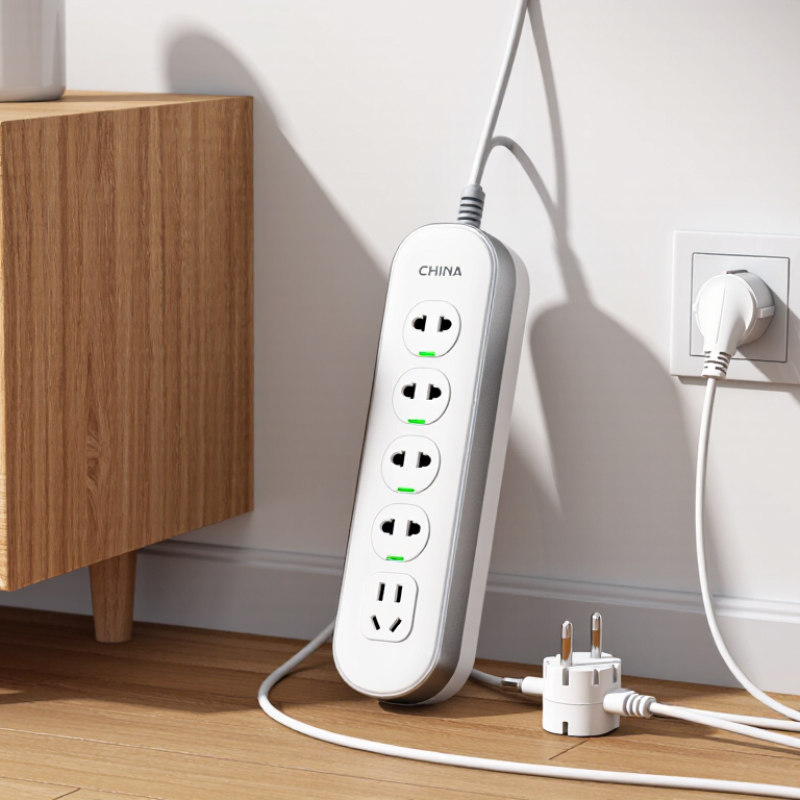
Identify the Surge Risks and Protection Needs in Your Home
Before buying a home surge protector from China, map the actual risks inside your home. Lightning is obvious, but utility switching and motor-driven appliances create frequent transient events. Refrigerators, air conditioners, pumps, and washing machines can stress sensitive electronics. A practical check begins at the electrical panel, not the shopping page.
NFPA’s Home Fires Caused by Electrical Distribution and Lighting Equipment report estimated 26,100 U.S. home fires annually from 2016 to 2020. These incidents caused about 420 deaths, 1,010 injuries, and 1.1 billion dollars in direct property damage. The figures are not surge-specific. Still, they show why protection needs to include wiring condition, grounding, and installation quality. IEEE C62.41.2 helps classify surge environments, while UL 1449 defines important performance and safety requirements for surge protective devices.
Match the device to your system voltage, earthing arrangement, and panel capacity. A Type 1 or Type 2 protector may suit the service entrance; Type 3 units protect individual electronics. Check maximum continuous operating voltage, nominal discharge current, thermal protection, and certification documents. Joule ratings alone can mislead. Ask the Chinese supplier for independent test reports, production traceability, and clear replacement procedures. Small clue: vague certificates deserve caution. The hard part is admitting that a cheap protector may protect less than expected, especially with poor grounding. A neat enclosure cannot correct an undersized conductor or a badly installed breaker.
Compare Surge Protector Types, Ratings, and Safety Features
How to Choose the Best Home Surge Protector from China?
Choosing a home surge protector requires more than checking its price or appearance. Start by matching the type to your electrical setup. Plug-in protectors suit televisions, computers, and kitchen appliances. Power strips add convenience, but they need overload protection and strong housing. Whole-house units offer wider coverage, although installation should be handled by a qualified electrician.
Compare the ratings carefully. Joule ratings indicate how much surge energy a protector can absorb. A higher rating usually supports longer service life, but it is not the only measure. Check clamping voltage, response time, maximum continuous voltage, and rated current. Safety features matter too. Look for thermal protection, an overload switch, grounding indicators, child-safe shutters, and fire-resistant materials. A missing indicator can create false confidence. That detail is easy to overlook.
Tips: Request clear test reports, factory inspection records, and product samples before placing a large order. Confirm that the plug, voltage, frequency, and certifications match your destination market. Test the grounding indicator with a qualified professional. Do not connect one surge strip to another. Keep the protector away from water, heaters, and crowded outlets. I would also inspect the cord flexibility and plug temperature after several hours of use. A product may look solid but perform differently under load. Recheck every claim.
Evaluate Chinese Manufacturers, Certifications, and Product Quality
Choosing a home surge protector from China starts with checking the manufacturer, not just the product photos. Ask how long the factory has made surge protection devices and whether it controls assembly and testing in-house. Request a current test report that names the exact model. Check the issuing laboratory, report number, test scope, and accreditation independently. A certificate for a similar model proves little.
Review certifications for your destination market. For example, ask about applicable IEC or GB standards and relevant market conformity documents. In North America, look for appropriate independent safety certification. Do not treat a CE mark alone as proof of third-party testing. Compare the rated surge current, protection modes, thermal cutoff, grounding requirements, and replacement indicator. A polished datasheet can still leave gaps; I would want clear answers about failure protection and warranty limits.
Tips: Request a production sample and inspect its casing, plug fit, labels, and instruction sheet. Ask for batch traceability and routine quality-control records. Confirm the stated ratings against the test report, not only the sales listing. If the seller avoids specific questions, keep looking.
How to Choose the Best Home Surge Protector from China?
Check that the product matches your market’s nominal household voltage before comparing manufacturers, certifications, and product quality.
The chart shows nominal household supply voltage: China 220 V, the United States 120 V, and the United Kingdom and European Union 230 V. These are nominal values; local installations and standards may vary. Also verify frequency, plug type, and the surge protector’s rated voltage and protection specifications. Ask manufacturers for test reports and certifications applicable to your target market.
Reference standards: GB/T 156 (China), ANSI C84.1 (United States), and IEC 60038 (standard voltages).
Match the Protector to Your Appliances, Wiring, and Installation Setup
How to Choose the Best Home Surge Protector from China?
Match the protector to your appliances, wiring, and installation setup. A compact protector for a television cannot replace a service-panel device. Type 1 or Type 2 protection suits the main distribution board, while Type 3 devices work near sensitive electronics. Check the maximum continuous operating voltage, nominal discharge current, and clamping voltage. These figures must match your local electrical system.
Wiring matters just as much. A surge protector needs a short, low-impedance path to protective earth. Long leads can reduce its performance during a fast transient. In older homes, ask an electrician to inspect grounding, neutral connections, and breaker capacity before installation. The International Electrotechnical Commission’s IEC 61643-11 standard defines key performance requirements for low-voltage surge protective devices. Request test evidence against the relevant edition, not only a printed compliance symbol.
Look for thermal disconnection, status indicators, and clear replacement instructions. The Electrical Safety Foundation International cites about 51,000 residential electrical fires annually in the United States, showing why installation quality deserves attention. A low price still tempts buyers. I have learned that a neat label can hide weak documentation. Ask the Chinese supplier for leakage-current data, impulse-test results, warranty terms, and photographs of internal construction. Also confirm plug geometry and certification for the destination market. A protector may fit the socket but still mismatch the appliance load. That mistake is easy to make.
Verify Warranty, Support, and Long-Term Reliability Before Buying
How to Choose the Best Home Surge Protector from China?
A low price can be attractive, but warranty terms reveal much more about a supplier. Ask for the warranty period, covered failures, return address, and replacement process. These details should appear in writing, not only in a sales message. Check whether the warranty covers normal household use, including repeated voltage events and thermal damage. Some policies sound generous but exclude the most likely failures.
Support quality matters when a protector stops working during a stormy evening. Ask how quickly technical questions receive replies. Request a clear contact person, installation instructions, and troubleshooting guidance in English. A dependable supplier should explain clamping voltage, maximum surge capacity, and grounding requirements without vague claims. Ask for test reports from recognized laboratories, then verify the report numbers when possible. Do not rely on a product photo alone.
Long-term reliability needs practical evidence. Review material specifications, socket durability, cable thickness, indicator lifespan, and internal safety features. If available, request samples and inspect the plug fit, casing seams, and heat after normal use. I once focused too heavily on electrical ratings and ignored slow customer support. That was a costly warning. Ask about spare parts, batch consistency, and after-sales records. A supplier that answers difficult questions clearly is often safer than one offering only impressive numbers.