How to Choose the Best Egg Packaging Machine?
Choosing the right Egg Packaging Machine is not merely a machinery decision. It affects product protection, labor efficiency, hygiene, and long-term operating costs. Global egg production has exceeded 90 million tonnes in recent years, according to FAOSTAT data. That scale increases pressure on producers to package faster without damaging shells.
Industry reports show why this decision deserves careful evaluation. The OECD-FAO Agricultural Outlook identifies continued growth in poultry and egg demand, especially in developing markets. Meanwhile, PMMI’s packaging industry research highlights labor shortages, automation investment, and the need for flexible equipment. These trends point toward machines that can handle different carton formats, detect cracked eggs, and maintain stable output during peak periods. A practical example is a line moving fragile eggs into 6-, 10-, or 12-piece cartons while preserving consistent spacing and gentle transfer.
There is no universal “best” machine. A compact farm may value simple controls and easy cleaning. A large packing center may prioritize high speed, vision inspection, and automatic carton changes. Grand View Research and similar market studies forecast continued expansion in automated packaging equipment, but forecasts are not guarantees. Actual results depend on egg size, packaging material, staffing, maintenance, and local power conditions. That part is often underestimated. This guide compares machine capacity, handling accuracy, sanitation design, energy use, service support, and total ownership cost. It also questions attractive specifications that look impressive on paper but may perform poorly in a dusty, humid packing room.
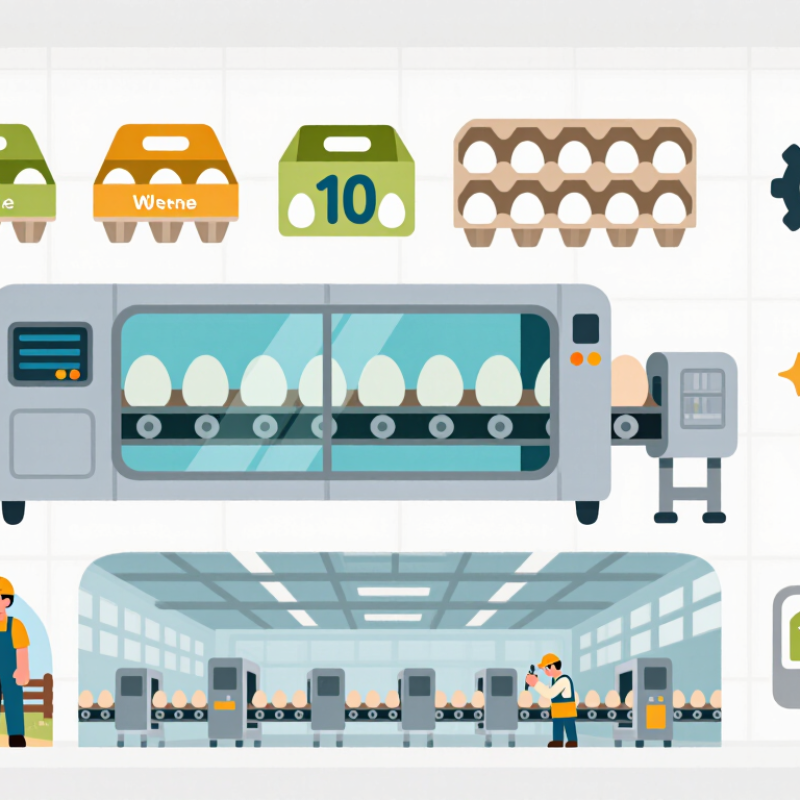
Egg Packaging Machine Types and Their Applications
How to Choose the Best Egg Packaging Machine?
Egg Packaging Machine Types and Their Applications
Egg packaging machines differ by the product format, production speed, and handling conditions. Tray packing machines place eggs into molded trays for farms, wholesalers, and short-distance distribution. They work well when speed matters and packaging costs must stay controlled. Carton packaging machines load eggs into retail cartons, often with automatic closing and labeling. They suit supermarkets and direct consumer sales. Case packing machines gather filled cartons into larger shipping cases. They reduce manual lifting during warehouse operations. Some systems combine grading, inspection, and packing. These integrated lines can improve consistency, but they require more space and skilled maintenance.
A suitable machine should match egg size, shell strength, packaging material, and expected output. Check the changeover process carefully. Frequent size changes can turn a fast machine into a slow one. Gentle conveyors, accurate sensors, and adjustable guides help reduce cracks. Sanitation access also matters, especially around belts and transfer points. A technical specification may look impressive, yet real performance depends on operator training and daily cleaning. That detail is easy to overlook.
Tips: Test several egg sizes before purchase. Measure breakage during a full shift, not a short demonstration. Ask for maintenance records and spare-part availability. Leave room for future capacity, but avoid paying for unused automation. A smaller machine may be wiser for irregular production. Mistakes happen when buyers trust speed figures alone. Observe noise, vibration, rejected eggs, and changeover time. These details often reveal more than the brochure.
Production Needs and Packaging Requirements
Choosing the best egg packaging machine starts with production needs, not advertised speed. Measure daily output, peak demand, egg sizes, and working hours. A small farm may need a compact system with simple controls. A large packhouse may require continuous feeding, grading, tray loading, and case packing.
Check packaging requirements in detail. Will the machine handle pulp trays, plastic cartons, or several formats? Ask how quickly operators can change between six-egg and twelve-egg packs. Changeover time affects real output. The machine should also protect fragile shells during transfer. Soft belts, accurate sensors, and controlled drops can reduce cracked eggs. It needs washable surfaces and accessible parts because dust, shell fragments, and moisture collect around conveyors.
Do not judge equipment by speed alone. A machine rated for 30,000 eggs per hour may perform poorly with uneven feeding or frequent stops. In one production test, minor tray alignment errors created repeated jams. The issue was not dramatic, but it reduced output across the entire shift. Request a practical trial with your own eggs and packaging materials. Check inspection records, maintenance access, power use, noise, and operator training. Data logging can reveal recurring faults, although sensors also require calibration. A reliable supplier should provide clear manuals, spare-part guidance, and measurable service support. Some assumptions will still need testing.
Safety, Hygiene, Automation, and System Compatibility
How to Choose the Best Egg Packaging Machine?
Egg packaging begins with food safety, not speed. The WHO estimates that contaminated food causes 600 million illnesses worldwide each year. Your machine should reduce contact, dust, moisture, and cracked shells. Choose stainless steel surfaces, tool-free cleaning points, and washable conveyors. Check whether the design supports HACCP procedures and current Codex hygiene principles. Small gaps can become serious cleaning problems.
Hygiene must work alongside automation. The International Egg Commission estimates global production exceeds 1.5 trillion eggs annually. At this scale, manual handling creates inconsistent spacing and inspection risks. Look for automatic counting, weighing, grading, and reject functions. Sensors should detect missing eggs and damaged trays without stopping the whole line. However, automation is not always better. Complex systems may slow production when operators lack training. This is where real experience matters.
Tips: Test the machine with your own eggs and trays. Measure breakage, cleaning time, noise, and changeover speed. Confirm compatibility with existing graders, conveyors, printers, and case packers. Ask for documented accuracy, spare-part availability, and operator training. A machine can look impressive during a demonstration, yet perform differently in a humid packing room. Review the data twice. Mistakes happen.
Cost Evaluation, Supplier Selection, and Long-Term Support
Choosing an egg packaging machine starts with cost, not the catalogue price. FAOSTAT records annual global hen-egg production above 80 million tonnes, creating strong demand for reliable packing capacity. Compare total ownership costs, including electricity, tooling, sanitation, spare parts, labor, and planned downtime. A cheaper machine can become expensive when cartons misalign or sensors fail. Ask suppliers for verified output at your egg sizes, not only laboratory speed. A faster line is not always better.
Supplier selection requires evidence. Review factory references, maintenance response times, installation records, and operator training. PMMI’s 2024 packaging industry research identifies labor availability and automation as major investment concerns. Therefore, choose controls that local workers can learn quickly. Request a written service agreement with response targets and critical-part availability. Inspect a running machine before purchase. Watch the transfer points closely. Small cracks often appear there first. I would also test dirty, irregular, and mixed-size eggs, because ideal samples can hide practical weaknesses.
Tips: Build a five-year cost model before comparing quotations. Measure electricity use during a full shift. Confirm carton and tray compatibility in writing. Keep essential sensors and belts onsite. Ask for remote diagnostics, but do not depend on them completely. Supplier promises sometimes sound clearer than the contract. Recheck every assumption.
How to Choose the Best Egg Packaging Machine?
Five-year total cost of ownership comparison for three common production-capacity levels. Values are planning estimates in USD and should be validated with supplier quotations, local labor rates, energy prices, and service terms.
Evaluation insight: A lower purchase price does not always produce the lowest long-term cost. Compare installation, labor, energy consumption, preventive maintenance, spare-parts availability, warranty coverage, response time, and operator training before selecting a supplier.