Why Choose a Die Casting Machine for Your Manufacturing Needs?
In today's manufacturing landscape, selecting the right die casting machine is critical. Experts recognize the profound impact of such technology. John Smith, a well-respected authority in die casting, states, "A superior die casting machine is essential for both quality and efficiency." This highlights the machine's importance in modern production.
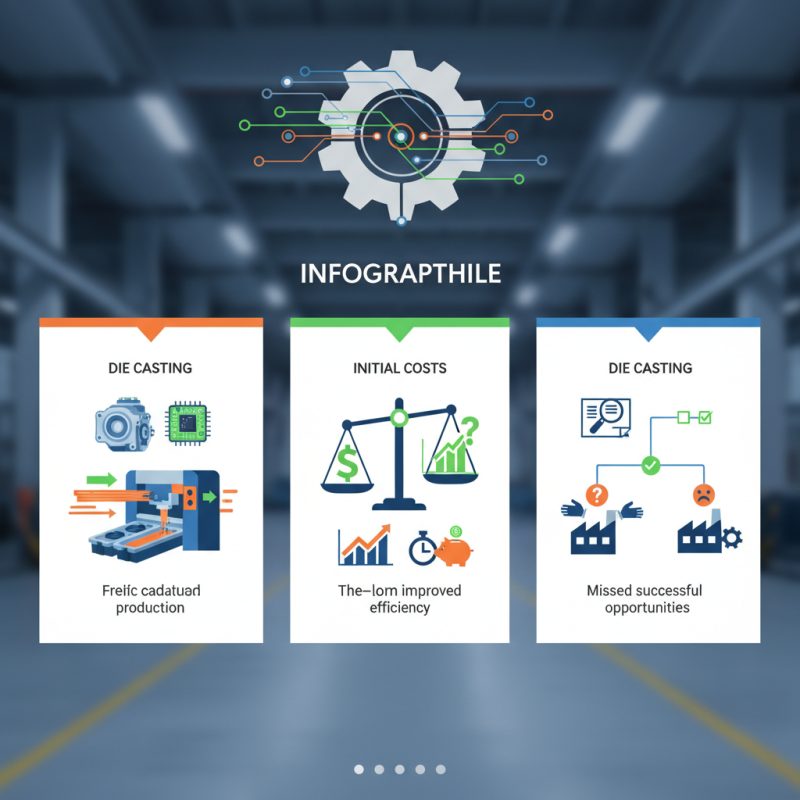
Die casting machines offer precision and speed in creating complex metal parts. They are favored in industries like automotive and electronics. However, challenges remain. Not all manufacturers understand their benefits. Some hesitate to invest due to initial costs. They may overlook the potential for long-term savings and improved production rates.
Choosing the right die casting machine requires careful evaluation. Manufacturers must weigh their needs against machine capabilities. It's crucial to assess both current and future requirements. By doing so, companies can avoid regrets later on and ensure a successful manufacturing process.
Benefits of Die Casting Machines in Manufacturing Processes
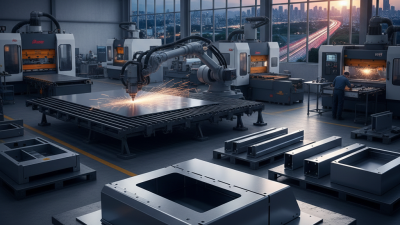
Die casting machines play a crucial role in modern manufacturing. They offer precision and efficiency that are hard to match. With these machines, manufacturers can create intricate shapes from metals like aluminum and zinc. The process allows for rapid production, reducing lead times significantly.
One of the exciting advantages is the reduction of waste. Die casting minimizes excess material, which can save money. This method also supports complex designs. However, achieving the perfect design can be challenging. It requires testing and fine-tuning. Quality control is essential to ensure that each part meets high standards. Sometimes, flaws can arise during production, leading to costly revisions.
Another important factor is energy efficiency. Die casting uses less energy compared to other methods. This translates into lower operational costs over time. Despite these benefits, some manufacturers hesitate. They worry about the initial investment. It can be hefty. Yet, the long-term gains often offset these costs. Businesses must weigh risks and rewards carefully before committing to die casting technology.
Comparison of Die Casting and Other Metal Forming Techniques
Die casting stands out among metal forming techniques. It offers precision and consistency. According to a 2022 industry report, die casting can achieve tolerances as tight as ±0.1 mm. This can greatly enhance product quality in sectors like automotive and electronics.
Compared to other methods, die casting has unique advantages. Forging typically requires more energy and yields rougher surfaces. Injection molding, while also precise, often lacks the durability of die-cast parts. A recent survey indicated die-cast components are 30% lighter than similar forged pieces. This weight reduction can lead to significant savings in material and shipping costs.
Yet, die casting isn't without its flaws. Start-up costs are higher, and the process may require extensive tooling. Some manufacturers face challenges with aluminum alloys, which can create defects. Continuous improvement is needed to address these issues and enhance overall efficiency in production.
Why Choose a Die Casting Machine for Your Manufacturing Needs? - Comparison of Die Casting and Other Metal Forming Techniques
| Technique |
Material Compatibility |
Production Speed |
Dimensional Accuracy |
Surface Finish |
Cost Efficiency |
| Die Casting |
Aluminum, Zinc, Magnesium |
High |
±0.1 mm |
Good to Excellent |
Medium to High |
| Sand Casting |
Iron, Aluminum, Steel |
Low to Medium |
±0.5 mm |
Fair |
Low |
| Injection Molding |
Plastics, Elastomers |
Medium to High |
±0.1 mm |
Excellent |
Medium |
| Forging |
Steel, Titanium |
Low |
±0.5 mm |
Good |
High |
Key Features to Look for in a Die Casting Machine
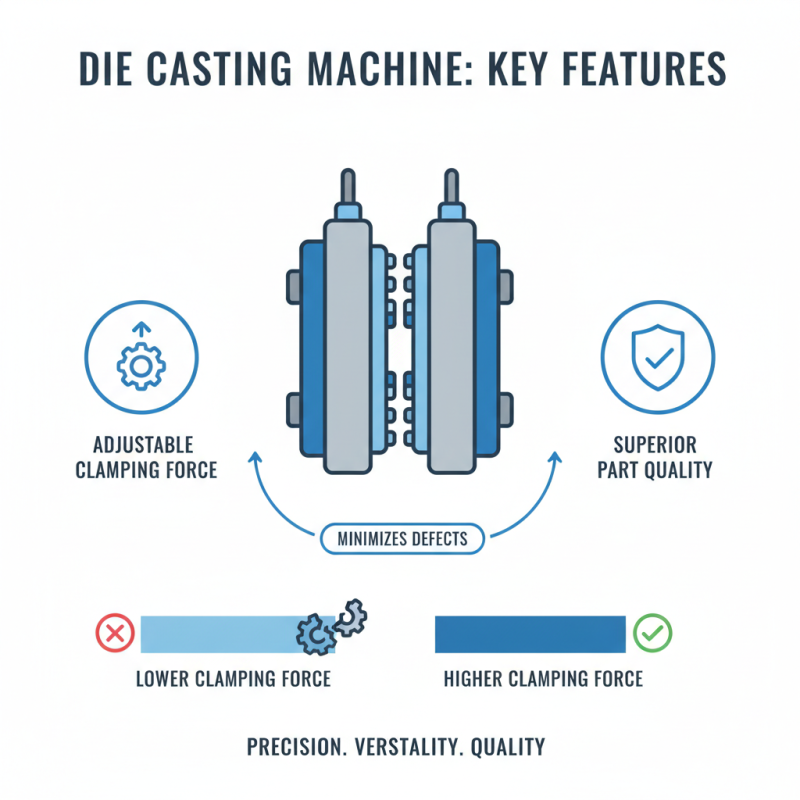
When considering a die casting machine, certain key features stand out. Clamping force is essential. It affects the precision of the parts produced. A machine with adjustable clamping force can enhance versatility. According to industry reports, machines with higher clamping force provide better part quality by minimizing defects. It's essential to evaluate this feature against your production needs.
Another significant aspect is the machine's cycle time. Shorter cycle times can lead to increased productivity. Some advanced machines achieve cycle times as low as 5 seconds, drastically improving output. However, faster cycles can impact the quality of the cast. Balancing speed and quality is crucial. Not all machines that boast rapid speeds deliver the best outcomes.
Energy efficiency is also a vital consideration. Die casting machines that utilize less energy can lower operational costs. Many reports indicate that energy-efficient models can reduce power consumption by 30% or more. Nevertheless, beware of machines that prioritize energy savings at the cost of performance. It's important to scrutinize how these factors interplay for your specific applications.
Cost-Effectiveness and Efficiency of Die Casting Machines
Die casting machines provide significant cost-effectiveness and efficiency in manufacturing. According to industry reports, these machines can produce complex parts at a lower cost compared to traditional methods. The average savings can reach up to 20% in production costs. This makes them attractive for companies aiming to enhance profitability.
Efficiency is another key aspect. Die casting machines offer high-speed production, often producing thousands of parts per hour. A recent study highlighted that these machines can operate at 90% efficiency levels. This leads to reduced cycle times and quicker project completions. However, the initial investment in die casting technology can be daunting for some manufacturers. High upfront costs may discourage adoption despite potential long-term savings.
Additionally, the industry faces challenges like material waste and setup times. Some manufacturers struggle to optimize their processes. There’s room for improvement in understanding how to fully leverage technology. This creates a gap in expertise that needs addressing. Overall, a thorough analysis is essential for manufacturers contemplating die casting machines. The potential rewards might outweigh hurdles if approached thoughtfully.
Applications of Die Casting in Various Industries
Die casting is a versatile manufacturing process. It finds applications across various industries.
One significant area is automotive manufacturing. The need for lightweight and durable parts drives innovation.
Die casting produces engine blocks, transmission housings, and structural components.
These parts must withstand high stress. They also need to be cost-effective and precise.
Another industry benefiting from die casting is electronics. Manufacturers rely on die casting for enclosures and heat sinks.
These components ensure the reliability of devices. They require high thermal conductivity and complex designs.
Precision is crucial, yet some designs can be tricky to achieve. Not all parts come out perfectly, and imperfections may appear.
Consumer goods also use die casting extensively. This method produces items ranging from kitchen appliances to furniture hardware.
Aesthetic appeal and functionality are vital here. However, achieving both can sometimes lead to compromises in quality.
Certain designs may not be as durable as expected, prompting reevaluation. Overall, the die casting process embodies a blend of creativity and technical challenges.