China Best Wifi Humidity Sensor for Global Buyers?
Choosing the China Best Wifi Humidity Sensor for global buyers requires more than comparing prices and wireless range. The right device should provide stable humidity readings, practical connectivity, and dependable performance in real environments. Warehouses, greenhouses, museums, offices, and homes may all require different accuracy levels.
A reliable Wifi Humidity Sensor should be tested across changing temperatures, condensation risks, and weak network conditions. Buyers should review calibration methods, sensor response time, data storage, app compatibility, and power options. Clear technical documents matter. So do supplier records, product samples, and transparent quality-control procedures. A low-cost unit may appear attractive, but unstable readings can damage inventory or increase maintenance work.
Real testing reveals more than a polished product page. Place samples near storage racks, ventilation outlets, and enclosed cabinets. Compare their readings with a verified reference meter. Small differences may be acceptable, but unexplained changes deserve attention. No sensor performs perfectly in every climate. That is worth admitting. Wireless compatibility can also vary between regions, routers, and mobile systems. Buyers should confirm supported frequency bands, communication security, warranty terms, and after-sales response before placing large orders.
This guide examines key selection points for international purchasers. It considers technical performance, supplier reliability, customization options, packaging, and long-term service. The goal is not to promote one factory without evidence. It is to help buyers ask better questions, reduce avoidable risks, and choose a Wifi Humidity Sensor that fits their actual operating conditions.
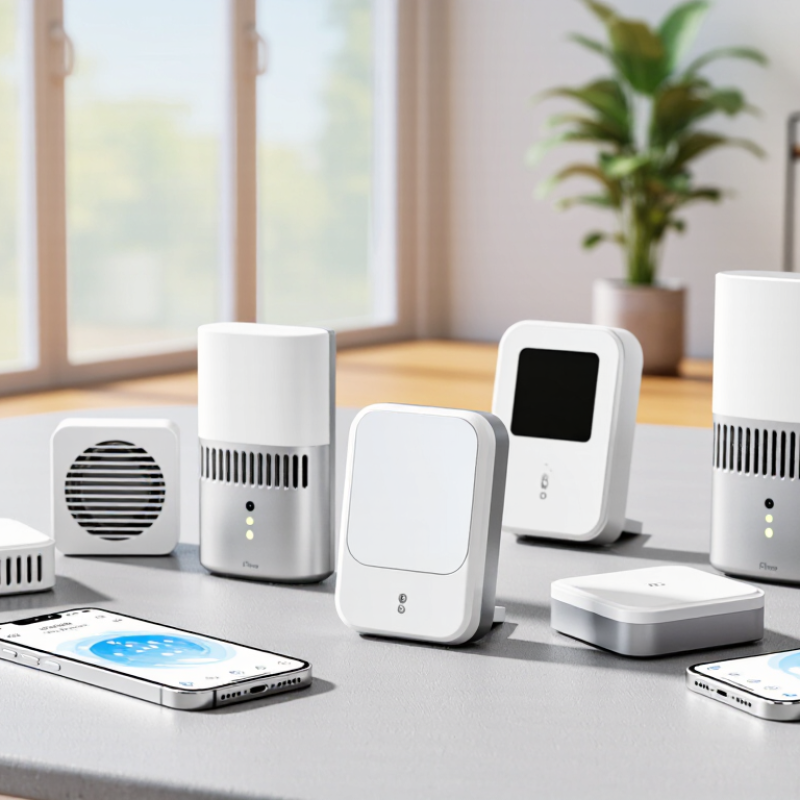
What Is a WiFi Humidity Sensor?
A WiFi humidity sensor is a small electronic device that measures moisture in the air and sends readings through a wireless network. Humidity is usually shown as relative humidity, or RH, expressed as a percentage. A reading of 60% RH means the air holds about 60% of its possible moisture at that temperature. Many sensors also measure temperature because temperature changes affect humidity calculations.
In practical use, the sensor may sit in a bedroom, warehouse, greenhouse, or storage room. It records conditions and sends updates to a phone, dashboard, or connected control system. Users can receive alerts when humidity rises above a chosen limit. This helps protect furniture, electronics, documents, plants, and stored materials.
It is not magic. The device needs stable WiFi, suitable placement, and a dependable power source. Avoid placing it beside a window, heater, humidifier, or air vent. These locations can create misleading readings.
Accuracy deserves attention. A low-cost sensor may drift over time, especially in hot or damp environments. Professional users should compare readings with a calibrated reference instrument during quality checks. I have found that convenience can hide weak maintenance habits.
Batteries need replacement, firmware may require updates, and wireless signals can fail behind thick walls. A reliable purchasing decision should examine measurement range, stated accuracy, response time, data storage, security features, and calibration support. A useful sensor is not merely connected; it must produce trustworthy information when conditions change.
How WiFi Humidity Sensors Measure and Share Data
A reliable WiFi humidity sensor does more than display a percentage. It turns moisture conditions into usable data for homes, warehouses, offices, and production areas. A sensing element reacts to changes in air moisture, usually through a change in capacitance or electrical resistance. The device then combines that reading with temperature data.
Inside the sensor, a small controller samples the element at regular intervals. It filters sudden spikes caused by airflow, open doors, or warm hands nearby. The result is usually shown as relative humidity, such as 45% RH at 22°C. Calibration matters. Even good sensors can drift over time, especially in dusty rooms or near condensation.
After measurement, the controller sends the data through a WiFi network. It may use a local gateway, a web dashboard, or a mobile application. Each record can include humidity, temperature, battery level, signal strength, and a timestamp. Secure data transfer helps protect readings during transmission.
However, WiFi does not solve every problem. Weak signals, router changes, and low batteries can create missing records. A sensor placed beside a window may also report conditions that do not represent the whole room. I have found that careful placement often improves accuracy more than expensive hardware. Leave space around the sensor. Check it against a trusted reference occasionally.
Readings are useful, but they still need human judgment.
Key Features for Global Buyers to Compare
For global buyers, the best Wi-Fi humidity sensor is not simply the cheapest model. Measurement accuracy matters near mold-sensitive areas. The U.S. Environmental Protection Agency recommends keeping indoor relative humidity between 30% and 50%. Compare accuracy across this range, not only at room temperature. A practical target is ±2% to ±3% RH. Ask whether the manufacturer provides calibration records. Some specifications look impressive but lack testing details.
Connectivity deserves equal attention. IoT Analytics reported 16.7 billion connected IoT devices worldwide in 2023. That number increases pressure on stable, scalable monitoring. Check 2.4 GHz Wi-Fi support, reconnection behavior, alert latency, and cloud availability. Battery life should reflect real settings, not laboratory promises. Also review encryption, account protection, data retention, and regional app compatibility. These details affect daily reliability more than a polished dashboard.
Physical design can reveal hidden costs. For warehouses, inspect the operating temperature range and enclosure rating. For homes, a compact sensor with a visible screen may be easier to verify. Compare replacement batteries and installation time. A useful device should report both humidity and temperature. It should also export historical data for maintenance records. I would test several units in one room before large deployment. Sensors can drift. Wi-Fi can fail. Perfect performance is unlikely. EPA indoor-air guidance and published test evidence deserve more trust than vague marketing claims.
How to Select the Best Sensor for Different Applications
China Best Wifi Humidity Sensor for Global Buyers?
Selecting the best WiFi humidity sensor starts with the application, not the product photo. A warehouse may need wide temperature coverage and long battery life. A museum requires gentle airflow, stable readings, and careful placement. For greenhouses, condensation resistance and rapid updates can matter more than a polished dashboard. Match the sensor’s humidity range, accuracy, response time, and operating temperature to real conditions. Test it near doors, vents, and heat sources before installation. Small details matter.
Connectivity also deserves practical attention. Check whether the sensor supports the required WiFi frequency and regional radio requirements. Confirm encryption, user access controls, and data storage practices. A cloud platform may be useful for global teams, but local alerts are safer when internet service fails. Choose an enclosure rating that fits dust, splashes, or washdown areas. Do not trust an IP label without checking its test conditions.
Calibration evidence separates dependable equipment from attractive claims. Ask for inspection records, calibration intervals, measurement uncertainty, and replacement procedures. I have seen accurate sensors give poor results because they were mounted against cold metal. That mistake is easy to repeat. Leave space around the sensing element, protect it from direct water, and compare readings with a trusted reference during commissioning. No sensor is perfect. Even a careful selection can need adjustment after seasonal changes. Test the complete system, not only the device.