China Best Aluminum Tube Extrusions Supplier?
Choosing the right supplier for Aluminum Tube Extrusions requires more than comparing prices. A reliable partner must understand alloy selection, die design, wall thickness, tolerances, surface finishing, and production consistency. These details affect whether a tube fits smoothly, survives vibration, and performs reliably in real applications.
Jeff Henderson, an industry expert and former president of the Aluminum Extruders Council, once stated, “Extrusion is a design process, not merely a manufacturing process.” This insight remains highly relevant when evaluating suppliers in China. A capable manufacturer should review drawings carefully, suggest practical profile improvements, and explain how tooling choices influence cost and strength. Ask for material certificates, inspection records, sample measurements, and clear production timelines. A polished website is not enough.
The best supplier should also demonstrate experience with 6061, 6063, or other suitable aluminum alloys. Their factory should maintain controlled extrusion temperatures, dependable cutting equipment, and consistent quality checks. Look for evidence, not promises.
Small details matter.
A supplier may offer an attractive quotation but overlook minimum wall thickness or packaging protection. That mistake can create scratches, bending, or costly delays after delivery. I also believe buyers should remain realistic. No manufacturer is perfect, and every project may require design revisions or a second inspection. The strongest partnership allows honest questions, transparent communication, and measurable improvement. This guide examines how to identify China’s best Aluminum Tube Extrusions supplier through technical capability, verified experience, quality assurance, and dependable customer support.
What Are Aluminum Tube Extrusions and How Are They Made?
China Best Aluminum Tube Extrusions Supplier?
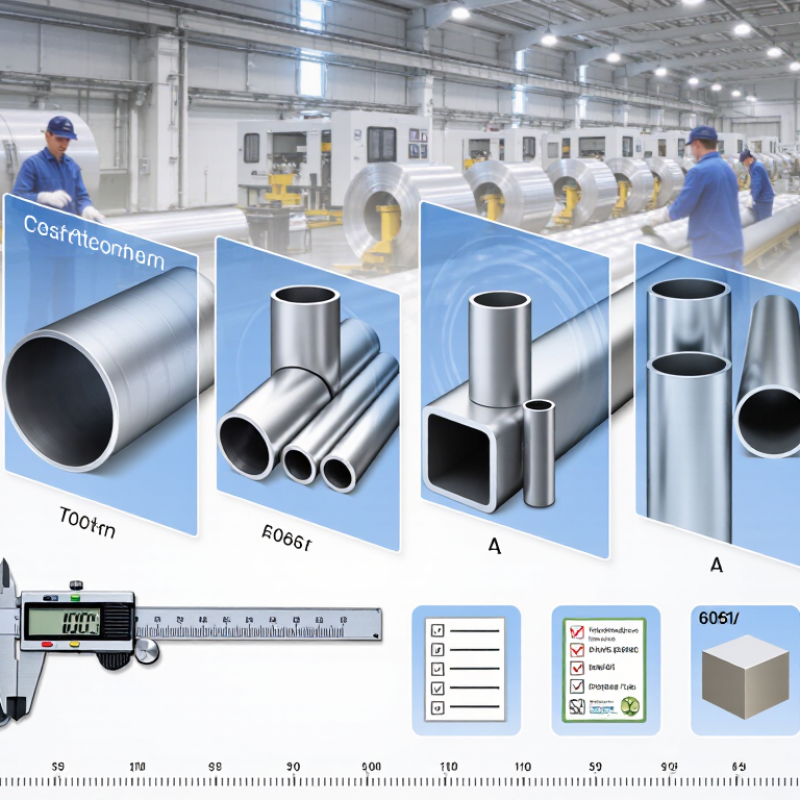
Aluminum tube extrusion is a process that forms heated aluminum through a shaped steel die. The die controls the tube’s outside profile, wall thickness, and internal opening. A solid billet is heated until it becomes workable, but not liquid. A hydraulic ram then pushes it through the die. The emerging tube looks continuous and bright.
Production details matter. After extrusion, the tube may pass through a water or air cooling stage. Controlled cooling helps preserve its shape and mechanical properties. Workers then stretch the profile to reduce bending and internal stress. Cutting follows, often with saws that leave clean, square ends. Heat treatment can improve strength, depending on the alloy and application.
A practical supplier should verify dimensions with calibrated equipment. Measurements may include diameter, wall thickness, straightness, and surface condition. Alloy certificates and inspection records also provide useful evidence. I have seen drawings appear accurate while the finished tube still twists slightly. Small die errors can create large problems during assembly. That is why trial samples deserve careful testing, not quick approval. Packaging also matters; thin walls can dent during transport. A reliable production review should examine the die design, extrusion speed, cooling method, and final inspection data. Some details remain easy to overlook.
Why Choose a Chinese Aluminum Tube Extrusion Supplier?
Why Choose a Chinese Aluminum Tube Extrusion Supplier?
Chinese aluminum tube extrusion suppliers offer practical advantages for international buyers. Many operate modern extrusion lines, automated cutting equipment, and in-house quality laboratories. This combination supports consistent dimensions, smooth surfaces, and repeatable production. I have seen how small tooling adjustments can improve tube straightness and reduce material waste. Large production capacity can also support prototypes, regular orders, and customized profiles.
Cost is another reason to consider China. Competitive energy, labor, and manufacturing networks can lower the total unit price. However, the cheapest quotation is not always the best choice. A reliable supplier should explain alloy selection, temper requirements, tolerances, packaging, and delivery schedules clearly. Ask for inspection records, material certificates, and sample approval before mass production. Traceability matters. It protects your project when problems appear months later. Communication may still require patience, especially when technical drawings contain unclear details.
Tips: Compare samples, not promises. Check wall thickness at several points. Confirm tooling ownership and revision procedures. Request a realistic lead time, including shipping. A video factory audit can reveal storage conditions and production discipline. Do not ignore small surface scratches; they may become serious after anodizing. Also, review the supplier’s response speed and technical questions. A strong partner should notice risks before you do. Mistakes can happen. The important issue is how openly the supplier corrects them.
How to Evaluate Aluminum Tube Extrusion Quality and Certifications?
When evaluating an aluminum tube extrusion supplier, inspect the profile before trusting a certificate. Measure outer diameter, wall thickness, straightness, and cut length from several production batches. Uneven walls can weaken welded joints and cause assembly problems. Surface scratches also reveal poor die maintenance or careless handling.
Request chemistry and mechanical test reports for each alloy and temper. ASTM B221 and EN 755 provide useful references for extrusion dimensions and performance. An EN 10204 3.1 inspection certificate can link test results to a specific heat number. Traceability matters. A certificate is evidence, not proof. Verify the laboratory, testing date, sample identity, and reported yield strength. I would also check hardness and elongation independently when the application carries structural loads.
Quality systems deserve equal attention. ISO 9001 indicates controlled processes, while ISO 14001 addresses environmental management. These standards do not guarantee perfect tubes. They show whether procedures are documented and reviewed. The International Aluminium Institute reports that recycled aluminium can require about 95% less energy than primary production, so ask for recycled-content evidence when sustainability matters. However, recycled input may affect chemistry control if purchasing records are weak. That detail is easy to miss. Factory audits, calibration records, first-article samples, and batch photographs provide stronger confidence than a logo on a document. Small samples can look excellent while later batches drift. Evaluate consistency, not appearance alone.
Which Customization Options and Alloys Are Available?
China Best Aluminum Tube Extrusions Supplier?
Which Customization Options and Alloys Are Available?
A capable aluminum tube supplier should customize more than outside diameter and length. Buyers can request wall thickness, tube shape, hole patterns, slots, and internal channels. Common finishing choices include mill finish, anodizing, powder coating, and brushing. CNC cutting, drilling, bending, and end forming can reduce assembly work. However, every added operation affects cost, tolerance, and delivery time. A perfect profile rarely exists.
Alloy selection should follow the tube’s actual job. 6063 offers smooth extrusion and attractive anodizing for frames, trims, and furniture. 6061 provides higher strength for brackets, machine parts, and structural tubes. 6005A and 6082 can suit heavier load requirements, though extrusion complexity may increase. Temper matters too. T5 and T6 can change hardness, straightness, and machining behavior. Do not choose an alloy from a catalog alone.
The International Aluminium Institute reports that recycled aluminum requires about 5% of the energy used for primary aluminum. This makes recycled content worth discussing during sourcing. The Aluminum Association also reports that nearly 75% of all aluminum ever produced remains in use, supporting aluminum’s long service life. Still, recycled material may vary in chemistry. Request a mill certificate, alloy verification, dimensional inspection, and sample approval. One practical mistake is ignoring corner radii. Sharp corners can slow extrusion and create weak areas. Ask for a trial profile before committing to large tooling.
How to Compare Pricing, Lead Times, and Supplier Services?
China Best Aluminum Tube Extrusions Supplier?
How to Compare Pricing, Lead Times, and Supplier Services?
An experienced buyer compares more than the quoted price. Material is only one part. The World Bank’s Commodity Markets Outlook reports an average aluminum price near $2,419 per metric ton in 2024. That figure moves. Therefore, request the quotation date, alloy, temper, tube dimensions, finish, tooling cost, packaging, and delivery terms. A low price may exclude die charges or inland freight. Ask for proof.
Global supply is large but uneven. The International Aluminium Institute reported approximately 73 million tonnes of primary aluminum production in 2024. Production volume does not guarantee suitable extrusion capacity. Ask suppliers to separate die preparation, sample approval, production, inspection, and shipping time. Compare the promised lead time with historical on-time delivery data. A “15-day lead time” means little without a clear starting point.
Supplier service often decides whether a project stays stable. Request tolerance reviews, material certificates, dimensional reports, surface inspection records, and batch traceability. Confirm how quickly engineers answer drawing questions. Also ask what happens after a rejected batch. A practical supplier should explain corrective action, replacement timing, and communication ownership. I would not rely only on polished samples; samples can hide inconsistent wall thickness or poor packaging. My own comparison sheet would score landed cost, lead-time reliability, response speed, and defect handling separately. It is imperfect, but more honest than choosing the lowest quote.