What Are the Best Types of Bearing Steel for Global Buyers
Bearing Steel is critical in various industries, from automotive to aerospace. The right type enhances performance and durability. According to a report by Grand View Research, the global bearing market is expected to reach over $80 billion by 2025. This growth emphasizes the importance of selecting high-quality bearing steel.
Different types of bearing steel exhibit distinct properties. For instance, chrome steel is known for its excellent load capacity and wear resistance. In contrast, stainless steel provides corrosion resistance, making it suitable for harsh environments. Research demonstrates that bearing failures can be traced back to inadequate material selection. This highlights the need for global buyers to make informed decisions.
Choosing the best bearing steel requires understanding specific applications. Factors like temperature, load conditions, and environmental factors play a role. Despite advancements, challenges remain in optimizing steel grades. The continuous demand for innovative solutions points to the evolving nature of the bearing steel industry. Making the right choice is no small task; it requires expertise and a keen awareness of market trends.
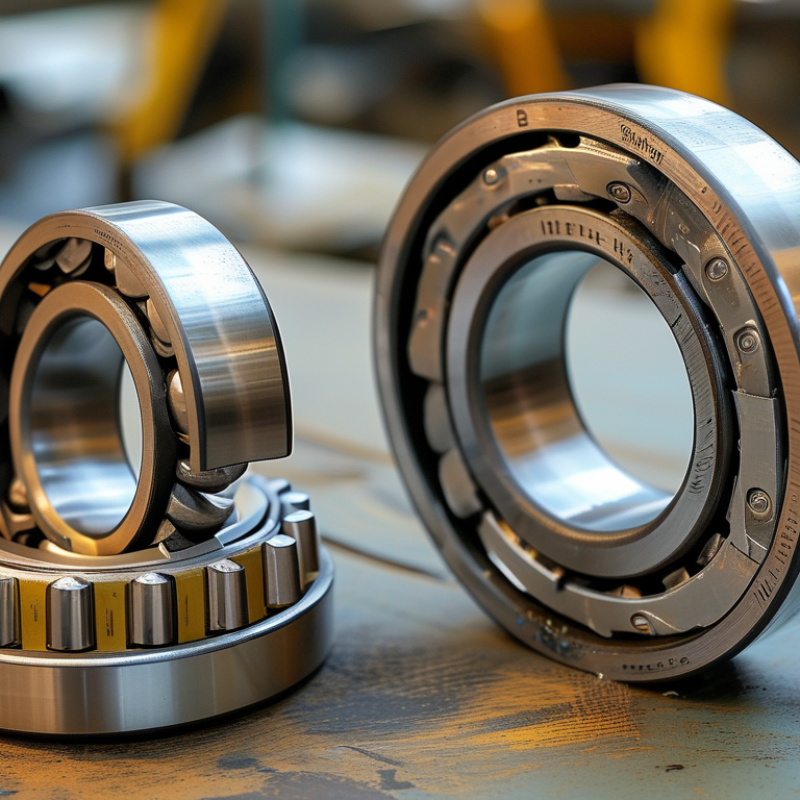
Types of Bearing Steel: An Overview for Global Buyers
Bearing steel is essential in various industries. Its type directly impacts performance and durability. Many manufacturers favor specific grades of steel based on their application. For instance, AISI 52100 is a commonly used bearing steel due to its high hardness and wear resistance. Its unique properties make it suitable for high-load applications.
Another popular type is 440C stainless steel. This material offers excellent corrosion resistance, making it ideal for marine and food processing applications. A report by the Steel Institute shows that the demand for stainless bearing steel has increased by 15% over the past five years. This shift reflects a growing awareness of environmental factors affecting bearing industries.
However, choosing the right bearing steel can be challenging. Each type offers unique advantages and disadvantages. Some users may find that achieving the perfect balance between hardness and ductility requires additional testing. Not all steel grades perform equally under varying conditions. Ensuring proper selection can save time and costs in the long run.
Key Properties of Bearing Steels Essential for Performance
Bearing steel plays a crucial role in various industrial applications. Its performance largely depends on its unique properties. Among these, hardness, wear resistance, and tensile strength are vital. A steel's ability to withstand deformation under stress ensures longevity and reliability in machinery. A balance between hardening and toughness is essential for optimal performance.
Furthermore, the steel's response to heat treatment significantly influences its characteristics. Normalizing processes can refine grain structure, leading to improved strength. High-carbon steels often exhibit better wear resistance but may lack toughness. This balance poses a challenge for manufacturers. The choice of alloying elements also impacts corrosion resistance, which is crucial in dynamic environments.
While these properties are fundamental, each application may demand specific characteristics. This underscores the importance of understanding the operating conditions. Choosing the wrong type can lead to failure. It's not just about selecting a type of steel; it's about ensuring it meets your specific needs effectively. Each choice requires careful consideration of trade-offs between properties.
Comparison of Common Bearing Steel Grades and Their Applications
Bearing steel plays a critical role in machinery and applications. It is vital to understand the various grades available. Different grades of bearing steel exhibit distinct mechanical properties affecting performance, durability, and wear resistance.
The most common grades include AISI 52100 and AISI 440C. AISI 52100 is popular for its balance between toughness and high hardness. This is crucial for applications like automotive bearings. In contrast, AISI 440C offers superior corrosion resistance, ideal for environments exposed to moisture. A report by the American Iron and Steel Institute notes that AISI 440C can withstand corrosion better than other grades due to its higher chromium content.
Moreover, the choice of grade impacts the manufacturing process. Higher hardness grades may require specialized machinery during production. A study by the International Journal of Manufacturing Science emphasizes that improper selection can lead to premature failure in applications. Hence, knowing the right grade for specific applications is essential. Understanding these nuances ensures better product longevity and performance across industries.
Global Market Trends Impacting Bearing Steel Demand and Supply
The global market for bearing steel is evolving. Increased demand from industries such as automotive and aerospace affects supply dynamics. According to a recent report by Mordor Intelligence, the bearing steel market is expected to grow at a CAGR of 6.5% from 2023 to 2028. This growth is driven by a rise in electric vehicle production and advancements in manufacturing technology.
Challenges, however, remain. Fluctuations in raw material prices impact the overall production costs. For example, iron ore and scrap metal prices hit record highs in mid-2023. As a result, producers may face pressure to maintain profit margins. Furthermore, the ongoing geopolitical tensions may disrupt supply chains, leading to further uncertainties in availability.
Buyers are increasingly seeking reliable sources. Quality assurance becomes critical in this competitive landscape. Understanding material grades and specifications is essential for procurement professionals. It is vital to balance cost and performance. Inconsistencies in supply can lead to delays and increased costs, prompting buyers to reassess their sourcing strategies.
Innovations in Bearing Steel Manufacturing for Enhanced Durability
Innovations in bearing steel manufacturing have revolutionized the industry. Advances focus on enhancing durability and performance. Modern techniques prioritize creating alloys that withstand extreme conditions. High-strength steels are designed to resist wear, reducing maintenance costs. Process improvements lead to uniformity, promoting consistency in bearing applications.
The introduction of advanced heat treatments has also played a vital role. These treatments improve the microstructure of steel, enhancing toughness and fatigue resistance. For manufacturers, this means a longer lifespan for components. However, the challenge lies in balancing production costs with these innovations. Some processes may yield superior materials but come at a higher price.
Experts highlight the importance of careful material selection. Not all innovations suit every application. Businesses must analyze specific needs to choose the right steel type. This process can be time-consuming and complex. Yet, it is crucial for achieving optimal performance. Material reliability is paramount, especially under demanding conditions.