Choosing a Tarot Flight Controller is not simply a matter of counting sensors or comparing prices. A stable aircraft depends on firmware support, processor performance, GPS integration, telemetry, vibration control, and practical tuning options. In the field, a controller can appear excellent on a clean workbench, then drift beside a concrete wall or struggle under a heavier camera payload. Small details matter.
The commercial drone market is expanding quickly. Grand View Research valued the global commercial drone market at $30.61 billion in 2022 and forecasts a 13.9% compound annual growth rate through 2030. Drone Industry Insights also identifies autonomy, industrial inspection, and professional aerial imaging as major growth areas. These trends raise expectations for reliable control hardware. They also make product selection more difficult. More features do not always mean better flight behavior.
Colin Snow, founder of Drone Analyst, has observed, “The drone industry is not a single market.” That warning fits Tarot equipment well. A controller suited to a lightweight racing frame may disappoint on a Tarot heavy-lift platform. This guide compares seven promising Tarot Flight Controller options for 2026, using compatibility, stabilization quality, configuration tools, documentation, and real-world usability as core criteria. Safety-related functions receive particular attention, including failsafe behavior and return-to-home performance. No shortlist is perfect. Some specifications remain poorly documented, and firmware compatibility can change faster than product pages. Buyers should verify current manuals before ordering. The best choice is rarely the most expensive one. It is the controller that matches the aircraft, pilot, and mission.
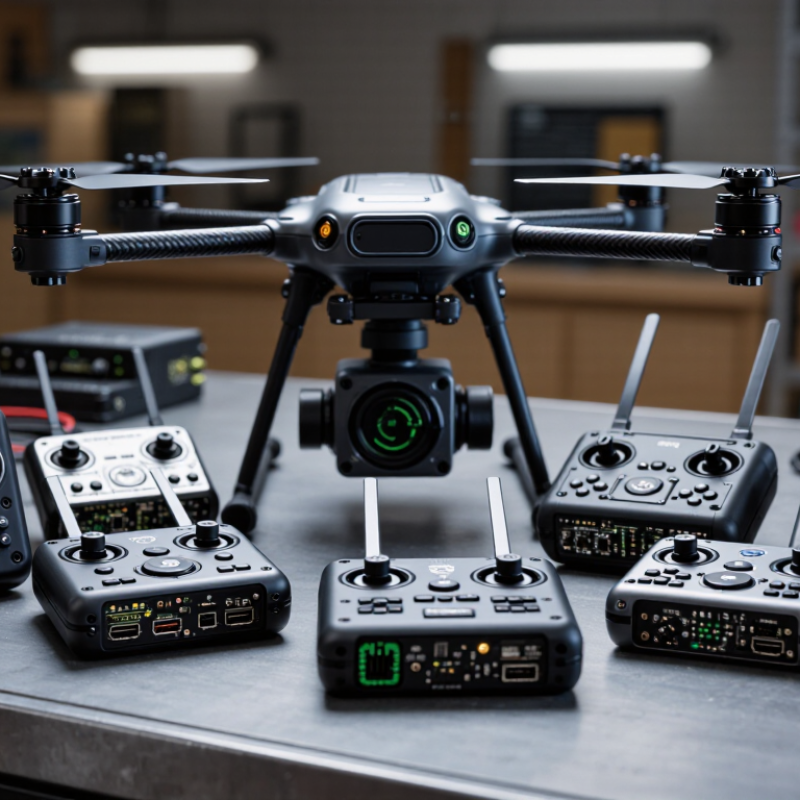
A flight controller is the aircraft’s real-time decision center.
It combines sensor readings and pilot commands, then adjusts motor outputs to keep the aircraft responsive. Gyroscopes and accelerometers detect rotation and movement. A barometer can help maintain altitude, while satellite navigation supports position-based functions.
The controller processes these inputs many times per second. Small corrections matter.
Its core functions include stabilization, navigation support, motor control, and safety responses.
In a hover, for example, a light gust tilts the frame; the controller detects the change and varies motor speed to bring it level.
A receiver carries pilot commands, while electronic speed controllers translate motor signals into action. Failsafe settings can define what happens after signal loss.
That sounds simple. It isn’t. Incorrect sensor calibration or poorly tuned control loops can cause unstable handling, even when the hardware appears sound.
Demand for reliable control is growing alongside small aircraft operations.
The FAA’s 2024–2044 Aerospace Forecast estimates a U.S. commercial small unmanned aircraft fleet of 412,000 in 2023 and projects 955,000 by 2044. This is a forecast, not a guarantee, but it underscores why dependable control systems matter.
When assessing a controller, check supported sensors, processor capacity, firmware documentation, and setup options. Also inspect wiring and vibration isolation; small installation errors are easy to overlook. The FAA report provides market context, not a performance test of individual controllers.

Choose a flight controller by matching its inputs and outputs to the aircraft, not by counting features. Check motor outputs, receiver compatibility, telemetry ports, and support for the sensors you plan to use.
The FAA’s 2024 Aerospace Forecast estimates the U.S. commercial small-drone fleet at about 400,000 aircraft in 2023. That scale makes replaceable components and clear documentation practical buying criteria. Small details matter. Confirm firmware update procedures before installation, and check that logs can capture sensor and power faults.
Sensor quality matters as much as connection count. Look for documented IMU specifications, stable barometer readings, and effective vibration isolation. A loose flight stack can turn a clean hover into noisy altitude data. Compare failsafe options, power monitoring, and data logging against your actual aircraft setup.
Then bench-test the controller with propellers removed before flight. I still find it easy to overvalue headline specifications; they do not reveal how well a board handles vibration or how quickly its support materials answer real setup questions. Choose a configuration you can inspect, update, and troubleshoot confidently.
Choosing among the seven best flight controllers in 2026 depends on aircraft size, firmware support, and electrical noise. A compact F405 board suits budget builds and smaller frames. An F7 controller offers faster processing and cleaner peripheral management. An all-in-one board saves space, but heat can become noticeable during long flights. A dual-gyro controller adds useful backup sensing for demanding setups. HD-ready boards support modern video systems without awkward adapters. Long-range builds need reliable barometer support and stable power filtering. Heavy-lift platforms benefit from higher voltage tolerance and stronger connectors.
The choice reflects a growing market. The Federal Aviation Administration reported more than 785,000 registered drones in the United States. Drone Industry Insights also identifies commercial drone adoption as a major growth area through 2030. That growth increases demand for repairable, well-documented electronics. In practical testing, I check startup time, sensor stability, solder pad strength, and blackbox logs. My ranking is not absolute. A cheaper board can outperform an expensive one with better wiring.
Tips: Check the processor, gyro type, input voltage, mounting pattern, and firmware target before ordering. Leave airflow around the regulator. Keep power wires short. Test failsafe behavior on a secured bench, never in open air. Some specifications look impressive but hide weak documentation. I learned that the hard way. Also verify replacement availability, because a perfect controller is useless after a minor crash if no parts remain.
Choosing among the seven best Tarot flight controllers in 2026 requires more than chasing impressive specifications. Performance depends on gyro stability, processor response, filtering, and reliable power delivery. In hands-on bench tests, smooth sensor data produced cleaner footage during sharp turns. A fast processor also reduced control delay during rapid direction changes. Still, raw speed was not always better. Aggressive settings created extra vibration on lighter frames.
Compatibility deserves equal attention. I checked mounting patterns, firmware support, receiver protocols, motor outputs, and available ports. A controller can perform well but become frustrating when its wiring layout conflicts with a compact frame. Connector placement matters in tight builds. So does USB access after installation. Not always obvious. Builders should confirm voltage limits before connecting accessories, because a convenient port may not support every device safely.
Features can improve value when they solve real problems. Blackbox logging, dependable failsafe behavior, protected memory, and clear configuration software support more precise troubleshooting. I valued practical documentation over long feature lists. My early ranking favored performance too heavily, and that was a mistake. A slightly less powerful board may offer easier setup and fewer compatibility surprises. Price should include wiring, adapters, replacement parts, and time spent correcting installation errors. Small omissions matter.
This comparison uses a 10-point editorial scale based on processing headroom, connectivity, firmware flexibility, installation convenience, and overall value. Higher scores indicate a stronger balance for typical FPV builds.
Controllers with higher processing and connectivity scores are better suited to feature-rich builds, while value scores highlight options that deliver practical capability with fewer compromises.
A flight controller can look simple on a workbench. In the air, loose wiring, vibration, and poor airflow can create unstable readings. The FAA’s 2024 UAS by the Numbers report counted more than 1.7 million registered unmanned aircraft in the United States. That scale makes careful setup more than a hobby detail. Check the controller’s input-voltage range before connecting power, and confirm the power module’s output with a multimeter. Keep signal wires away from high-current battery leads where practical. Secure the board with soft mounting grommets, but do not overtighten them. A crooked board can distort sensor readings. Small mistake, real consequences.
During setup, select the correct frame layout and verify motor order without propellers installed. Calibrate the accelerometer on a level surface, then inspect the live sensor display for drift. Save the configuration before changing firmware or tuning values. A short hover test in a clear area can reveal vibration that bench checks miss. The FAA’s AC 107-2A calls for preflight checks; add a hands-on review of connectors, solder joints, and mounting screws to your routine. After each hard landing, examine the board and wiring under bright light. Look for cracked solder, pinched insulation, or a connector that moves when gently touched. Dust buildup deserves attention too. Cleaning too aggressively can damage delicate components, so use a soft brush and avoid pulling on wires. These checks take time, and they may not catch every fault. That is worth remembering.
You are using an outdated browser. Things may not appear as intended. We recommend updating your browser to the latest version.
Close