7 Best Roll Crusher Manufacturers for Global Buyers

A Roll Crusher can look simple on a plant drawing: two steel rolls, a defined gap, and a steady feed. In operation, moisture, abrasiveness, feed size, and required product shape all matter. Small differences can change wear rates, throughput, and maintenance intervals. Buyers comparing manufacturers need more than a capacity figure.

The scale of mineral processing makes those choices significant. The U.S. Geological Survey’s Mineral Commodity Summaries 2025 estimates global iron ore mine production at about 2.5 billion metric tons in 2024. That figure describes the wider industry, not roll-crusher demand, but it shows the scale of material handling behind equipment decisions. A crusher must fit the actual duty.

Mineral-processing author Barry Wills has long emphasized the importance of matching equipment to ore characteristics and the process flowsheet. That principle is useful when evaluating manufacturers. Ask for material-specific test data, roll-surface options, achievable product size, and realistic wear estimates. Then check whether service support reaches your site. A polished brochure is not a performance guarantee. Even a strong supplier can be the wrong fit if the feed is wetter, harder, or more variable than expected. This guide compares seven Roll Crusher manufacturers for global buyers, focusing on practical selection factors, technical capability, and support. The shortlist is a starting point—not a substitute for testing your material and checking references.
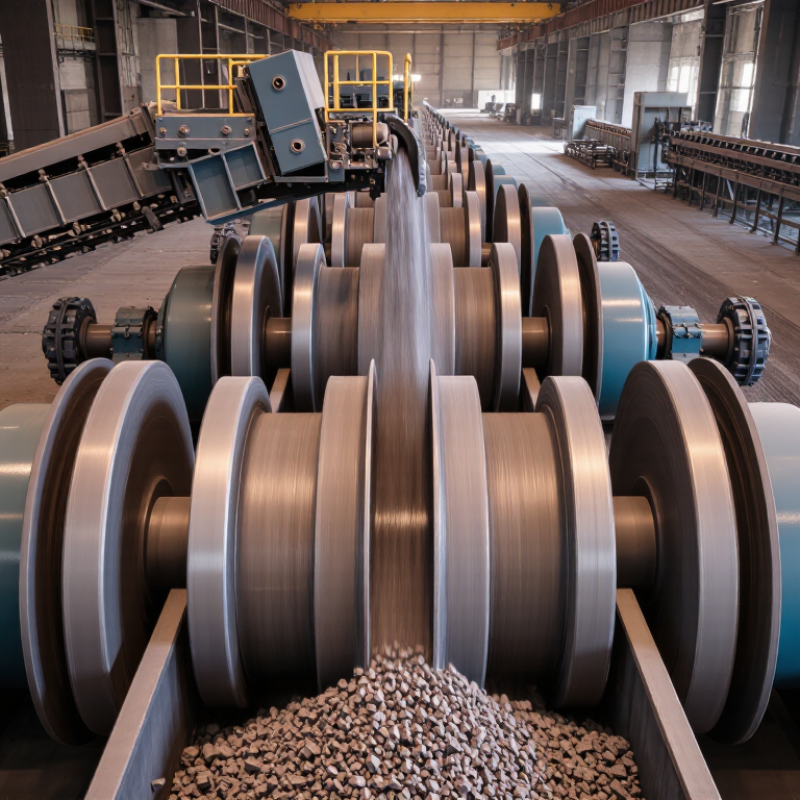
7 Best Roll Crusher Manufacturers for Global Buyers

What Roll Crushers Do in Industrial Material Processing

Roll crushers reduce rock, coal, minerals, and recycled materials between two rotating cylinders. Their steady compression can produce a more uniform product than some impact-based methods. The gap between the rolls helps control output size, while surface patterns improve grip on harder feed. Simple in principle, but feed conditions matter.

A consistent feed lets material pass through the crushing zone without overloading the machine. Operators monitor motor load, roll wear, product size, and unusual vibration. Wet, sticky material may cling to the rolls or block the feed opening; dry, brittle material can create more fines. Less dust, often. These trade-offs mean a crusher should be matched to the material, not chosen by capacity alone.

Roll crushers commonly serve as a primary or secondary stage before screening, conveying, or further size reduction. Routine checks of bearings, scrapers, and roll surfaces can help catch uneven wear early. Guards and lockout procedures are essential during inspection and maintenance. The tidy model on paper rarely survives unchanged: real feed varies, and settings may need adjustment. Reliable operation depends on measuring the product and revisiting the setup as conditions change.

How to Assess Roll Crusher Manufacturers for Global Projects

When comparing roll crusher manufacturers for a global project, begin with the feed, not the brochure. Record the material’s hardness, moisture, top size, and expected daily tonnage. Ask how the proposed roll diameter, surface pattern, and speed handle those conditions. A capacity figure alone proves little. It may assume dry, uniform feed that your site does not have.

Request test data from material similar to yours, including product-size distribution, power draw, and wear rates. Check whether the manufacturer explains test conditions and measurement methods. Vague results deserve follow-up. Review fabrication quality, inspection records, and documentation for the exact machine configuration. References from comparable mines or processing plants can reveal how equipment performs after months of operation, not just during commissioning.

Global projects also depend on practical support. Confirm spare-parts lead times, installation supervision, operator training, and response arrangements across time zones. Ask for clear drawings, manuals, and a defined warranty scope. Shipping access and local service capacity matter, too. A detailed checklist helps, but it can still miss site-specific problems. Review the assumptions with operators and maintenance staff before approval; they may notice access or changeout issues that a desk review overlooks.

Seven Roll Crusher Manufacturers Serving International Buyers

International buyers comparing roll crusher manufacturers should look beyond catalog capacity. A supplier must understand feed size, moisture, abrasiveness, and required product gradation. These details affect roll materials, gap adjustment, motor sizing, and wear life. Ask for drawings, performance data, and references from comparable installations. Real operating records matter more than polished brochures.

A useful shortlist can include seven manufacturer profiles: a heavy-duty mining equipment maker, a quarry-focused producer, a custom-engineering workshop, a supplier of compact units, a company with local service partners, an exporter experienced in regional shipping, and a manufacturer offering wear-part support. Compare each on fabrication quality, inspection procedures, spare-parts availability, and commissioning help. Request a written scope that states what is included and what is not. Some suppliers may excel at machine design but provide limited after-sales support. That trade-off is easy to miss.

Tips: Send representative feed samples and state the target output size before requesting quotations. Confirm voltage, controls, packing, delivery terms, and installation responsibilities in writing. Ask how often rolls need inspection under similar operating conditions. A brief video of a comparable crusher running can help, but it cannot replace verified references. Allow time for technical questions. Details can change.

7 Best Roll Crusher Manufacturers for Global Buyers

A practical comparison framework for evaluating roll crusher suppliers serving international buyers.

The illustrative priority index (0–100) highlights common procurement considerations, including capacity, feed-size compatibility, spare-parts access, service coverage, safety compliance, and lifecycle cost. These framework values are not survey findings or ratings of specific manufacturers.

How Manufacturers Differ in Products, Services, and Market Reach

Roll crusher manufacturers differ most in how closely their equipment matches a buyer’s feed and operating conditions. Some focus on compact units for smaller plants, while others offer heavy-duty designs for high-throughput lines. Compare roll diameter, width, drive configuration, and adjustment range against your material’s hardness, moisture, and target particle size. A brochure alone cannot confirm performance. Ask for test data using similar feed, plus details on roll wear and gap adjustment. Details matter.

Service can separate similar-looking machines. Check whether installation guidance, operator training, troubleshooting, and replacement parts are available after delivery. For overseas projects, clarify shipping terms, spare-part lead times, and the languages used for technical support. Market reach is not just a list of export destinations; it also means dependable communication across time zones. Ask for references from comparable applications, but treat them as starting points, not guarantees. No supplier is perfect. A smaller manufacturer may respond quickly yet have limited local service coverage; a broad network may offer easier support but less flexibility on custom specifications. Compare written commitments, not promises made during a sales call.

What Global Buyers Should Verify Before Choosing a Supplier

Before choosing a roll crusher supplier, match the machine to your actual feed, not a brochure’s ideal sample. Confirm maximum feed size, moisture, abrasiveness, target product size, and hourly capacity. Ask for test data from material similar to yours. A photograph of a finished product is not enough. Check roll diameter, surface pattern, drive power, and adjustment range against your process. Small details matter.

Tips: Request a written quotation with wear-part materials, replacement intervals, installation needs, and spare-parts lead times. Ask for two relevant operating references. Verify what the stated capacity assumes.

Review service support as carefully as equipment specifications. Who handles commissioning, operator training, and fault diagnosis? Ask for drawings, maintenance instructions, warranty conditions, and a clear list of exclusions. Compare delivery schedules and confirm which components are included. If possible, speak with a current user about downtime and wear-part availability. Supplier claims can sound precise, yet site conditions vary. I would still leave room for uncertainty: a test run may not reproduce every change in feed moisture or hardness. A supplier willing to discuss those limits is often more useful than one promising a perfect result.

7 Best Roll Crusher Manufacturers for Global Buyers - What Global Buyers Should Verify Before Choosing a Supplier

Buyer-side verification matrix. No company names or brand rankings are shown. Crusher capacity, feed limits, and performance depend on the material and machine configuration; request project-specific, written guarantees from each shortlisted supplier.

No. What to Verify Information to Request Evidence of a Credible Offer Buyer Check
1 Material and duty suitability Confirm the proposed design against feed material, feed-size distribution, moisture, abrasiveness, compressive strength, required throughput, and operating hours. A written application review that identifies assumptions and states expected capacity and product size for the specified material—not just a generic catalogue rating. Provide a representative sample or complete material data. Ask which conditions could reduce throughput or affect product size.
2 Feed size, roll geometry, and product setting Request maximum recommended feed size, roll diameter and width, roll surface type, adjustable gap range, and expected product-size distribution. A model-specific drawing and performance basis explaining how the feed, roll configuration, and gap relate to the required product. Check that the stated gap is not being presented as a guaranteed product top size; ask for product-size test data for comparable feed.
3 Capacity and performance guarantees Obtain the guaranteed feed rate, product-size basis, operating conditions, and test method. Clarify whether capacity is stated in tonnes per hour and whether it is continuous or peak duty. A quotation or contract with measurable acceptance criteria, agreed test conditions, and stated remedies if the machine does not meet them. Compare offers only on the same material, feed size, product specification, and operating basis.
4 Wear parts and maintenance Ask for roll-surface material and design, expected wear-life basis, replacement procedure, routine inspection points, and the price and availability of critical spares. A parts list, maintenance schedule, wear-part drawings or specifications, and written lead times for recommended commissioning and operating spares. Treat wear life as application-dependent. Request the assumptions and reference operating conditions behind any life estimate.
5 Drive, protection, and safety Verify motor and drive ratings, starting method, overload or tramp-material protection, guarding, emergency-stop provisions, and required electrical supply. Electrical and mechanical drawings, equipment ratings, protection-system description, and documentation identifying applicable safety requirements for the installation location. Confirm the proposed controls and protective devices suit the plant layout and local regulations; do not assume one protection arrangement fits every application.
6 Manufacturing quality and inspection Ask where the equipment is manufactured and what inspections, dimensional checks, material records, and functional tests are included before shipment. A quality plan, inspection and test records, equipment identification details, and an agreed factory acceptance test (FAT) scope where appropriate. Check that any quality certificates are current and cover the relevant manufacturing activity; a certificate alone does not prove crusher performance.
7 Installation, service, and export support Confirm installation and commissioning scope, operator training, manuals and drawings, warranty terms, response arrangements, spare-parts shipping, and delivery terms. A written scope of supply with delivery schedule, warranty exclusions, service contacts, documentation language, and clearly allocated logistics responsibilities. Check the support plan against the destination country, site access, import requirements, and the plant’s expected downtime tolerance.

Comparison note: Use the same material data, capacity target, product specification, delivery basis, and acceptance requirements for every quotation. The table is a supplier-verification checklist, not a ranking of named manufacturers.

Warning!

You are using an outdated browser. Things may not appear as intended. We recommend updating your browser to the latest version.

Close