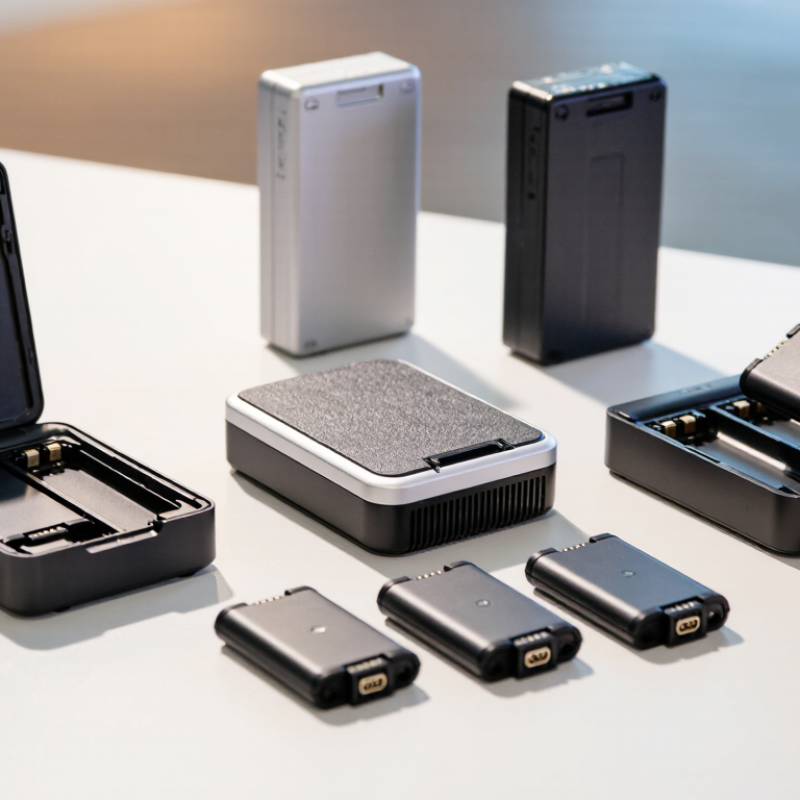
2026 Best POS Machine Battery for Global Buyers

Choosing the right Pos Machine Battery is no longer a minor purchasing decision. For global buyers, it affects transaction uptime, customer queues, service costs, and device safety. A terminal that dies during a busy lunch period can delay dozens of payments within minutes. The battery must also withstand repeated charging, warm storage rooms, airport transport, and irregular working hours.

Battery-industry analyst Dr. Menahem Anderman offers a useful principle: “Battery performance depends on the application, not only the cell.” This idea matters when comparing lithium-ion packs for portable POS terminals. A higher capacity rating may look attractive, yet it can add weight, charging time, or unnecessary cost. A balanced Pos Machine Battery should match the terminal’s voltage, connector, firmware, operating temperature, and daily transaction volume.

This guide examines practical options for 2026. It considers usable capacity, cycle life, standby drain, charging stability, replacement access, and supplier traceability. It also looks at details buyers sometimes overlook, including molded protection, clear labeling, and consistent batch testing. Small differences matter.

No single battery wins everywhere. That assumption can fail.

A café may need fast charging and frequent replacement. A mobile retailer may value low weight and dependable performance during long outdoor shifts. Warehouse operators may prioritize rugged housings and stable operation in cooler environments. Certification documents and test records should be checked before purchase, not after failure. Some specifications still look impressive on paper but perform poorly in real terminals. Careful comparison remains essential.

2026 Best POS Machine Battery for Global Buyers

What Defines the Best POS Machine Battery in 2026

2026 Best POS Machine Battery for Global Buyers

What Defines the Best POS Machine Battery in 2026

The best POS machine battery is not simply the largest one. It must deliver stable power during long retail shifts, repeated charging, and sudden payment peaks. BloombergNEF’s 2024 Battery Price Survey reported an average lithium-ion pack price of 115 dollars per kWh, down 20% year on year. Lower prices help buyers, but cell quality still matters more than capacity alone.

Safety remains the practical test. A reliable battery should include thermal protection, overcharge control, short-circuit protection, and clear state-of-charge reporting. It should also support testing under IEC 62133-2 and transport requirements under UN 38.3. These standards do not guarantee perfect field performance. They establish a safer baseline.

Cycle life deserves careful attention. A battery rated for 1,000 cycles may perform differently in a hot checkout area. Heat, fast charging, and frequent low-battery operation can reduce real capacity. Field testing should measure runtime, charging temperature, and capacity after repeated use. I would not trust a specification sheet alone. Small details matter. A secure connector, replaceable battery design, and consistent charging behavior can reduce downtime across global operations.

How to Compare POS Battery Types, Capacity, and Runtime

For global POS buyers, battery chemistry affects weight, safety, charging speed, and service life. Lithium-ion cells usually offer high energy density and low weight. Lithium iron phosphate cells trade some compactness for stronger thermal stability and longer cycle potential. The International Energy Agency reported a 14% fall in lithium-ion battery pack prices during 2023, but lower cost does not guarantee better terminal performance.

Start with watt-hours, not only milliamp-hours. Capacity in Wh equals voltage multiplied by Ah. A 3.7 V, 5 Ah battery stores about 18.5 Wh before conversion losses.

If a POS terminal averages 2 W, theoretical runtime reaches 9.25 hours. Screen brightness, wireless scanning, receipt printing, and weak network signals reduce that figure. Real testing matters. Aim for at least 20% reserve.

Small details matter. Ask for cycle-life data at the stated temperature, not an optimistic laboratory figure. Check charging time, replacement access, connector quality, and battery protection circuitry. IEC 61960 testing practices help compare rechargeable cells, while UL 2054 addresses household and commercial battery-pack safety. The 2024 Global E-waste Monitor recorded 62 million tonnes of electronic waste in 2022, making replaceable batteries a practical sustainability choice. A neat runtime calculation can still mislead. Test a loaded terminal for one full business shift.

Which Battery Features Matter for Global POS Deployments

2026 Best POS Machine Battery for Global Buyers

Which Battery Features Matter for Global POS Deployments

For global POS deployments, battery choice begins with usage, not the largest capacity number. A terminal serving a busy café may process hundreds of payments during one shift. It also powers a display, wireless radios, security functions, and sometimes a receipt printer. Measure real energy demand at peak brightness and weak-signal locations. Capacity alone misleads. A practical battery should deliver stable voltage until the shift ends, not merely advertise a high watt-hour rating.

Lithium-ion packs with reliable protection circuits remain common for portable terminals. Look for overcharge, over-discharge, short-circuit, and temperature safeguards. Cycle life matters when staff recharge the device daily. A pack rated for 800 cycles may behave differently under heat, fast charging, or constant full-charge storage. Test it in a loading dock, an air-conditioned shop, and a cold delivery area. Small details matter. Battery health reporting can reveal capacity loss before sudden shutdowns disrupt payment queues.

Global buyers should examine charging time, connector durability, spare-battery access, and service documentation. A removable pack can reduce downtime, but poor replacement design may damage clips or seals. For sealed devices, choose battery systems supported by trained service procedures and applicable regional safety requirements. Keep records of charge cycles and failure temperatures. They make service discussions more objective. One overlooked issue is aging during storage. A terminal shipped across climates may arrive with less usable runtime than laboratory figures suggest. That gap deserves honest testing. A perfect specification is unlikely, so early field assumptions should be challenged before volume purchasing.

How to Match POS Batteries with Regional Safety Standards

2026 Best POS Machine Battery for Global Buyers

How to Match POS Batteries with Regional Safety Standards

A POS battery must match the market, not only the machine. Worldpay’s Global Payments Report 2024 estimated digital wallets represented 30% of in-person payment value worldwide in 2023. That growth increases demand for reliable, portable terminals. A battery failure during a busy checkout can leave a cashier holding a powerless device.

Start with the destination country. In the European Union, check IEC 62133-2 test coverage and obligations under Regulation (EU) 2023/1542. Confirm that the complete battery pack, not only its cells, has traceable documentation. In the United States and Canada, buyers commonly review UL 2054 or applicable lithium-battery standards. China may require GB 31241 compliance. Transport still requires UN 38.3 testing.

Do not stop at a certificate.

A practical audit should examine overcharge protection, short-circuit response, thermal control, drop resistance, and charging temperature. Ask for cell origin, production dates, test-laboratory details, and battery-management-system records. The International Energy Agency reported that global electric-vehicle battery demand exceeded 750 GWh in 2023. That scale shows why traceability matters, even for smaller POS packs.

Regional labels can be confusing. A document may cover a cell, but not the finished battery. This is where procurement teams sometimes make mistakes. Match voltage, connector design, enclosure size, and firmware limits with the terminal. Test the pack in heat, cold, and repeated charging. No checklist is perfect, but a small pilot batch can reveal unsafe swelling, slow charging, or unexpected shutdowns before wider deployment.

2026 Best POS Machine Battery for Global Buyers - How to Match POS Batteries with Regional Safety Standards
Target Region Typical POS Battery Configuration Common Battery Chemistry Key Safety and Transport Standards Regional Compliance Considerations Recommended Selection Criteria
European Union and EEA Single-cell or multi-cell rechargeable pack; commonly 3.6–3.7 V nominal per lithium-ion cell, with protection circuitry and an application-specific connector. Rechargeable lithium-ion or lithium-ion polymer. IEC 62133-2 for portable sealed secondary lithium cells and batteries;
UN 38.3 for transport testing;
EU Battery Regulation (EU) 2023/1542;
RoHS and applicable CE-related product requirements.
The complete POS device may require CE conformity assessment under the legislation applicable to its functions. Battery marking, documentation, collection obligations, and producer responsibilities may apply under the EU Battery Regulation. Choose a pack with IEC 62133-2 evidence, UN 38.3 test-summary availability, traceable cells, overcharge and over-discharge protection, and documentation suitable for EU importer and recycling obligations.
United Kingdom Protected lithium-ion or lithium-ion polymer pack matched to the device charging circuit; typical nominal cell voltage is 3.6–3.7 V. Rechargeable lithium-ion or lithium-ion polymer. IEC 62133-2 is commonly used as supporting battery safety evidence;
UN 38.3 for transport;
UK product, electrical, environmental, and battery obligations applicable to the finished product.
Great Britain and Northern Ireland can have different conformity routes depending on the product and applicable legislation. Importers should verify current marking, technical-file, and battery producer requirements before placing products on the market. Use a battery with a complete technical file, transport test summary, clear rating label, protection circuit, and documentation that can support the applicable UK conformity route.
United States and Canada Removable or internal battery pack, normally supplied with a device-specific protection board, temperature sensing, and keyed connector. Rechargeable lithium-ion or lithium-ion polymer. UN 38.3 for lithium battery transport;
UL 1642 may apply to lithium cells and batteries;
UL 2054 may apply to household and commercial battery packs;
IEC 62133-2 is frequently accepted as supplementary evidence.
The applicable safety path depends on whether the battery is evaluated separately or as part of the POS system. The finished POS terminal may also require evaluation for power supply, charging, radio, and information-technology equipment safety. Prefer a pack supported by cell-level and pack-level safety test reports, a protected charging design, thermal monitoring, short-circuit protection, and documentation acceptable to the intended certification body or authority having jurisdiction.
Japan Compact single-cell or multi-cell pack designed for frequent charging cycles and low-profile integration into handheld terminals. Rechargeable lithium-ion or lithium-ion polymer. UN 38.3 for transport;
PSE requirements may apply to specified electrical products, power supplies, or chargers depending on product classification;
JIS or IEC-based safety evidence may be requested by customers or evaluation bodies.
PSE applicability is product-specific and should not be assumed for every POS battery pack. The charger, AC adapter, and complete terminal may follow different requirements from the battery itself. Confirm the Japanese product classification, use Japanese-compatible labels and manuals where required, and obtain separate evidence for the battery, charger, and complete POS terminal when requested.
South Korea Protected rechargeable pack with a battery-management or protection circuit and a connector designed for the original terminal architecture. Rechargeable lithium-ion or lithium-ion polymer. UN 38.3 for transport;
KC-related requirements may apply to batteries, electrical products, or the finished POS equipment according to product category;
IEC 62133-2 or equivalent test evidence may support technical review.
KC applicability and testing scope depend on the product classification, rated capacity, configuration, and intended use. Confirm the current Korean requirements before import or local sale. Select a pack with Korean-market documentation, Korean labeling support where required, verified cell traceability, protection against abnormal charging, and a complete test report set.
China Mainland Commonly a 3.7 V nominal lithium-ion or lithium-polymer pack, with device-specific dimensions, protection electronics, and charging parameters. Rechargeable lithium-ion or lithium-ion polymer. UN 38.3 for transport;
Applicable Chinese national or industry standards for lithium batteries and the finished terminal;
CCC or other conformity requirements may apply depending on the product category and intended market.
Requirements can differ for domestic sale, export, telecommunications functions, chargers, and complete POS terminals. Battery-only replacement products and finished equipment may follow different compliance routes. Verify the applicable Chinese product category, use a cell and pack supplier with traceable production records, and match the battery protection board to the terminal’s charging voltage and current limits.
Australia and New Zealand Rechargeable protected battery pack, usually integrated into a mobile POS terminal or supplied as a replacement module. Rechargeable lithium-ion or lithium-ion polymer. UN 38.3 for transport;
IEC 62133-2 is commonly used as battery safety evidence;
Electrical equipment, radio, EMC, and supplier-declaration requirements may apply to the complete POS device.
Battery safety and transport compliance do not automatically demonstrate compliance of the complete POS terminal. The charger, radio functions, EMC performance, and power supply may require separate assessment. Choose a battery with internationally recognized test documentation, clear supplier identification, suitable charger compatibility, and transport packaging that meets the carrier’s lithium-battery rules.
India Protected lithium-ion or lithium-ion polymer pack sized for handheld payment terminals and designed for repeated daily charging. Rechargeable lithium-ion or lithium-ion polymer. UN 38.3 for transport;
BIS requirements may apply to lithium cells, batteries, chargers, or electronic equipment according to the applicable product category;
IEC 62133-2 may be requested as supporting evidence.
Confirm current BIS registration or certification applicability for both the battery and the finished POS equipment. Import documentation and battery-waste obligations may also apply. Prioritize thermal protection, verified charging limits, local compliance documentation, reliable performance at elevated ambient temperatures, and a serviceable replacement design.
Gulf Cooperation Council Markets Protected lithium-ion or lithium-polymer pack, generally selected for high ambient temperatures and continuous commercial use. Rechargeable lithium-ion or lithium-ion polymer. UN 38.3 for transport;
IEC 62133-2 or equivalent battery safety evidence;
Applicable national or Gulf conformity requirements for the complete electrical and electronic product.
Market-entry requirements vary by country and product category. Local authorities, importers, or retailers may request conformity documents for the POS terminal, charger, radio module, and battery as a complete system. Select cells and protection components rated for the expected temperature range, require thermal and overcurrent test data, and confirm local documentation and labeling requirements before shipment.
Latin America Device-specific rechargeable pack, often supplied as an internal battery or field-replaceable module for mobile terminals. Rechargeable lithium-ion or lithium-ion polymer. UN 38.3 for transport;
IEC 62133-2 is commonly used as international safety evidence;
National certification or registration may apply to the finished POS device and charger.
Compliance requirements differ significantly by country. The battery may be reviewed together with the terminal, charger, radio equipment, or energy-efficiency documentation. Use internationally recognized test reports, bilingual or locally required documentation, robust packaging, and a battery specification that matches local charger input, climate, and after-sales replacement conditions.
International Air and Sea Freight Any lithium-ion or lithium-polymer pack shipped separately, installed in equipment, or packed with equipment. Rechargeable lithium-ion or lithium-ion polymer. UN 38.3 testing is required for applicable lithium battery transport;
IATA Dangerous Goods Regulations commonly govern air transport;
IMDG Code commonly governs sea transport;
Packaging, state-of-charge, labeling, and documentation rules depend on the shipment configuration.
Transport compliance is separate from market-access compliance. Carriers may impose stricter limits or require additional documents, packaging controls, and declarations. Obtain the UN 38.3 test summary, confirm the battery’s watt-hour rating and shipment configuration, use compliant packaging, protect terminals from short circuit, and verify the carrier’s current acceptance rules.
Selection note: Regional standards and conformity requirements can change and may depend on the battery design, rated capacity, charger, radio functions, shipment configuration, and final POS product category. Verify the current requirements with the importing authority, qualified testing laboratory, carrier, and local compliance representative before commercial shipment.

How to Select, Maintain, and Replace a Reliable POS Battery

2026 Best POS Machine Battery for Global Buyers

How to Select, Maintain, and Replace a Reliable POS Battery

Selecting a POS battery starts with the terminal’s exact model and battery specification. Check voltage, connector position, dimensions, chemistry, and rated capacity. A higher mAh rating is not automatically better. It may increase weight, charging time, or internal heat. Ask for a clear datasheet, safety test records, and production traceability. A reliable supplier should explain cell quality, protection circuitry, and expected cycle life. Avoid batteries with unclear labels or loose connectors.

Maintenance is practical, not complicated. Keep the terminal away from hot windows, damp counters, and metal dust. Charge it before the battery reaches zero. Use the approved charger and inspect the casing during routine cleaning. Swelling, unusual heat, a sharp chemical smell, or sudden shutdowns require immediate service. Do not press, open, or continue using a damaged battery. I have seen staff ignore small casing gaps because the terminal still worked. That decision can create a bigger failure later.

Replace the battery when runtime drops sharply or charging becomes unstable. Record the installation date and compare daily operating hours. Before replacement, power down the terminal and follow the service instructions. A trained technician should check the connector and battery compartment for corrosion. The new unit must fit firmly without pressure. Test charging, payment processing, and standby performance afterward. Do not judge quality after one afternoon. Monitor it for several weeks. Local recycling requirements may differ, so use an approved battery collection channel.

2026 Best POS Machine Battery for Global Buyers

How to select, maintain, and replace a reliable POS battery

How to read this chart: Lithium-ion phosphate batteries generally provide the longest cycle life, while standard lithium-ion batteries offer a strong balance between compact size, energy density, and cost. Nickel-metal hydride batteries can be suitable for specific designs but usually provide fewer cycles and lower energy density.

Maintenance tips: Keep the device away from excessive heat, use the specified charger, avoid long-term storage at full charge, and inspect the battery for swelling or abnormal heating. Replace the battery when runtime drops significantly, the device shuts down unexpectedly, or physical damage appears.

Values show commonly published typical cycle-life ranges under controlled laboratory conditions. Actual results vary with charge rate, discharge depth, temperature, storage conditions, and battery-management design.
Warning!

You are using an outdated browser. Things may not appear as intended. We recommend updating your browser to the latest version.

Close