Top 10 Benefits of the Investment Casting Process for Global Buyers?
The investment casting process has gained significant traction in various industries, offering a range of benefits for global buyers. This method of metal forming enables the production of intricate shapes with remarkable precision. Manufacturers appreciate its efficiency and ability to minimize material waste.
One notable advantage is the high-quality surface finish achieved through the investment casting process. Parts often require little to no machining. This precision leads to cost savings and shorter production cycles. As global markets continue evolving, buyers are increasingly aware of the competitive edge this process provides.
However, it is important to weigh the drawbacks. Initial setup costs can be high for smaller manufacturers. Some may find the lead times longer than other methods. Nevertheless, the investment casting process remains a top choice for many, underlining its importance in modern manufacturing. Understanding these dynamics can aid buyers in making informed decisions.
Overview of Investment Casting and Its Global Relevance
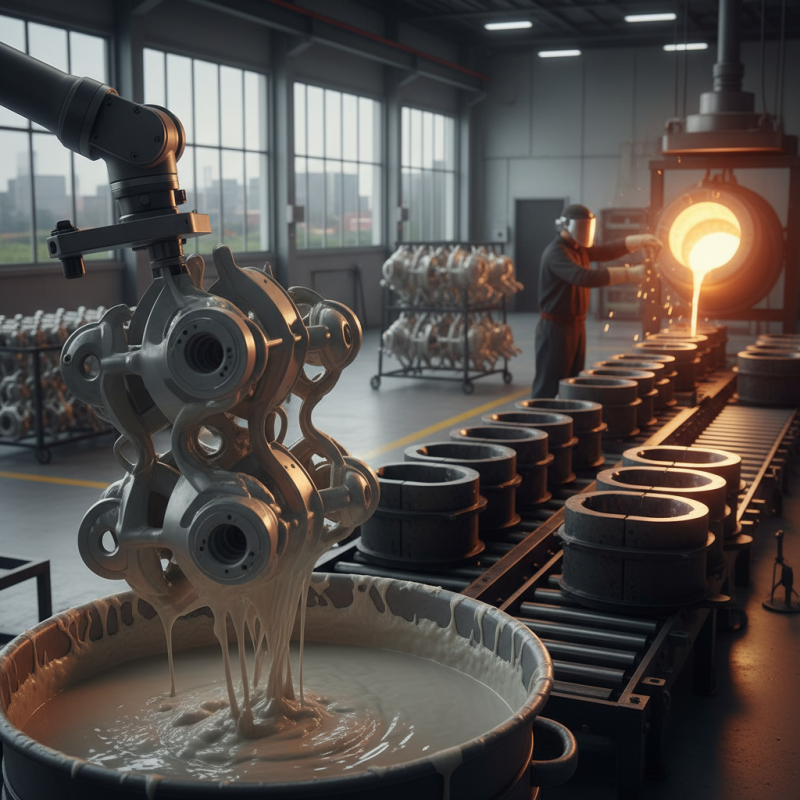
Investment casting, often known as lost-wax casting, is renowned for its precision and versatility. This method allows for the production of complex shapes, essential in various industries—automotive, aerospace, and medical, to name a few. Global buyers benefit from investment casting due to its ability to create detailed components with tight tolerances. The process is suitable for both small and large quantities, adapting to different production needs.
The relevance of investment casting extends beyond its technical benefits. Many manufacturers appreciate the process's efficiency. It can reduce material waste significantly compared to traditional machining methods. However, it requires a skilled workforce adept in metalworking and design. This dependency can sometimes lead to delays, especially when navigating the global supply chain. Understanding regional expertise can be critical.
As more businesses seek sustainable practices, the investment casting process can contribute by minimizing waste. However, not every foundry can guarantee consistent quality. This inconsistency can pose risks for global buyers. They must conduct thorough due diligence when selecting partners. By recognizing both the advantages and risks of investment casting, companies can better position themselves in a competitive market.
Cost Efficiency of Investment Casting for International Buyers
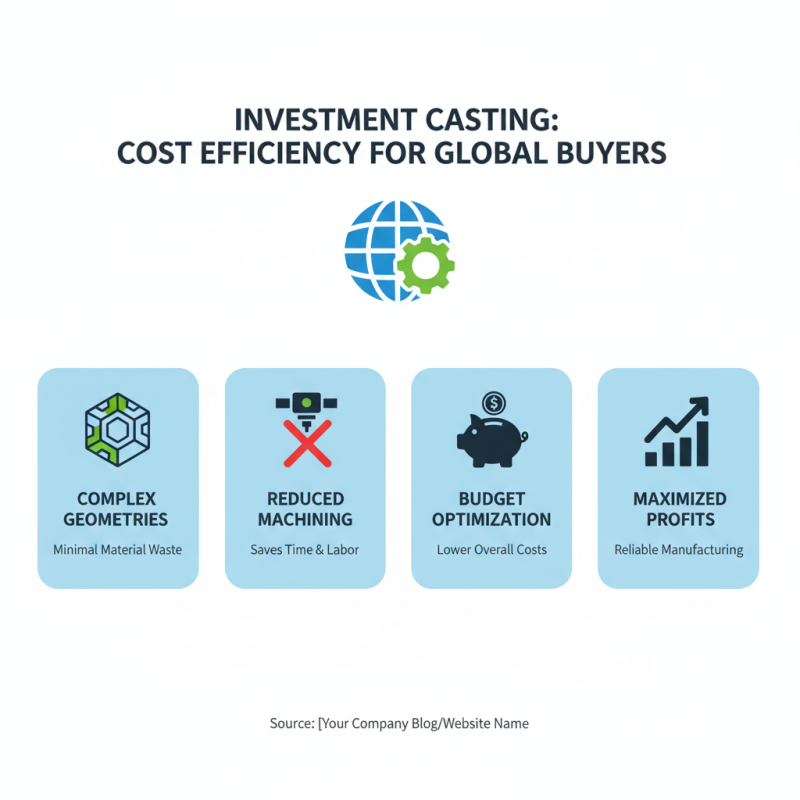
Investment casting is renowned for its cost efficiency, especially for international buyers seeking reliable manufacturing solutions. This process enables the production of complex geometries with minimal material waste. The reduced need for machining saves time and lowers labor costs. As a result, projects can stay within budget, maximizing profit margins.
International buyers also appreciate the material versatility offered by investment casting. This method can work with various metals, allowing for diverse applications. It reduces the need to switch manufacturers when materials change. However, it's essential to consider that custom molds may also increase initial costs. This upfront investment can be a hurdle for some buyers.
Moreover, the scalability of investment casting can be a double-edged sword. While it allows for increased production rates, production runs must be carefully planned. Oversights in demand forecasting can lead to overproduction or delays. Such challenges require diligent attention to detail and market analysis. This ensures that the benefits of cost efficiency are fully realized in the global marketplace.
High Precision and Tolerances in Investment Casting Processes
Investment casting is a method that excels at producing components with high precision and tight tolerances. This capability is essential for industries such as aerospace and automotive, where exact specifications are critical. The process begins with creating a mold, which allows for intricate designs. This can result in parts that fit together seamlessly.
The precision of investment casting is evident in the minimal need for machining during the finishing process. When cast correctly, parts can have tolerances as tight as ±0.5% of the dimension. This reduces waste and ensures higher efficiency in production. However, achieving such precision requires experienced operators and meticulous attention to detail. Missteps in earlier stages can compromise the overall quality of the finished product.
Moreover, the versatility of materials used in investment casting adds to its appeal. Different alloys can be employed based on specific requirements. Each material may behave differently, presenting challenges in consistency. Buyers must consider these aspects carefully to ensure that the final product meets their standards. While the investment casting process offers numerous benefits, it demands a commitment to quality and precision at every step.
Material Versatility and Customization in Investment Casting
Investment casting offers remarkable material versatility and customization potential, making it an attractive option for various industries. This process can utilize metals such as stainless steel, aluminum, and titanium. According to the Investment Casting Institute, around 70% of buyers appreciate the ability to work with unique alloys tailored for specific applications. This flexibility allows engineers to meet diverse mechanical properties and performance requirements.
Customization is particularly advantageous in sectors like aerospace and automotive, where precision is critical. Reports show that around 60% of investment casting products have complex geometries, which traditional methods find challenging. The ability to produce intricate designs reduces the need for additional machining, leading to cost savings. While it generally enhances performance, some challenges remain. For example, achieving consistency in larger production runs can be tricky. Yet, advancements in technology are addressing these issues. As manufacturers refine their processes, the potential to achieve even higher quality products increases.
In addition, investment casting enables the production of parts that are lighter without sacrificing strength. With a shift towards more sustainable practices, this feature resonates well with global buyers. Data from recent industry analysis reveal that nearly 80% of buyers factor in weight reduction along with durability in their decisions. Balancing these demanding criteria is vital yet presents an ongoing challenge for the industry.
Sustainability and Environmental Benefits of Investment Casting
Investment casting stands out in today’s eco-conscious industry. It offers significant sustainability benefits. This process minimizes waste by using almost 100% of the material. A report by the American Foundry Society indicates that casting processes, including investment casting, produce far less scrap compared to traditional methods. This efficiency helps in conserving resources and reducing the overall carbon footprint.
The use of advanced materials further enhances sustainability. High-performance alloys are often employed, which can improve energy efficiency in applications. According to a study from the Global Manufacturing Research Institute, utilizing these materials can lead to a 30% reduction in energy consumption for end-use products. This efficiency not only benefits the environment but also provides cost savings for manufacturers and consumers alike.
Tip: Consider energy-efficient practices in your project. Engage suppliers who prioritize sustainable methods. The investment casting process can yield high-quality components while supporting global sustainability goals. It’s a win-win for buyers who care about their environmental impact.
Top 10 Benefits of the Investment Casting Process for Global Buyers - Sustainability and Environmental Benefits of Investment Casting
| Benefit |
Description |
Environmental Impact |
| Material Efficiency |
Minimizes waste by using a precise amount of material, reducing excess scrap. |
Lower waste generation supports sustainable practices. |
| Energy Efficient Production |
Requires less energy compared to other manufacturing techniques. |
Reduced carbon footprint associated with reduced energy consumption. |
| Design Flexibility |
Allows for complex shapes reducing the need for multiple components. |
Lowers material use and waste, enhancing sustainability. |
| Recyclable Materials |
Uses metals that are fully recyclable at the end of their lifecycle. |
Promotes a circular economy by reusing materials. |
| Reduced Pollution |
Less harmful emissions compared to traditional casting methods. |
Improves air quality and protects environmental health. |
| Durability of Products |
Produces stronger and more durable parts leading to longevity. |
Fewer replacements reduce resource consumption. |
| Lower Production Waste |
Minimizes excess material cut-off that leads to scrap. |
Enhanced resource management promoting sustainability. |
| Implementation of Green Technologies |
Encourages investment in eco-friendly manufacturing techniques. |
Overall reduction in industrial ecological footprints. |
| Support for Local Economies |
Investment casting often utilizes local suppliers and labor. |
Strengthens local industry sustainability initiatives. |
| Reduction of Production Cycle Time |
Faster production methods help in quicker market delivery. |
Enables efficient resource use and decreases waste over time. |