10 3D Printing Tips for Choosing the Right Supplier

Choosing a supplier for 3d printing is no longer a simple price comparison. The market has matured, but supplier quality still varies sharply across materials, machines, and production controls. The stakes are real.

Wohlers Associates reported that the global additive manufacturing industry reached approximately $20.035 billion in 2023, growing 23.5% year over year. That expansion creates more options, but it also increases selection risk. A supplier may show polished prototypes while lacking stable production capacity. Another may offer excellent tolerances but provide weak documentation. Numbers matter. So do the details.

This guide, “10 3D Printing Tips for Choosing the Right Supplier,” focuses on evidence you can verify. It considers material certifications, machine capability, dimensional accuracy, inspection methods, lead times, pricing structure, and communication. ISO/ASTM 52901 also highlights the importance of process specifications and acceptance criteria for additive manufacturing contracts. These principles support clearer supplier evaluations.

Look beyond impressive sample parts. Ask how the supplier records powder batches, nozzle changes, calibration checks, and post-processing steps. Request inspection reports for comparable components, not generic examples. A low quote can hide tooling, finishing, packaging, or redesign costs. Even experienced teams miss hidden costs.

No checklist is flawless. Supplier performance can change after a new machine, operator, or material enters the workflow. Therefore, a small pilot order remains valuable. It reveals packaging damage, surface consistency, response speed, and whether promised tolerances survive real production. Reliable decisions come from documented evidence, practical testing, and informed skepticism.
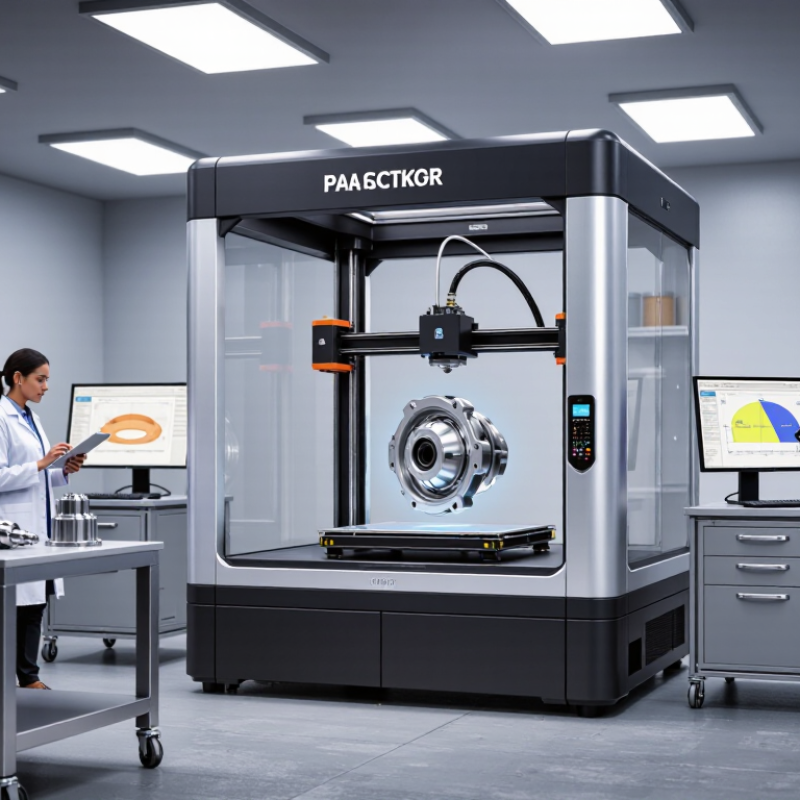
10 3D Printing Tips for Choosing the Right Supplier

Define Your Project Requirements and Supplier Selection Criteria

Choosing a 3D printing supplier begins with a precise project brief. Define the part’s purpose, dimensions, material, color, surface finish, tolerance, and expected quantity. Include the operating environment, such as heat, moisture, friction, or repeated impact. A prototype for visual review needs different capabilities than a functional part.

My first supplier request was too vague. I received a clean-looking sample that failed under load. That mistake taught me to separate appearance from performance. Set measurable criteria for accuracy, strength, lead time, communication, inspection, and total cost. Ask suppliers how they verify dimensions, manage revisions, and document material batches. Request a sample report or a small test piece when possible. Evidence matters more than confident promises.

Tip 1: Send a dimensioned drawing and reference photos.
Tip 2: State which measurements are critical.
Tip 3: Confirm compatible materials before comparing prices.
Tip 4: Ask about minimum and repeat-order quantities.
Tip 5: Define acceptable cosmetic defects.
Tip 6: Request production and shipping timelines in writing.
Tip 7: Check how design files are protected.
Tip 8: Ask who reviews the first article.
Tip 9: Compare complete costs, not printing fees alone.
Tip 10: Score suppliers against the same checklist.

Do not choose the fastest reply automatically. A careful question may reveal stronger engineering judgment. Still, I sometimes overvalue polished communication. Technical proof should carry more weight. Supplier selection becomes more reliable when your requirements are specific, testable, and easy to review.

10 3D Printing Tips for Choosing the Right Supplier

Define Your Project Requirements and Supplier Selection Criteria

For a reliable supplier decision, prioritize the factors that directly affect part performance, production reliability, total cost, and delivery risk. The example weighting below can be adjusted to match your project requirements.

Assess Printing Technologies, Materials, and Production Capabilities

10 3D Printing Tips for Choosing the Right Supplier

Assess Printing Technologies, Materials, and Production Capabilities

A capable supplier should match its printing technology to your part’s actual function. Ask whether it uses FDM, SLA, SLS, or metal processes, and why. Each method affects strength, surface finish, accuracy, and production speed. Request a sample made with the same technology and material. Inspect its edges, threads, small holes, and visible layer lines. Small details reveal process control.

Materials need more than a familiar name. Request technical data sheets covering temperature resistance, chemical exposure, flexibility, and certified mechanical values. Confirm whether the supplier controls moisture, storage temperature, and batch tracking. Poorly stored material can create brittle parts or inconsistent surfaces. It happens more often than expected. Also check finishing options, such as sanding, curing, machining, or heat treatment. These steps can change dimensions.

Production capability matters beyond the first successful prototype. Ask about machine capacity, dimensional tolerances, inspection tools, and documented quality procedures. A reliable supplier should explain how it handles design changes, rejected parts, and urgent orders. Review a realistic production sample, not only polished photographs. I once focused too heavily on resolution and underestimated delivery consistency. That was a useful mistake. Confirm lead times, backup equipment, operator experience, and packaging before approval. A short pilot run can expose warping, color variation, or fit problems before full production.

Verify Quality Standards, Certifications, and Prototype Performance

Choosing a 3D printing supplier starts with evidence, not polished sample parts. The 2024 Wohlers industry report estimates that additive manufacturing reached 20.0 billion dollars in 2023, growing 13.5%. More suppliers are entering the market. That makes verification harder. Ask for the exact process, material batch, machine model, and inspection method behind each prototype. Then request recent dimensional reports. A glossy part proves very little.

Check whether the quality system matches your risk. ISO 9001 certification is useful, but it does not guarantee every printed part is accurate. The ISO Survey 2022 recorded more than 1.26 million ISO 9001 certificates worldwide, so the certificate alone is not a differentiator. Request the certificate number, scope, expiry date, and issuing body’s verification link. For aerospace, medical, or safety-critical work, ask whether the supplier follows relevant ISO/ASTM 52900 terminology and process controls. Be precise. “Certified” can mean less than you assume.

Prototype performance needs a controlled test, not a single impressive sample. Send identical CAD files to two suppliers, then define tolerances, surface limits, load cycles, and acceptance criteria. Measure warping after cooling, thread fit, density, and repeatability across several builds. In my experience, the weakest clue is often a perfect first part. Production exposes drift. I once focused too heavily on appearance and ignored heat distortion; that mistake was expensive. Leave room for retesting, because supplier data can be incomplete, and your own requirements may still be immature.

10 3D Printing Tips for Choosing the Right Supplier - Verify Quality Standards, Certifications, and Prototype Performance

No. Evaluation Dimension What to Verify Practical Acceptance Check Why It Matters
1 Quality Management System Ask for a current quality-management certificate and confirm its scope, issuing body, validity period, and covered production location. ISO 9001:2015 is a widely used quality-management standard. Confirm that the certificate applies to additive-manufacturing or production activities rather than only sales, administration, or unrelated services. A documented quality system supports consistent procedures, corrective actions, record keeping, and controlled change management.
2 Process Classification Require the supplier to identify the technology using the terminology in ISO/ASTM 52900, such as powder bed fusion, material extrusion, vat photopolymerization, or material jetting. Check that the stated process, material family, layer-height range, and build orientation match the requirements of the part. Different processes create different levels of accuracy, surface finish, anisotropy, porosity, and post-processing demand.
3 Material Traceability Request material batch or lot identification, supplier certificates, storage conditions, expiry controls where applicable, and records of powder or resin reuse. Verify that the material lot used for the prototype can be linked to the job traveler, build file, machine, operator, and post-processing records. Traceability makes it possible to investigate defects, reproduce successful builds, and control material-related variation.
4 Machine and Calibration Control Review preventive-maintenance schedules, calibration records, software revision control, and machine qualification or verification procedures. Check that measurement equipment is calibrated and that the supplier records machine settings, build parameters, and maintenance status for each order. Uncontrolled machines or measurement tools can cause dimensional drift and make inspection results unreliable.
5 Dimensional Accuracy Ask for a capability statement that identifies achievable tolerances by process, material, part size, geometry, and orientation. Do not rely on a single universal tolerance value. Send a dimensioned test feature or representative prototype and compare measured results with the drawing’s stated tolerances using calibrated equipment. Accuracy depends on shrinkage, thermal behavior, support removal, build orientation, and post-processing—not only on nominal machine specifications.
6 Prototype Performance Define functional requirements such as fit, movement, load, temperature exposure, chemical contact, or repeated assembly before requesting a prototype. Use a written test plan with measurable pass/fail criteria. For mechanical parts, record load, cycles, temperature, test duration, and failure mode where relevant. A visually accurate prototype may still fail in use because printed properties vary with material, orientation, infill, and post-processing.
7 Inspection and Test Reports Request sample inspection reports showing actual values, nominal values, tolerances, measurement methods, equipment identification, and inspector approval. Prefer reports based on calibrated instruments and a defined sampling plan. For critical parts, consider a full dimensional report or coordinate-measuring inspection. Clear inspection data separates verified performance from marketing claims and provides objective evidence for acceptance decisions.
8 Post-Processing Control Document cleaning, support removal, curing, heat treatment, surface finishing, machining, dyeing, or other secondary operations. Confirm which dimensions are measured before and after post-processing, and identify any surfaces or features that require masking or machining allowance. Post-processing can alter dimensions, surface properties, strength, color, and fit even when the initial build is correct.
9 Compliance and Safety Documentation Match required documentation to the application. Examples may include material safety data, declarations of conformity, flammability information, biocompatibility evidence, or food-contact documentation when legally relevant. Verify that documents refer to the exact material, process, post-processing route, and intended use. A general material datasheet may not cover the finished printed part. Regulatory suitability is application-specific; a material certificate alone does not automatically prove compliance of every printed component.
10 Pilot Build and Supplier Review Start with a controlled prototype or pilot order before approving regular production. Evaluate communication, change control, packaging, delivery records, and nonconformance handling. Score the supplier against agreed criteria: dimensional conformity, functional performance, documentation completeness, delivery reliability, response time, and corrective-action quality. A pilot build reveals process variation and operational risks that may not appear in a sample part or capability presentation.

Compare Pricing, Lead Times, Capacity, and Delivery Reliability

When choosing a 3D printing supplier, compare complete pricing rather than the unit price alone. Ask for separate costs for materials, setup, finishing, inspection, packaging, and shipping. A low quote can hide expensive post-processing fees. Request a sample invoice before approving production. It reveals assumptions early.

Check lead times against your actual project schedule. Ask how many business days cover printing, quality checks, and dispatch. Then confirm the supplier’s capacity during busy periods. A workshop may produce ten prototypes quickly but struggle with 500 parts. Request recent capacity figures, available machine types, and planned maintenance dates. A small pilot order can expose bottlenecks better than a polished sales presentation. I once trusted an optimistic delivery promise and ignored the supplier’s vague production calendar. The parts arrived late. That mistake changed my review process.

Delivery reliability needs measurable evidence. Ask for on-time delivery records from recent, comparable orders. Confirm how the supplier handles failed prints, damaged packages, material shortages, and urgent revisions. Written response times matter. So does tracking. Set acceptance criteria for dimensions, surface finish, packaging, and replacement timing. Compare two or three suppliers using the same drawing and quantity. Keep the comparison sheet simple, but include total landed cost and delivery variance. Do not reward speed alone. Fast work is useless when dimensions drift or cartons arrive crushed. Be cautious with impressive promises. Real capacity, clear pricing, and consistent dispatch records usually matter more.

Evaluate Communication, Technical Support, and Long-Term Partnership Potential

10 3D Printing Tips for Choosing the Right Supplier

Evaluate Communication, Technical Support, and Long-Term Partnership Potential

A capable supplier communicates before quoting. Ask how engineers review CAD files, tolerances, wall thickness, and unsupported features. Request a written production timeline, including design review, sampling, and inspection stages. Clear replies matter more than impressive promises. During my early projects, I trusted fast emails too quickly. That mistake caused revisions, delays, and avoidable material waste. Test the supplier with detailed questions. Do they explain uncertainty, or simply say yes? Their answers reveal practical experience. Good communication should include one technical contact, response expectations, and documented decisions.

Technical support must continue after the order. Ask whether the team can recommend suitable materials, build orientations, surface treatments, and inspection methods. Request material data, process limits, and sample inspection records. A small test coupon can expose warping before a full batch begins. Also discuss how they handle failed parts, machine downtime, and design changes. Their corrective action should identify causes, not blame the customer. Be careful here. A polished report does not always prove strong production control.

A durable partnership needs measurable habits. Review on-time delivery, defect rates, revision history, and response quality after every project. Confirm how files, approvals, and quality records are protected. Discuss capacity honestly, especially during urgent demand or equipment maintenance. The right supplier challenges unsafe assumptions while respecting your application requirements. They should help improve manufacturability, not lock you into unnecessary complexity. Start with a modest pilot order. Trust should be earned through repeatable results, transparent communication, and technical ownership. There will still be occasional errors. The important question is how openly they fix them.

Warning!

You are using an outdated browser. Things may not appear as intended. We recommend updating your browser to the latest version.

Close