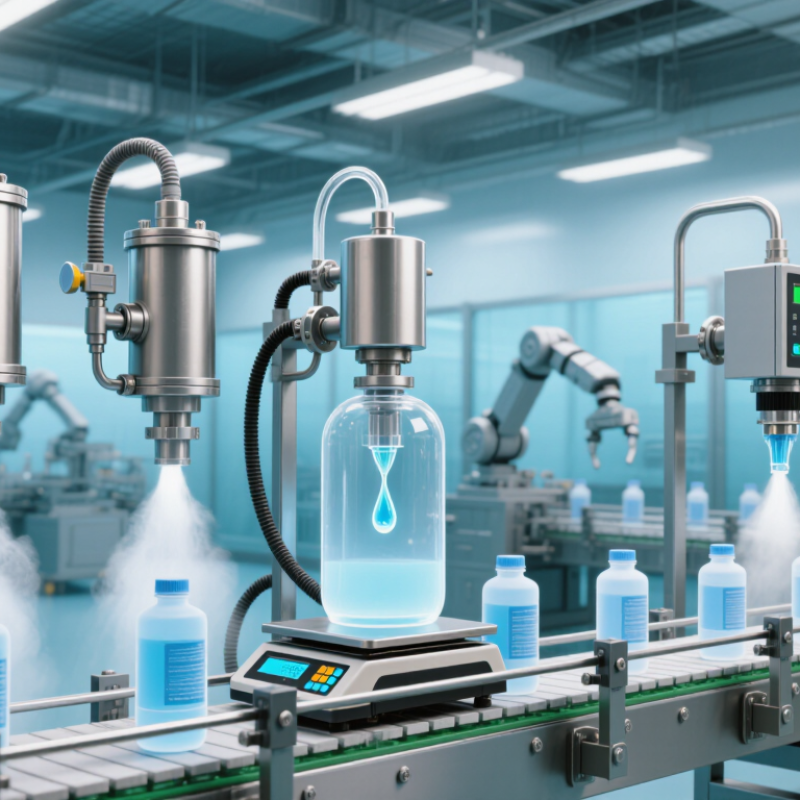
Choosing the right Liquid Nitrogen Dosing System starts with the product, not the machine catalog. A beverage line may need controlled micro-dosing for oxygen displacement, while a pharmaceutical process may demand tighter pressure, temperature, and validation controls. The visible result can be subtle: a bottle enters the filler, receives a measured nitrogen droplet, and gains internal pressure without damaging its closure.
That sounds simple. It is not.
Industry reports support this growing need for reliable cryogenic equipment. MarketsandMarkets’ industrial gases research identifies food and beverage, healthcare, and electronics as important demand sectors. Grand View Research also reports continued expansion in industrial gas applications, supported by packaged foods, medical technologies, and advanced manufacturing. These findings explain why dosing systems now appear in more production environments, from high-speed cans to small specialty containers.
This guide compares pressure-based, vacuum-assisted, gravimetric, and inline Liquid Nitrogen Dosing System designs. It examines dosing accuracy, line speed, container shape, nitrogen consumption, cleaning access, controls, and operator safety. Real selection decisions often involve compromises. A faster system may increase waste if its timing is poorly tuned. A highly automated unit may require stronger maintenance skills and better sensors. Published market figures also use different definitions, so direct comparisons can mislead. Buyers should verify test conditions, liquid nitrogen purity, actual throughput, and service records before approving a purchase. The best choice is rarely the most powerful model. It is the system that remains stable during normal production, product changes, and occasional human error.
Liquid nitrogen is not simply “cold water.” The NIST Chemistry WebBook reports a normal boiling point of 77.36 K, or −195.79°C. Its density near the boiling point is approximately 0.808 kg/L, consistent with common industrial specifications. These values influence tank sizing, valve selection, and dosing accuracy. A small temperature rise causes rapid vaporization. Pressure changes do too.
For open, low-speed filling, a pressure-driven dosing system may be economical. It is simple, but line pressure and flashing can change each dose. Volumetric systems suit repeatable fills when nozzle geometry, insulation, and timing remain stable. Weight-based dosing offers stronger validation because the scale measures delivered mass, not assumed volume. However, cold vapor can disturb readings. Isolate the scale and allow stabilization. Cold changes everything.
CGA P-12 guidance emphasizes ventilation, oxygen monitoring, compatible materials, and pressure relief for cryogenic liquids. These are selection criteria, not optional accessories. Ask suppliers for flow curves at actual pressure and temperature. Request uncertainty data during startup, refill, and low-level operation. A 0.808 kg/L calculation may appear precise, yet it can mislead when liquid flashes inside the transfer line. That weakness is often understated in specifications. Choose the system after measured trials, not from a brochure alone. (Sources: NIST Chemistry WebBook; Compressed Gas Association, CGA P-12.)
| System Type | Operating Principle | Typical Dosing Control | Typical Accuracy* | Suitable Applications | Main Advantages | Main Limitations | Selection Guidance |
|---|---|---|---|---|---|---|---|
| Timed Pressure Dosing | A controlled valve opens for a calibrated time while pressure in the liquid-nitrogen vessel drives the flow. | Valve-open time, vessel pressure, and nozzle configuration. | Approximately ±5% to ±15%, depending on pressure stability, valve response, and calibration. | High-speed filling where a moderate dose tolerance is acceptable. | Simple design, low maintenance, and relatively low capital cost. | Dose can vary with pressure, liquid level, temperature, and nozzle condition. | Choose this type for robust, economical operation when the target dose has a wide tolerance. |
| Gravimetric Dosing with Load Cells | The receiving container or supply vessel is weighed before and after dosing to determine actual mass delivered. | Closed-loop control based on measured weight change. | Often approximately ±0.5% to ±2% when correctly installed and calibrated. | Laboratory filling, premium packaging, and processes requiring direct mass verification. | Measures delivered mass directly and compensates for some flow variations. | Sensitive to vibration, mechanical contact, pipe strain, and platform installation errors. | Select it when dose traceability and mass accuracy are more important than the lowest cost. |
| Mass-Flow-Controlled Dosing | A cryogenic-compatible flowmeter measures liquid flow, and a control valve regulates the target mass or volume. | Flow rate, totalized mass, or programmed dose setpoint. | Commonly approximately ±1% to ±3%, subject to meter technology and calibration. | Continuous or frequent dosing with repeatable, programmable setpoints. | Provides real-time flow information and supports automation and data logging. | Cryogenic flow measurement can be technically demanding and requires suitable instrumentation. | Use it when process integration, monitoring, and repeatability are key requirements. |
| Cryogenic Pump Dosing | A cryogenic pump transfers liquid nitrogen at a controlled flow rate to the dosing point. | Pump speed, stroke, pressure, and flow feedback. | Approximately ±1% to ±5%, depending on pump type, operating point, and feedback method. | Long transfer distances, elevated delivery points, and applications needing stable flow. | Can provide controlled delivery independent of some supply-pressure fluctuations. | Higher cost, more components, and additional maintenance compared with pressure-fed systems. | Choose it when pressure-fed transfer cannot provide the required flow, distance, or stability. |
| Vacuum-Insulated Transfer Dosing | Liquid nitrogen is delivered through vacuum-insulated piping to reduce heat ingress and unwanted vaporization. | Usually combined with timed, gravimetric, or flow-controlled dosing. | Accuracy depends on the selected metering method; insulation primarily improves transfer stability. | Fixed production lines, long pipe runs, and high-throughput installations. | Reduces heat leak, flash gas formation, and liquid loss during transfer. | Higher installation cost and more demanding layout, inspection, and maintenance requirements. | Select it for permanent systems where transfer distance and thermal efficiency justify the investment. |
| Batch or Recipe-Based Dosing | A programmable controller sequences valves, sensors, and dosing stages according to a defined recipe. | Mass, volume, time, temperature, or production-line signals. | Depends on the integrated measurement method and process control design. | Multiple products, variable dose sizes, automated lines, and traceable production. | Flexible recipes, interlocks, alarms, data recording, and integration with plant controls. | More complex software, validation, training, and commissioning requirements. | Choose it when the process has several products, dose sizes, or quality-control requirements. |