Global workshops are becoming more mobile, specialized, and demanding. Rolling Tool Carts now support automotive repair, factory maintenance, construction service, and technical training. Buyers need more than attractive drawers and bright powder coating.
The U.S. Bureau of Labor Statistics projects 15% employment growth for industrial machinery mechanics, machinery maintenance workers, and millwrights from 2023 to 2033. This signals continued demand for organized, accessible equipment. Grand View Research’s tool storage market analysis also identifies professional workshops, modular storage, and durable mobile systems as important growth factors. These findings matter because a cart is not merely furniture. It affects movement, retrieval time, workplace order, and sometimes worker fatigue.
Ergonomist Dr. Alan Hedge has repeatedly emphasized that equipment should fit the worker and the task, not the opposite. That principle guides this 2026 comparison of Rolling Tool Carts. We examine load capacity, drawer travel, caster performance, lock quality, worktop height, corrosion resistance, and replacement-part availability. A 900-pound rating may sound impressive, yet thin casters can fail on uneven concrete. A deep drawer may hold power tools, but it can also become difficult to organize. No cart wins everywhere.
Global buyers should also consider voltage-independent features, packaging quality, spare parts, warranty terms, and regional service support. These details are easy to overlook. They should not be. The best choice balances price, durability, safety, and daily usability, while admitting one uncomfortable truth: product specifications rarely reveal the whole working experience.
What Defines a High-Quality Rolling Tool Cart in 2026
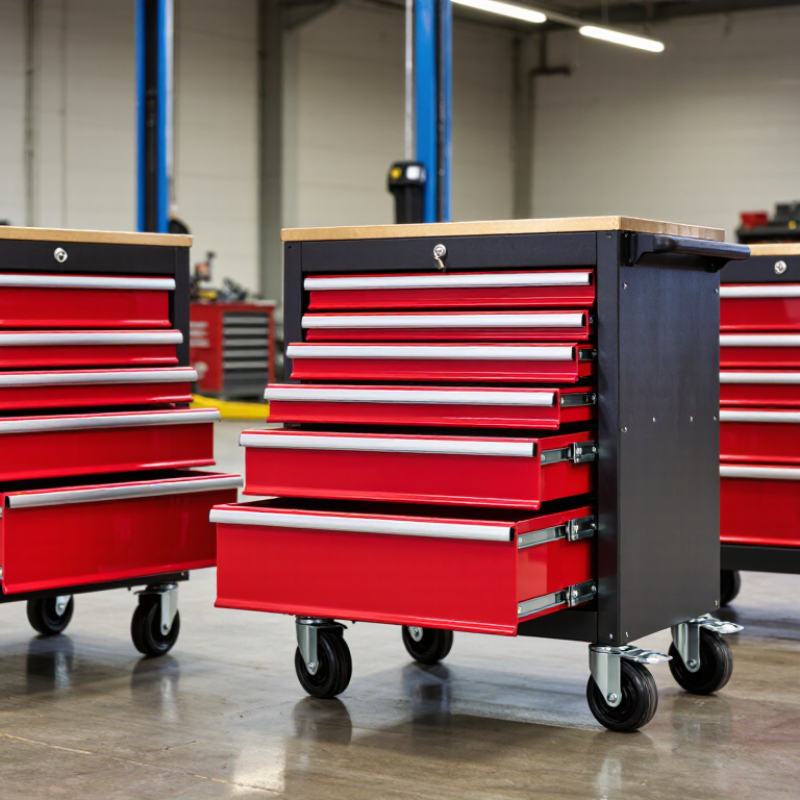
A high-quality rolling tool cart begins with controlled movement, not appearance. Grand View Research projects steady growth in the global tool storage market through 2030, driven by organized workshops and mobile maintenance. Buyers should check the stated load rating, not just drawer size. A practical cart needs reinforced frames, smooth full-extension slides, and casters that remain stable on uneven floors. Four casters are common, but two locking swivel casters improve directional control. Small details matter.
Ergonomics now deserves equal attention. NIOSH guidance emphasizes reducing excessive force, awkward postures, and repeated handling. A cart handle should support a neutral wrist position. Drawers should open without sudden resistance. A 2023 U.S. Bureau of Labor Statistics report recorded hundreds of thousands of workplace injuries involving days away from work, although those figures are not specific to tool carts. Safer storage can still reduce unnecessary reaching and lifting. It is not a complete safety solution.
Durability requires evidence. Look for corrosion testing, weld quality, wheel material, and transparent load tests. Powder coating may resist workshop wear, but thin coating can hide weak steel. I would also inspect drawer alignment after repeated opening. Many specifications sound impressive. Some are not independently verified. Buyers should request test methods, warranty terms, replacement-part availability, and climate suitability before purchasing. The best cart feels quiet, balanced, and predictable beside a working technician.

Global buyers should evaluate a cart beyond its advertised drawer count. A practical unit needs a rated load, stable casters, and controlled movement. The International Labour Organization estimated 2.93 million work-related deaths annually in its 2023 global report. Safer storage therefore matters. Look for locking drawers, rounded edges, anti-tip protection, and brakes that hold on slightly uneven floors. Test the handle with one hand.
Drawer design affects daily productivity. Deep drawers should carry heavier tools without bending, while shallow drawers should keep sockets visible. A 2024 Grand View Research assessment valued the global hand tools market at approximately USD 24 billion in 2023, showing the scale of professional tool use.
Buyers should match cart capacity to real tool weight, not optimistic catalog photos. A 100-kilogram rating may become unreliable on rough concrete or ramps.
Mobility needs local context. Larger swivel casters suit workshops with thresholds, while smaller wheels waste effort on damaged floors. Check corrosion resistance for humid coastal warehouses and powder-coating quality for industrial environments. Metric and imperial socket layouts may both be necessary across international teams. Packaging also deserves attention; crushed corners can expose drawers before installation. I would request spare keys, replacement casters, and assembly instructions in the destination language. Perfect carts do not exist. Recheck the specification against actual workstations, because my first selection would probably overvalue appearance.
For global buyers in 2026, rolling tool carts should match the work environment, not just the tool count. In my workshop experience, a cart with 360-degree casters moves well across smooth floors. It struggles on dust, thresholds, and loose gravel. Check the rated load, drawer extension, wheel diameter, and handle height before ordering. A strong frame matters more than decorative finishes.
For automotive workshops, choose a multi-drawer steel cart with a deep lower compartment. It can hold sockets, torque tools, lubricants, and bulky service equipment. A locking drawer protects calibrated tools during busy shifts. Manufacturing floors often need modular carts with removable trays and labeled storage. These designs reduce walking time near assembly stations. However, narrow aisles may require a shorter chassis.
Cleanrooms and electrical service areas need different priorities. Stainless surfaces resist frequent cleaning, while nonconductive accessories can reduce contact risks around sensitive equipment. Construction sites benefit from oversized casters, reinforced corners, and a weather-resistant coating. Outdoor use is demanding. Even good casters collect grit. A brake on every swivel wheel is helpful, but buyers should test it on sloped flooring. I once selected a cart by drawer capacity alone and underestimated its turning radius. That mistake made daily work slower. Check the details.
Materials and structure should match the working environment. Powder-coated steel resists daily impacts and supports heavier tools. Aluminum reduces weight, but may flex under concentrated loads. Stainless steel suits humid workshops, although it usually costs more. Inspect welds, drawer runners, and corner joints closely. These small details often reveal long-term quality.
Storage design affects speed and safety. Full-extension drawers help users reach tools at the back. Different drawer depths prevent sockets from mixing with power equipment. Lockable storage protects tools during transport and shared use. Mobility also matters. Large casters roll more smoothly across concrete, while smaller wheels may struggle over thresholds. A reliable brake should hold the cart firmly on a slight slope. Do not trust a brake that feels loose.
Tips: Check the stated load rating carefully. Distribute heavy items in lower drawers. Test the handle height before ordering. Measure doors, lifts, and workshop aisles first. For international purchasing, confirm packaging strength and spare wheel availability. A photo may hide thin steel or weak drawer tracks. Ask for dimensions, material thickness, and test details. No cart is perfect. The best choice balances weight, capacity, mobility, and safe daily handling.
2026 Top Rolling Tool Carts for Global Buyers
How to Compare Suppliers, Costs, and International Shipping Terms
A dependable rolling tool cart starts with a clear specification sheet. Record steel thickness, drawer capacity, wheel diameter, locking design, and surface finish. Ask each supplier for test reports, factory photos, and recent inspection records. A low quote means little if the drawers jam or the frame twists under load. During supplier reviews, request a sample before placing a large order. Touch the handles. Check wheel movement on uneven flooring. Small details become expensive problems later.
Compare the full landed cost, not only the unit price. Include tooling, packaging, spare parts, inspection fees, freight, insurance, duties, and local delivery. Ask about minimum order quantities and payment stages. A supplier with a higher price may offer stronger cartons and fewer transit claims. I once underestimated pallet dimensions; the freight adjustment erased the original saving. That mistake still influences my cost comparisons.
Shipping terms need careful reading. Confirm whether the quotation covers pickup, export clearance, ocean or air freight, and delivery to your warehouse. Define responsibility for damage, delays, and missing documents. Clarify the agreed Incoterm and the exact named place. Port delivery is not warehouse delivery. Lead times should separate production days from transit days. Keep written records, even for small orders. Details get forgotten. Before approval, compare at least three offers in one spreadsheet, then challenge every unexplained charge.
You are using an outdated browser. Things may not appear as intended. We recommend updating your browser to the latest version.
Close