Choosing the right Hair Removal device in 2026 requires more than comparing flash counts, prices, or glossy advertisements. Global buyers face different skin tones, hair textures, electrical standards, climates, and product regulations. This guide examines leading home IPL systems, laser-inspired devices, and precision epilators through practical evidence. We consider treatment comfort, coverage speed, sensor quality, replacement costs, warranty support, and realistic results.
Dermatologist Dr. Tina Alster has stated, “Laser hair removal is a medical procedure and should be performed by a trained professional.” Her warning remains important for home users. A powerful-looking device is not automatically a safer device. Buyers should check the manual for compatible skin tones and hair colors, required eye protection, treatment intervals, and contraindications. Some IPL devices work poorly on blonde, red, gray, or white hair. Others may require extra caution on deeper skin tones because of light absorption and heat.
Small details matter. A reliable device should feel manageable on the ankle, remain stable around the knee, and provide clear intensity settings. Cooling features can make short sessions more comfortable, but they do not remove every risk. Patch testing is sensible. So is stopping when the skin feels unusually hot, painful, or blistered.
No device is perfect. Our comparisons may still miss a regional concern, especially where after-sales service is limited. Therefore, this guide values transparent specifications over exaggerated promises. Results vary, and patience matters. The best choice is the device that fits your skin, routine, budget, and local safety requirements.
Hair removal devices use light, heat, electrical energy, or mechanical movement to reduce unwanted hair. Their working principles differ, so buyers should not judge performance by appearance alone.
Intense pulsed light devices release broad light flashes into the skin. Melanin in the hair absorbs this energy and changes it into heat, which weakens the follicle. Home laser devices use a narrower light beam and usually target hair more precisely. Both methods work best when hair contains more pigment than the surrounding skin. Very light, gray, or red hair may respond poorly. Darker skin requires careful device selection and lower energy settings.
Mechanical epilators use rotating tweezers to pull hair from the root. They offer immediate smoothness but may cause redness, especially around the ankles or underarms.
Electrical devices use a small current to damage individual follicles, and professional supervision is often important. A clean, dry treatment area matters. Shaving before light-based treatment can help energy reach the follicle, while waxing may remove the target itself.
Read the manual carefully. Skin sensitivity, medication, recent tanning, and existing irritation can change the risk. A patch test on a small area is sensible, even when instructions seem simple. Results are not perfectly predictable. I would also question advertisements promising permanent removal after one session. Hair grows in cycles, so repeated treatments are usually necessary, and careless use can cause burns, pigmentation changes, or discomfort.
Choosing a hair removal device starts with skin tone, hair color, and treatment area. IPL devices use broad-spectrum light and usually work best on light-to-medium skin with dark brown or black hair. Diode laser devices deliver more focused energy and may suit coarse, deeply rooted hair. However, darker skin requires extra caution. Excess heat can cause burns or temporary pigmentation changes. Follow the device’s skin-tone guidance carefully.
Very light blonde, red, gray, or white hair may respond poorly because it contains less melanin. Electrolysis can target individual follicles and may suit light-colored hair, but it is slower and often requires professional skill. Results also depend on hormones, hair thickness, shaving habits, and treatment consistency. No device fits everyone. That is easy to forget.
Tips: Perform a small patch test first. Wait 24 to 48 hours before wider treatment. Avoid recently tanned skin, irritated areas, tattoos, and broken skin. Use protective eyewear when required. Check local safety certifications and instructions, because device rules differ between countries. Start with a lower setting, especially on sensitive areas. Stronger is not always better. Photographing the same area monthly can reveal gradual progress, although uneven regrowth is normal. If pain, blistering, or lasting discoloration appears, stop using the device and seek qualified medical advice.
When comparing 2026 hair removal devices, examine performance claims carefully. Grand View Research reports continued growth in the home-use hair removal market, driven by convenient light-based treatments. However, growth does not prove equal safety or effectiveness. Check the device’s energy range, pulse control, treatment window, and recommended skin tones. A wider window may shorten sessions, but it can reduce precision around ankles and the upper lip.
Safety features deserve practical attention. Look for a skin-contact sensor, adjustable intensity, cooling, and clear eye-protection guidance. IEC 60335-2-113 covers safety requirements for beauty appliances using lasers or intense light sources. That standard matters, but certification details should remain visible and verifiable. The American Academy of Dermatology notes that light-based hair reduction usually requires several sessions and may need maintenance. Permanent results should raise questions.
Global buyers should also compare voltage compatibility, plug type, language support, warranty length, and replacement-part access. Test the grip before buying. A heavy handset becomes frustrating after ten minutes. Avoid treating mobile applications as medical evidence. App reminders can help, but they cannot assess burns or pigment changes. Skin-tone sensors are useful, yet no sensor fits every user perfectly. Independent testing data would improve confidence, though many product pages still provide too little detail.
Wavelength is one of the most important specifications when comparing light-based hair removal devices. The chart shows commonly used nominal wavelength values or operating ranges for major technologies. Actual performance, safety, and skin-tone compatibility depend on the device design, settings, cooling system, and local regulatory approval.
Buyer tip: Compare wavelength, adjustable intensity, skin-tone sensing, cooling, treatment-area size, safety certification, replacement parts, and after-sales support before purchasing.
For global buyers, safety compliance should guide every hair removal device purchase. According to Grand View Research, the global hair removal products market continues to expand, driven by home-use technology and consumer demand for convenience. Growth increases choice, but it also increases verification risks.
Look for compliance with IEC 60335-1 and IEC 60335-2-113, which address household appliances and light-based hair removal equipment. ISO 14971 supports structured medical-device risk management, especially for skin-contact, heat, and optical exposure hazards. CE marking may support sales in the European Economic Area, while UKCA, FCC, or equivalent national requirements may apply elsewhere. Certification depends on the exact model, importer, and destination.
Check the label.
A reliable supplier should provide test reports, declarations of conformity, electrical ratings, wavelength information, and user-language instructions. The International Electrotechnical Commission emphasizes that voltage and plug differences affect equipment safety and performance. A 110–120V device may not operate safely on a 220–240V network without suitable certification and conversion design.
IP ratings, cooling systems, skin-tone sensors, and automatic intensity limits deserve practical inspection. Reports from the International Data Corporation show that connected consumer devices increasingly cross borders, making data protection and app compatibility relevant too. Yet certification is not a guarantee of comfortable treatment. I would still question unclear testing dates, copied documents, and promises of “universal” compatibility. Some details remain easy to overlook, especially replacement parts and local service access.
| Device Category | Primary Technology | Typical Emission or Operating Principle | Suitable Use Profile | Key Safety Requirements to Verify | Relevant International Standards or Regulatory Checks | Power and Global Compatibility | Important Buyer Considerations |
|---|---|---|---|---|---|---|---|
| Home IPL Device | Intense pulsed light | Broad-spectrum, filtered non-coherent light; commonly used across approximately 510–1,200 nm depending on the filter and device design. | At-home reduction of unwanted hair on suitable skin and hair combinations. | Skin-tone sensor, contact sensor, adjustable intensity, UV filtering, cooling or heat-management system, and protective optical design. | Check applicable electrical-safety, electromagnetic-compatibility, and photobiological-safety documentation, including IEC 60335-1, IEC 60335-2-113 where applicable, IEC 55014-1/2, and IEC 62471. | For international use, confirm the rating label. A device marked 100–240 V, 50/60 Hz can generally support a wider range of mains systems, but the plug or approved adapter must match the destination country. | Usually unsuitable for very dark skin tones when the manufacturer’s safety instructions restrict use because of increased melanin absorption. White, grey, red, or very light blond hair may respond poorly. |
| Professional IPL System | High-output pulsed light | Broad-spectrum pulsed light delivered through replaceable or fixed filters, with controlled fluence and pulse duration. | Professional salons, aesthetic clinics, and trained operators. | Interlocked handpiece, emergency stop, protective eyewear, treatment records, calibration controls, cooling system, and operator training. | Verify the product’s jurisdiction-specific authorization or registration, electrical safety, EMC, laser or optical-radiation classification where relevant, and local rules for professional cosmetic equipment. | Commercial systems may require 110–120 V or 220–240 V single-phase power and may not support automatic voltage conversion. Frequency, circuit capacity, grounding, and plug type must be checked before shipment. | Importers should confirm installation, maintenance, service availability, operator qualification, and local restrictions on intense pulsed light treatments. |
| Diode Laser Device | Semiconductor laser | Common hair-removal wavelengths include approximately 808–810 nm; some systems combine multiple diode wavelengths. | Professional hair-reduction treatments with controlled settings and trained operation. | Laser classification label, keyed or controlled access, emission indicator, emergency stop, interlock, wavelength-specific protective eyewear, and calibrated output controls. | Laser safety commonly references IEC 60825-1. Electrical safety, EMC, risk management, and market-specific medical-device or cosmetic-equipment requirements may also apply. | Many professional systems are region-specific. Confirm input voltage, frequency, maximum current, grounding, plug configuration, and whether a qualified electrician is required. | Longer wavelengths generally penetrate more deeply than shorter wavelengths, but treatment suitability depends on skin type, hair characteristics, cooling, fluence, pulse duration, and operator assessment. |
| Alexandrite Laser Device | Alexandrite laser | Nominal wavelength of approximately 755 nm. | Professional treatment of darker hair on lighter-to-medium skin types under appropriate clinical assessment. | Wavelength-specific eyewear, controlled treatment room access, skin cooling, test spots, calibrated fluence, and strict eye protection procedures. | Verify compliance with IEC 60825-1, applicable electrical and EMC standards, and the destination market’s authorization requirements for laser equipment. | Typically installed as professional equipment rather than universal plug-and-play equipment. Confirm voltage, frequency, circuit rating, grounding, and local installation requirements. | Higher melanin absorption can increase epidermal heating risk on darker or recently tanned skin. A qualified professional should determine whether the wavelength is appropriate. |
| Long-Pulsed Nd:YAG Laser | Nd:YAG laser | Nominal wavelength of approximately 1,064 nm, with relatively deeper penetration and lower melanin absorption than shorter visible wavelengths. | Professional hair-reduction treatments, including selected applications for darker skin types when clinically appropriate. | Wavelength-specific eyewear, cooling, pulse control, treatment-room access control, test spots, and documented operator procedures. | Verify IEC 60825-1 laser-safety information, electrical and EMC documentation, risk-management records, and destination-country regulatory status. | Commercial units may have high power requirements and may need dedicated circuits. Confirm voltage, frequency, grounding, plug type, and installation conditions. | Results depend on hair diameter, pigment, growth cycle, treatment parameters, and operator skill. It is not automatically suitable for every skin or hair combination. |
| Home Diode-Laser Product | Low-output diode laser | Uses a narrow-band laser wavelength, often near the 800 nm range, at an output and treatment area designed for consumer operation. | Consumers seeking targeted home use on small or moderate treatment areas. | Skin-contact detection, limited output, treatment-area guidance, eye-safety design, automatic shut-off, and clear contraindication labeling. | Check the actual regulatory pathway in the target market rather than relying only on a general safety mark. Review laser classification, IEC 60825-1 information, electrical safety, and EMC documentation. | Verify whether the power adapter accepts 100–240 V, 50/60 Hz. A detachable plug adapter does not convert voltage; a voltage converter may be necessary if the adapter is not universal. | Coverage is normally slower than with professional systems. Follow the supplied schedule and avoid use on areas or skin conditions excluded by the instructions. |
| Electrolysis Device | Galvanic, thermolysis, or blend electrolysis | Uses a fine probe inserted into the follicle. Galvanic current creates a chemical reaction, thermolysis uses high-frequency heat, and blend systems combine both methods. | Permanent hair removal performed by trained practitioners; useful for individual hairs and some hair colors that do not respond well to light-based systems. | Sterile or single-use probes, infection-control procedures, current and timing controls, skin-contact safety, and appropriate operator training. | Verify electrical safety, EMC, biocompatibility information for skin-contact components where relevant, and local requirements for personal-care or professional treatment devices. | Professional units may support a limited voltage range. Confirm adapter certification, mains frequency, protective earthing, and destination-country plug requirements. | Each follicle is treated individually, so treatment time is usually longer than with light-based devices. Hygiene and practitioner competence are critical. |
| Precision Facial Trimmer | Mechanical cutting or trimming | Rotating, oscillating, or foil blades cut hair at or near the skin surface without targeting the follicle. | Facial grooming, detail work, and users who cannot or do not wish to use optical hair-removal technologies. | Blade guarding, skin-contact material quality, cleaning instructions, battery protection, overheat protection, and safe charging design. | Common checks include IEC 60335-1 and the applicable part of the IEC 60335 series, EMC requirements, battery transport documentation, and charger safety. | USB charging can improve travel compatibility, but the charger or power adapter must support the destination voltage. Confirm battery type, charging input, and plug configuration. | Provides temporary hair removal only. It does not reduce follicle activity and generally has fewer optical-safety restrictions than IPL or laser devices. |
| Epilator | Mechanical tweezer-style extraction | Rotating or moving discs mechanically grasp and remove hair from the root. | Body hair removal for users seeking a non-light-based method. | Guard design, washable or replaceable head, skin-stretching guidance, battery safety, and cleaning instructions. | Check applicable household-appliance electrical safety, EMC, charger, battery, and materials documentation for the intended sales market. | Rechargeable models should specify input voltage on the charger. Dual-voltage charging is preferable for international travel; plug adapters may still be required. | Temporary redness, discomfort, or ingrown hairs may occur. It is not a permanent hair-removal technology and is independent of hair pigment. |
| Cooling-Assisted Light Device | IPL or laser combined with active cooling | Light-based hair reduction paired with a cooling plate, chilled tip, air cooling, or another thermal-management method. | Users who prioritize improved comfort and reduced surface heating during treatment. | Temperature monitoring, cooling-failure shut-off, contact detection, controlled energy delivery, and clear skin-condition warnings. | In addition to the underlying IPL or laser requirements, verify thermal-safety testing, electrical safety, EMC, and photobiological or laser-safety documentation as applicable. | Cooling components may increase power consumption. Confirm rated input, continuous operating time, ventilation requirements, and whether the unit is designed for 50 Hz, 60 Hz, or both. | Cooling can improve comfort but does not eliminate the need for correct skin assessment, patch testing, protective eyewear where specified, and adherence to treatment instructions. |
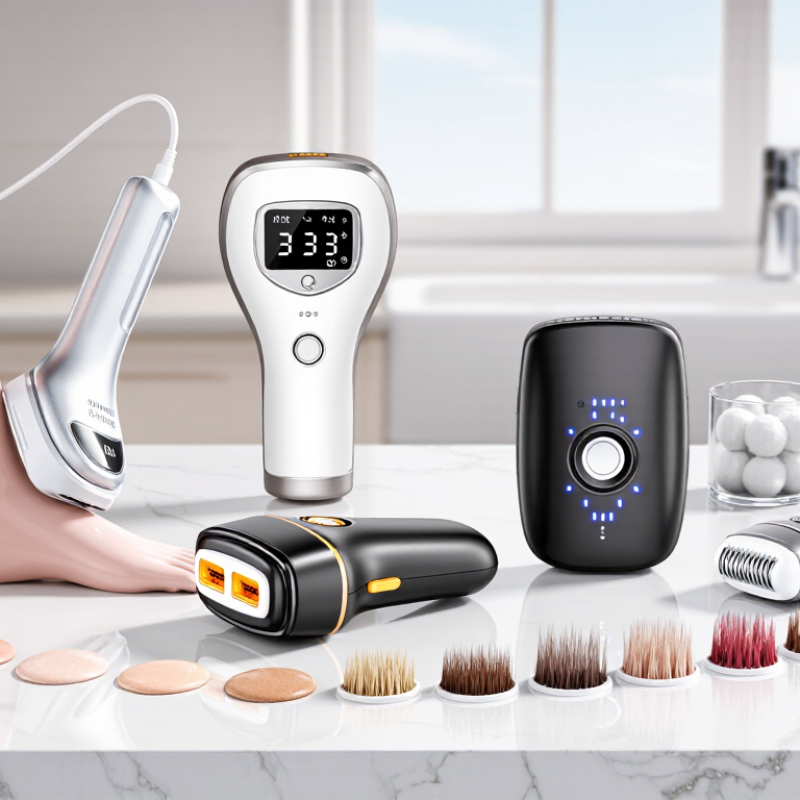
Choosing a hair removal device begins with matching its method to your skin tone, hair color, and treatment area. Light-based devices may work poorly on very light, grey, or red hair. Some may not suit very dark skin. Check the manufacturer’s safety guidance carefully. Look for adjustable intensity, skin-contact sensors, cooling features, and clear instructions. Also confirm voltage compatibility before international purchase. A device that fits the hand is easier to control. Small details matter.
Read the manual. Perform a patch test on clean, dry skin, then wait for the recommended period. Shave visible hair when instructed, but avoid waxing before light-based treatment. Use protective eyewear if the instructions require it. Move slowly across the skin, without treating the same spot repeatedly. Mild warmth can occur, but sharp pain, blistering, or lasting redness requires stopping and seeking professional advice. Results usually need repeated sessions. Patience is not optional.
Cleaning should happen after the device cools and is unplugged. Wipe the treatment window with a soft, slightly damp cloth. Do not spray liquid into openings or immerse the unit. Keep it dry. Remove hair or dust from vents gently. Inspect the cable before every session, especially after travel. Store the device in a clean, dry place away from heat and children. I have found that rushed cleaning creates avoidable problems. My earlier assumption that every device needs the same routine was wrong. Manuals differ, and replacement parts should come from approved sources.
You are using an outdated browser. Things may not appear as intended. We recommend updating your browser to the latest version.
Close