For global buyers, choosing the best Carbon Facial Machine in 2026 requires more than comparing prices, power ratings, or polished photographs. A professional buyer should examine laser wavelength, pulse control, cooling performance, treatment settings, handpiece quality, and maintenance support. These details become visible during real work: a clean treatment room, stable energy delivery, clear user instructions, and reliable post-sale service.
Dr. Shino Bay Aguilera, a respected cosmetic dermatologist, offers a practical reminder: “A treatment should be chosen for the patient, not for the machine.” This principle matters when evaluating carbon facial equipment. A suitable device should support trained professionals in managing different skin conditions and treatment expectations. It should also include documented safety guidance, operator training, protective eyewear requirements, and regionally appropriate certifications. Specifications alone do not prove clinical value. They only begin the conversation.
Global purchasing also involves careful questions. Can the supplier provide technical documents? Are replacement parts available locally? Does the warranty clearly explain response times? Can the manufacturer demonstrate consistent factory testing? These questions may feel less exciting than discussing glowing skin, but they protect long-term investment. Some buyers may focus too heavily on marketing language. That is a weakness worth admitting.
A reliable Carbon Facial Machine should fit the clinic’s patient profile, professional expertise, budget, and local compliance duties. Results can vary. Improper settings can create discomfort or poor outcomes. Therefore, this guide compares practical performance, safety features, supplier credibility, and ownership costs, helping international buyers make a more informed decision in 2026.
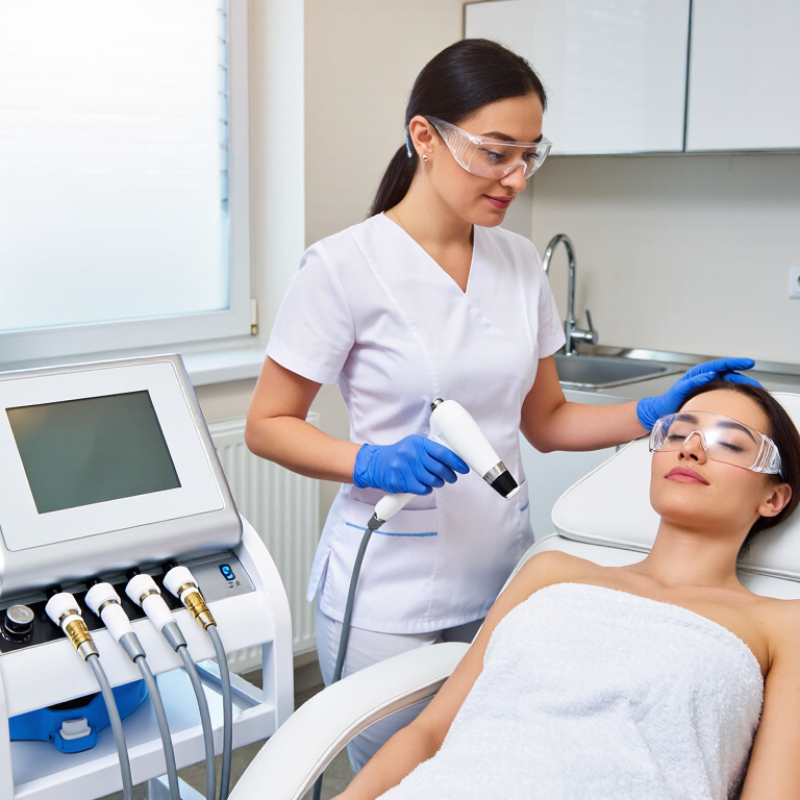
A carbon facial machine usually combines a carbon lotion with a Q-switched 1064 nm laser. The lotion settles into pores and absorbs laser energy. Short pulses heat the carbon layer, then break it into tiny particles. The process can remove surface debris, excess oil, and some dead skin cells. It may also create mild thermal stimulation in the upper dermis. That warmth can support collagen remodeling, although results vary between users.
The treatment is often called a carbon laser peel. It is not a miracle procedure. Skin type, oil production, laser settings, and operator training affect the outcome. A 2023 International Society of Aesthetic Plastic Surgery survey recorded about 19.1 million non-surgical aesthetic procedures worldwide. This figure shows strong demand for minimally invasive care, but it does not prove that every carbon treatment works equally well. Clinical evidence remains narrower than market interest.
Look closely at the machine’s controls. Pulse duration, fluence, cooling, and spot size influence comfort and treatment consistency. In practical use, the handpiece should move evenly across the forehead, cheeks, and nose. Uneven passes may leave inconsistent results. The American Society for Dermatologic Surgery’s consumer research also reports continued interest in non-surgical skin treatments. Buyers should still verify safety documentation, training requirements, service support, and regional electrical compliance. Some product descriptions sound impressive, yet independent clinical data may be limited. That gap deserves careful questioning.

2026 Best Carbon Facial Machine for Global Buyers
When comparing a carbon facial machine, start with energy control rather than appearance. A stable 1064 nm wavelength is commonly selected for carbon peel treatments. Check whether the device offers adjustable fluence, pulse width, and spot size. These controls help practitioners adapt treatment intensity to different skin conditions. A clear touchscreen is useful, but simple operation matters more. Complicated menus can increase mistakes during busy clinic hours. Test the handpiece balance, cable flexibility, and trigger response before purchase.
Cooling performance deserves close attention. A comfortable treatment can reduce unnecessary redness and improve the client experience. Look for real-time temperature monitoring, strong ventilation, and replaceable filters. Eye protection should be suitable for the operating wavelength and supplied with clear safety guidance. Ask for maintenance intervals, laser source lifespan, calibration procedures, and technical training. Documentation should include electrical safety information and compliance records accepted in the target market. Requirements differ between countries, so local verification remains essential.
Do not judge only by output power. Higher power is not automatically better. A machine with poor pulse consistency may produce uneven results and increase discomfort. Request demonstration data, warranty terms, spare-part availability, and response times for technical support. One easy mistake is overlooking after-sales service. It often becomes expensive later. I would also question dramatic treatment claims without clinical evidence. No device is perfect, and even a well-designed system depends on trained operation, proper skin assessment, and careful treatment records.
For clinics serving diverse global buyers, carbon facial machines should be matched to treatment goals, not advertised power. Q-switched Nd:YAG systems remain practical for carbon peels, enlarged pores, and uneven tone. Their 1064 nm wavelength suits many skin types when trained operators adjust fluence, pulse width, and repetition rate. Compact tabletop models fit small clinics and mobile practices. They need simple controls, stable cooling, and easy-to-replace handpieces. Smaller clinics often value uptime more than maximum output.
High-volume aesthetic centers may prefer dual-wavelength platforms, usually combining 1064 nm and 532 nm options. These systems offer broader treatment flexibility, but they require stronger training and maintenance planning. Picosecond systems can serve buyers seeking advanced pigmentation and texture applications. Their higher purchase cost is not automatically justified. A 2023 ISAPS Global Survey recorded 19.1 million nonsurgical aesthetic procedures worldwide showing strong demand, but demand alone cannot guarantee local profitability.
Distributors should inspect electrical compatibility, language support, spare-part access, and documented safety testing. IEC 60601-1 compliance is an important baseline for medical electrical equipment. Buyers should also request clinical protocols, operator training, and realistic before-and-after records. Skin-type diversity matters. A setting that works well on one patient may cause avoidable irritation on another. This is where many purchasing decisions become too simplistic. I would compare total ownership cost over three years, including downtime, consumables, service visits, and staff training. “More powerful” sounds attractive, but controlled performance is usually more useful.
Safety should guide every carbon facial machine purchase. A polished display does not prove clinical reliability. Look for IEC 60601-1 electrical safety documentation and IEC 60601-1-2 electromagnetic compatibility testing. These records help assess basic equipment risks. ISO 13485 indicates a structured medical-device quality system, while ISO 14971 supports formal risk management. However, certification is not the same as approval in every country. Buyers must verify local registration, import rules, labeling, and authorized service requirements.
Treatment conditions matter as much as technical documents. The operator should inspect the client’s skin, medical history, and sensitivity before treatment. Eye protection must match the device’s wavelength and operating instructions. A small test area may reduce unexpected reactions, but it cannot guarantee a risk-free session. Use only the specified carbon product, apply controlled energy, and follow the manufacturer’s instructions for cooling and cleaning. Never rely on online settings alone.
Tips: Request original certificates, test reports, serial-number records, and an English instruction manual. Confirm whether documents cover the exact model, not a similar unit. Check emergency-stop access, cooling performance, handpiece condition, and calibration support. Ask who handles repairs in your market. One overlooked detail can matter. Certification logos can also be misunderstood, so independent verification is worth the extra time. A careful buyer should accept that no machine is perfect, and treatment decisions still require qualified professional judgment.
The 2026 Best Carbon Facial Machine for Global Buyers
Supplier evaluation should begin with evidence, not polished photos. Request a live demonstration, technical specifications, and a clear user manual. Check laser wavelength, output stability, cooling design, voltage range, and included accessories. Ask whether the machine suits your local electrical standard. A reliable supplier explains limitations instead of promising instant results.
Cost means more than the invoice. Calculate shipping, customs, installation, training, consumables, and possible replacement parts. Ask for a detailed quotation with currency, delivery terms, and payment stages. Compare identical configurations. A cheaper machine may use fragile handpieces or expensive carbon products. That detail is easy to miss. No checklist is perfect, so leave room for unexpected costs.
Warranty terms should name covered parts, exclusions, response times, and repair procedures. Confirm whether remote troubleshooting is available and how quickly replacement parts can ship. Ask for service records, factory testing documents, and customer references from your region. Suppliers should also support safe operation and local compliance requirements. Before payment, test their communication with difficult questions. Slow or vague replies are warning signs. A strong supplier may still make occasional mistakes, but they should correct them transparently and document each solution.
Independent procurement benchmark for clinics, beauty salons, distributors, and international buyers
| Evaluation Area | Recommended Benchmark for 2026 | Evidence to Request from a Supplier | Common Buyer Cost or Risk | Suggested Weight |
|---|---|---|---|---|
| Laser Configuration | Q-switched Nd:YAG platform with a 1064 nm wavelength for carbon facial treatments; 532 nm may be useful for selected pigment applications when legally permitted. | Complete technical specification, wavelength information, pulse-mode description, and model-specific user manual. | A low quoted price may indicate a basic configuration, unclear laser source, or incomplete accessories. | 20% |
| Output and Pulse Performance | Adjustable fluence and frequency with stable pulse delivery; the supplier should state the measurement method rather than only advertising a maximum number. | Factory test report, calibration record, output tolerance, pulse-width range, and service procedure for checking energy output. | Unverified output specifications can affect treatment consistency, safety, and patient comfort. | 15% |
| Handpieces and Accessories | At least one carbon-peel-compatible handpiece, protective eyewear suitable for the specified wavelength, footswitch or trigger control, and basic maintenance tools. | Detailed packing list, photographs of included accessories, replacement-part prices, and eyewear wavelength rating. | Accessories omitted from the quotation may add approximately US$100–US$500 to the delivered cost. | 10% |
| Cooling and User Safety | Stable cooling or heat-management design, emergency stop, key switch or access control, warning labels, and clear operating limits. | Safety test documentation, electrical specifications, operating risk information, and service instructions. | Missing safety controls may create regulatory, insurance, and workplace risks even when the machine operates normally. | 15% |
| Electrical Compatibility | Correct voltage and frequency for the destination market, typically 100–240 V and 50/60 Hz only when explicitly confirmed by the supplier. | Product label photograph, electrical rating plate, plug type, power consumption, and destination-market conformity documents. | A voltage mismatch may require a transformer or cause damage; confirm before ordering rather than relying on a plug adapter. | 10% |
| Supplier Qualification | Supplier with a verifiable legal entity, stable technical team, documented quality process, and experience exporting to the buyer’s destination. | Business registration, factory or warehouse video inspection, quality certificates, export references, and serial-number traceability process. | Trading-only suppliers may provide limited technical support or have less control over replacement parts. | 10% |
| Regulatory Documentation | Documentation must match the exact model and destination market; electrical or general quality certificates do not automatically authorize medical or cosmetic use. | Declaration of conformity where applicable, test reports, risk information, labeling files, and import requirements for the destination country. | Import delays, relabeling costs, customs holds, or restrictions on professional use may result from incomplete documents. | 10% |
| Warranty | A practical baseline is 12 months; 18–24 months is stronger when the warranty covers the laser source, power supply, control board, and labor conditions clearly. | Signed warranty terms, exclusions, response time, covered parts, labor policy, shipping responsibility, and procedure for dead-on-arrival units. | A long warranty with broad exclusions may provide less protection than a shorter warranty with clear parts coverage. | 10% |
| After-Sales Support | Written technical support, remote troubleshooting, video training, spare-parts availability, and a defined escalation process. | Support email or ticket system, service-level target, training materials, spare-parts list, troubleshooting guide, and technician availability. | Downtime may cost more than the original price difference; ask for typical response time and parts lead time. | 15% |
| Training and Treatment Protocols | Operator training should cover skin assessment, eye protection, patch testing, contraindications, cleaning, carbon-product compatibility, and incident procedures. | Training agenda, user manual, treatment records, qualification requirements, and written statement that local regulations take priority. | Marketing claims are not a substitute for clinical training or compliance with local professional requirements. | 10% |
| Quoted Machine Price | Indicative international price for a professional tabletop or mobile Q-switched Nd:YAG carbon-peel machine: approximately US$1,500–US$6,000 before freight, taxes, and installation. | Model-specific pro forma invoice showing configuration, accessories, Incoterm, payment terms, lead time, and validity period. | Prices below the normal range may exclude eyewear, freight, taxes, training, or adequate quality control. | 15% |
| Total Landed Cost | Budget for machine price plus international freight, insurance, customs duty, import VAT or sales tax, broker fees, local delivery, installation, and staff training. | Delivered-cost worksheet using the buyer’s destination postcode and selected Incoterm, preferably DAP or DDP only when tax responsibility is clearly defined. | Freight and import charges commonly add 10%–35% or more, depending on destination, shipment size, tax rate, and customs classification. | 15% |
| Replacement Parts and Consumables | Confirm availability of protective eyewear, handpiece components, filters, footswitches, power supplies, control boards, and compatible carbon products. | Parts catalogue, current prices, minimum order quantity, estimated lead time, storage requirements, and compatibility by model and serial number. | Critical electronic or optical parts may cost several hundred US dollars and can create extended downtime if they are not stocked. | 10% |
| Positioning | Typical Machine Price (USD) | Typical Configuration | Suitable Buyer | Procurement Checks |
|---|---|---|---|---|
| Entry Professional | US$1,500–US$2,500 | Usually 1064 nm, basic control panel, one primary handpiece, limited accessories. | Small salons and buyers testing local demand. | Verify output stability, eyewear rating, warranty exclusions, and availability of the power supply. |
| Standard Clinic | US$2,500–US$4,500 | Adjustable parameters, improved cooling or heat management, stronger documentation, and broader accessory package. | Established salons, aesthetic clinics, and regional distributors. | Request factory testing, remote training, spare-parts pricing, and a written service response target. |
| Higher-Spec Professional | US$4,500–US$6,000+ | More refined controls, expanded handpiece options, improved ergonomics, stronger traceability, and enhanced support package. | Multi-room clinics, distributors, and buyers requiring repeatable multi-operator use. | Confirm that the higher price reflects measurable specifications, service infrastructure, and destination-market documentation. |
| Score | Interpretation | Recommended Action |
|---|---|---|
| 85–100 | Strong technical evidence, transparent landed-cost quotation, clear warranty, and reliable support process. | Shortlist for sample order or pre-shipment inspection, subject to local compliance review. |
| 70–84 | Acceptable potential, but one or more areas such as documentation, output verification, or service response needs clarification. | Request corrective evidence and use milestone payments or an independent inspection. |
| Below 70 | Material uncertainty regarding specifications, compliance, warranty coverage, supplier identity, or spare-parts support. | Do not place a bulk order until the gaps are resolved and the supplier passes a documented verification process. |
| Automatic Disqualifiers | Refusal to provide a model-specific manual, mismatched serial numbers, unverifiable warranty terms, unsafe or unsuitable eyewear, hidden charges, or pressure to misdeclare customs information. | Stop evaluation and select an alternative supplier. |
You are using an outdated browser. Things may not appear as intended. We recommend updating your browser to the latest version.
Close